

Army Vietnam War Lockport, IL Flight date: 07/23/25
By Charlie Souhrada, Honor Flight Chicago Veteran Interview Volunteer
On September 11, 1965, Daniel Ehart married his sweetheart, Linda, whom he met on a blind date a year earlier. The couple looked forward to building their lives together, but four years later, the Vietnam War put those plans on pause.
Daniel was born May 1, 1945, in Chicago, when World War II was grinding to an end. His father, Harry, was in the Navy serving in the Philippines, while his mother, Theresa, kept things running at home.
The family reunited when the war ended and followed Harry through a series of duty stations in Texas and Missouri. By the time Daniel entered first grade, his parents had relocated to the Chicago area, built a house in Lisle, and welcomed three additional sons. Growing up, Daniel played baseball with his brothers, rode his bike, and hung out with friends.
At Lisle High School, he worked part time at a local golf course, joined the Future Teachers of America, the track team and wrestled despite being a “skinny, runty kid.”
After he graduated from high school in 1963, he participated in a summer training program at the University of Illinois that enabled him to become a highway department technician and paved his future career. Upon completion of the training program, he got a full-time job with the Illinois Department of Transportation (IDOT). “I was on construction projects surveying, inspecting, and helping wherever needed,” he says.
Later in the ‘60s, he graduated from Chicago Technical College, received a degree in Civil Engineering, and continued his employment with IDOT as a Civil Engineer.
In 1969, Daniel’s draft notice came in the mail and the young couple’s lives were put on hold. The Army sent him to Fort Campbell, Kentucky, for basic training. Linda went to live with her parents in Westmont and worked for the BNSF railroad in Chicago. “Saying goodbye was difficult,” he says. “Somehow we knew we were going to get through.”
He remembers basic consisted of drill sergeants on his case all day long. “You woke up at 4 o’clock in the morning, stood around and waited,” he laughs. “Hurry up and wait for everything!” In the final weeks of basic, Daniel contracted pneumonia and was in a medical facility until the end. “My fever was so high, I don’t even remember my time in the hospital.”
Despite this setback, he moved to Advanced Individual Training (AIT) at Fort Sill, Oklahoma, where he was trained in fire direction control (FDC). There, he learned the responsibilities of an artillery battery’s command center and how to compute data for guns to hit their targets.
“All the guys in my AIT unit were married, around the same age, and were civil engineers. We had a lot in common.” He explains they were in an “OCS” prep battery, but none of them became an officer or even took officer training. “We wanted to get in, do the job, and get out.”
In 1970, Daniel took a commercial flight, and landed at Tan Son Nhut Airbase in southern Vietnam. “It was hot and smelled awful,” he remembers. “I’ll never forget that experience.”
During his time in country, Daniel served in two different artillery batteries in the 2nd core region of South Vietnam. The 1st of the 27th consisted of six, 155mm self-propelled howitzers, and the 7th of the 8th included two, 8 inch, and two, 175mm self-propelled guns. The batteries traveled between several fire support bases within the Central Highlands, in open terrain, and sometimes heavily wooded areas near rubber plantations.
His units spent the entire time in the field throughout his tour of duty. “We never stayed in one place very long,” he says. “We used roads, traveled in convoys, and always had security with us. Unlike infantry, we rode everywhere we went, and we ate hot meals when we weren’t constantly moving. Every artillery battery had cooks, so we were well taken care of, but there were times when we were eating c-rations out of tin cans.”
He explains the battery had a large, generator-powered computer that took two men to lift. “We used the computer, but we still were able to calculate everything manually using slide rules, maps and other tools to determine deflection and target distance. The officers in our bunker then had to double check the calculations by hand to make sure everything was computed accurately.”
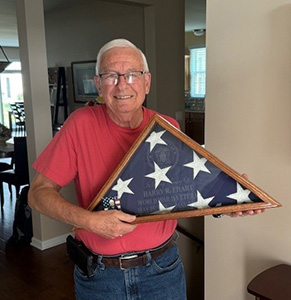
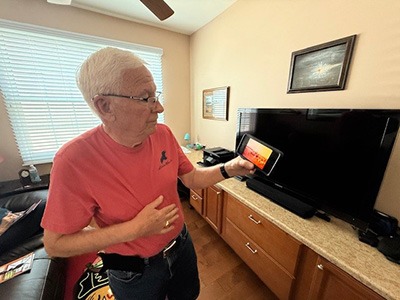
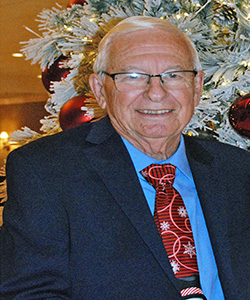
On his first day in the field, he remembers being taken by Jeep to his battery at a fire base and observed the battery getting ready to leave. He was asked to put his things in the command vehicle because the unit was “going on a turkey shoot.” He hopped on the command vehicle that looked almost like a personnel carrier and headed out. He remembers the Army identifications on the vehicles were blacked out after leaving. “Turns out we were going into Cambodia, and we spent the next 11 weeks there.”
Daniel and Linda exchanged letters often. She saved all his letters; her letters to him are lost somewhere in Vietnam. He reports the couple did get to spend one brief week of rest and relaxation together in Hawaii. “That was nice!” he says.
Also, during Daniel’s time in Vietnam, Linda arranged to buy a house in Downers Grove. In fact, Daniel completed the paperwork, including giving Linda the power of attorney while he was in the field. “I arranged to get to a rear area so I could sign the papers, send them off to her, and she bought the house. We just found ways to move forward.”
In a strategic move to shorten his time away from Linda, Daniel extended his tour by three months to get a six-month, “early out” from his scheduled End Term of Service (ETS) date. “I served 18 months, but it seemed like forever. I was counting the days.”
At the end, he took a flight back to the U.S. and eventually landed at O’Hare where Linda and her mother picked him up. Upon his return, he resumed his career with the highway department and worked on different construction projects throughout DuPage County.
In 1974, Tina, the couple’s only child, was born. She has given the couple six grandchildren – five boys and one girl – who range in age from 24- to 10-years-old.
Daniel continued to work for IDOT on construction and management roles until retiring in 1999. His last management role included handling all the different things that go into a project, like relocating utilities, estimating, local agreements and other assignments,” he says. That same year, Daniel joined Teng & Associates, a civil engineering consulting firm, and 15 years later, he took full retirement.
In December 2021, Daniel and Linda were both diagnosed with cancer. Luckily, both instances were caught in the early stages, and both are now cancer-free. While they remain focused on health issues, the couple also splits time between homes in Illinois and Florida.
In his spare time, Daniel tinkers with his model railroad layout, plays golf once a week, hangs out with other veterans, and enjoys attending his Army unit’s reunions.
Reflecting on his military service, Daniel is grateful for what he learned. “More than anything, it made me appreciate what we have in this country – clean air, water, food, and freedom.”
We’re grateful for your service Daniel, and hope you enjoy your Honor Flight experience!