Air Force Vietnam War Woodridge, IL Flight date: 05/20/26
By Joe Kolina, Honor Flight Chicago Veteran Interview Volunteer
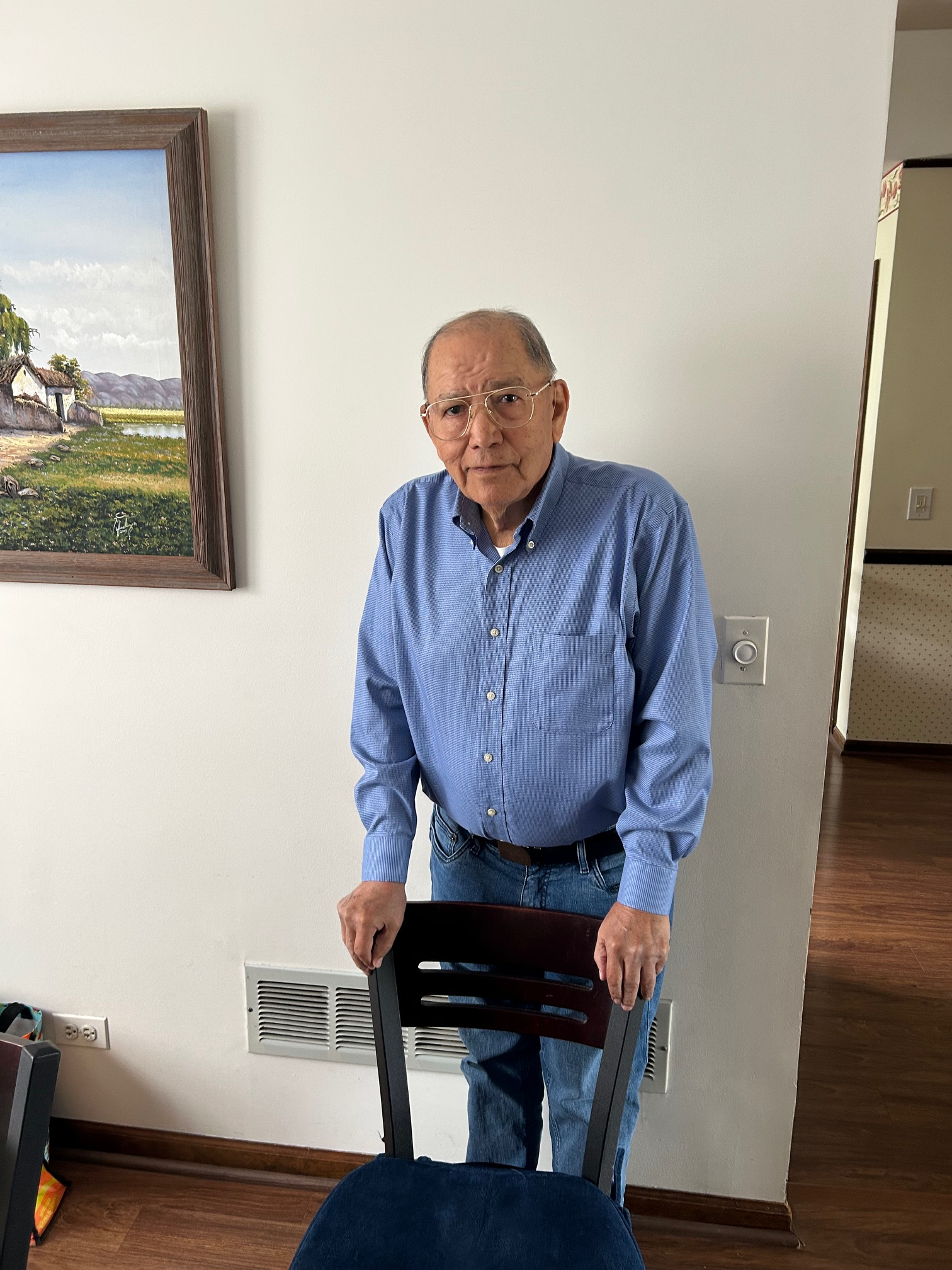
Mario Candia has dreamed about flying since he was a boy. It’s a vision that sparked a quest that stretched from his hometown of Cochabamba, Bolivia, to Washington, D.C., and all the way to an improbable tour of duty in Vietnam.
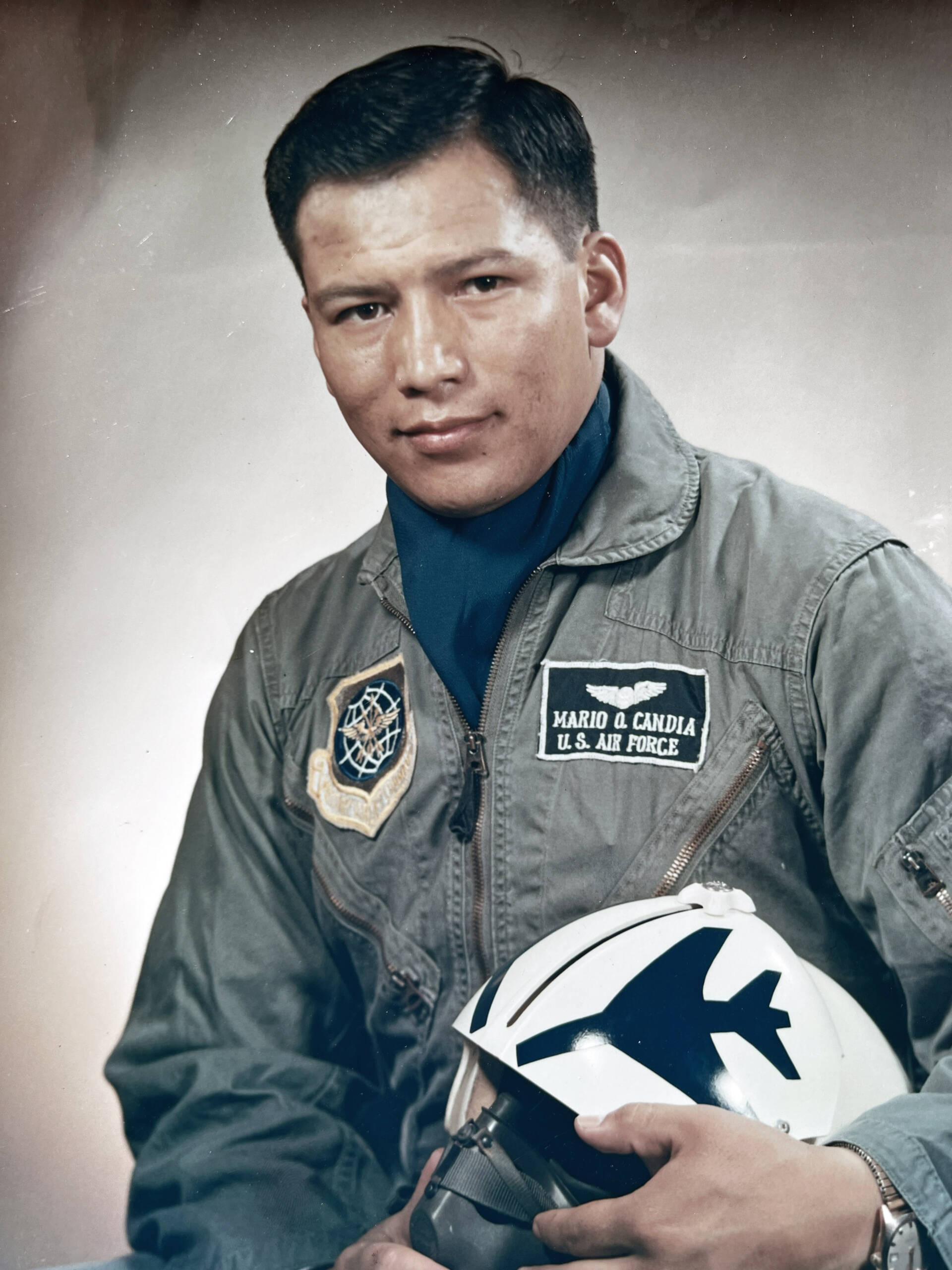
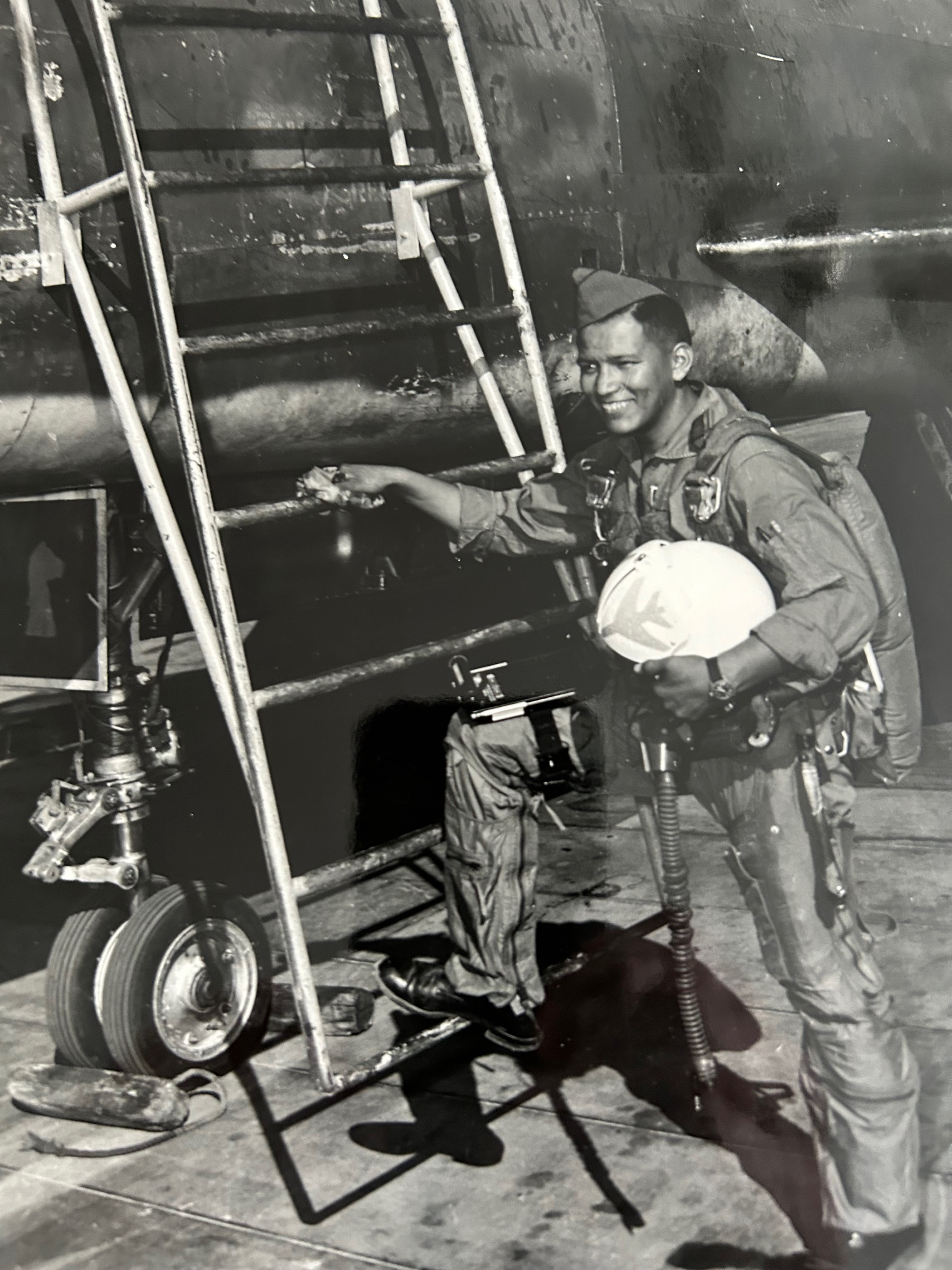
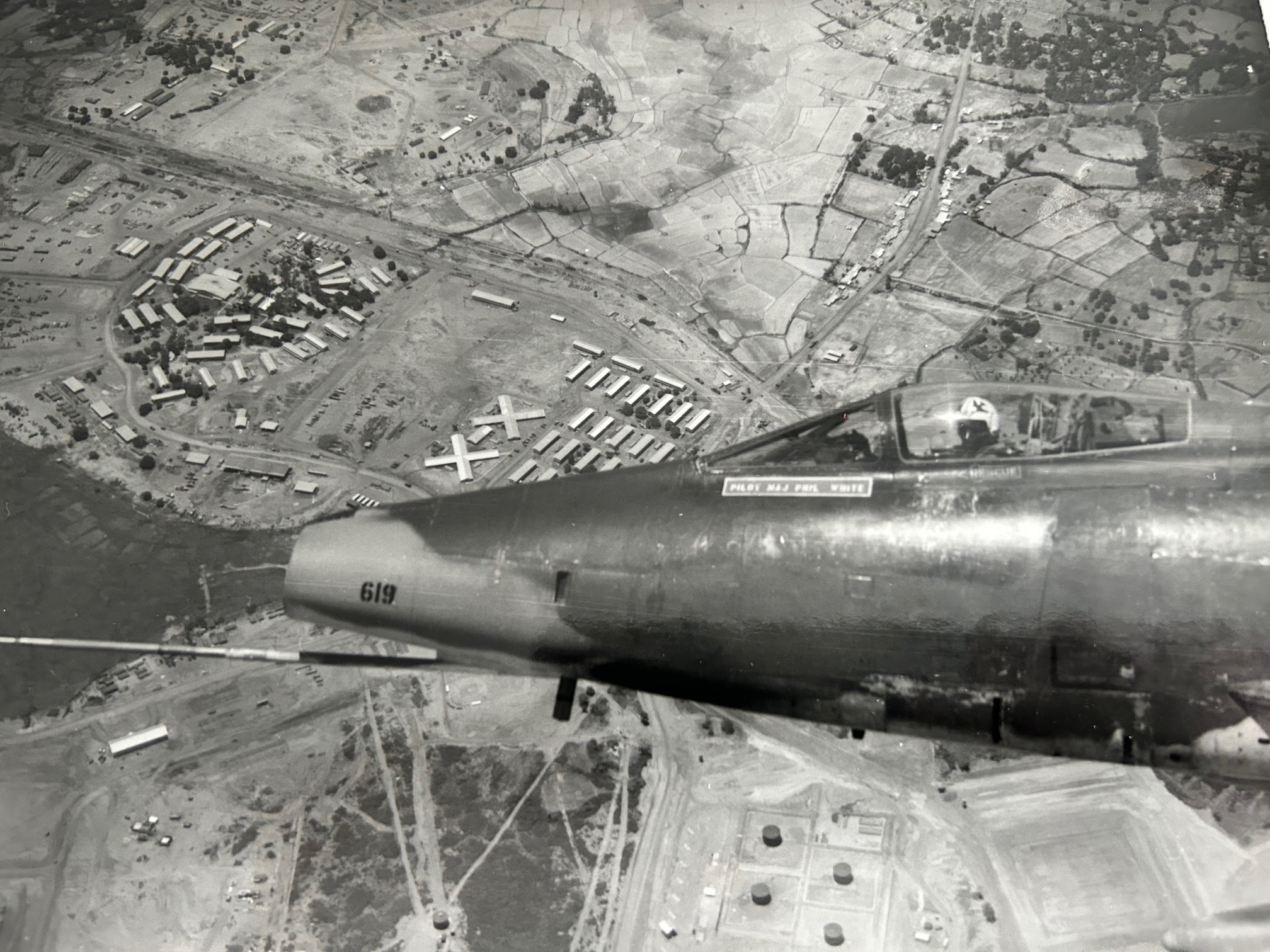
Mario’s adventures as a photographer for the U.S. Air Force put him in the cockpit of a F100D Super Sabre snapping pictures during top secret missions as he streaked through the atmosphere at the speed of sound.
He was strapped to the frame of a massive C-130 transport with only his arms and camera free as the rear cargo ramp opened and he furiously photographed paratroopers as they bolted past him and hurled themselves into the empty sky.
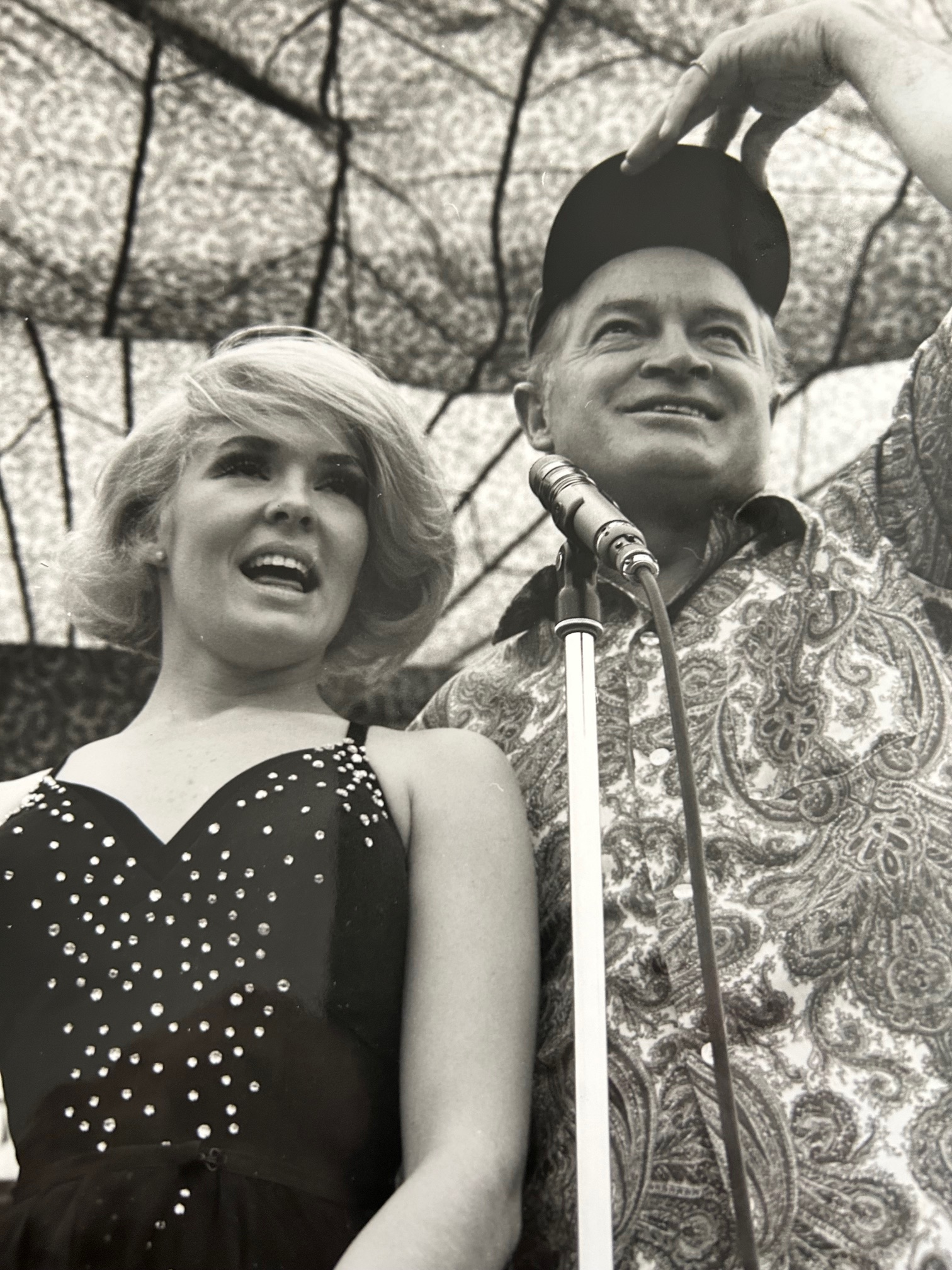
It’s a saga that even included outmaneuvering a gaggle of photographers to get the best shots of Bob Hope posing with showgirls in skimpy dresses during a USO tour of Vietnam.
Mario didn’t imagine any of that on September 21, 1963, the day he arrived in the United States. He was just 20 years old. He came to suburban Maryland hoping to study aeronautical engineering. But the high cost of school and language difficulties proved insurmountable obstacles. He soon considered the idea of military service. The professionalism and bearing of the military attachés he observed as a clerk/messenger at the Inter-American Defense Board in Washington D.C. impressed him. So did what he saw on November 25, 1963.
A Funeral and a Turning Point
“I walked behind the procession of President Kennedy’s funeral from Saint Matthew’s Cathedral all the way to Arlington National Cemetery,” Mario says.
The biting cold, the clear blue sky, and the grim, silent crowds lining the route gave the procession a striking sense of splendor.
“I was impressed by the pageantry,” he says. “I saw Mrs. Kennedy. A veil covered her face. I remember the riderless horse with the boots in the stirrups backward. I saw General de Gaulle and King Saud.”
The experience convinced Mario to think more seriously about joining the military. And he hoped that service could help him pursue his education later. A mentor at the Inter-American Defense Board helped him through the enlistment process. He took the oath on September 21, 1964, one year to the day after arriving in America.
________________________________________________________________________
“I pledged my allegiance to the United States and joined the Air Force.”
_________________________________________________________________________
“I pledged my allegiance to the United States and joined the Air Force,” Mario says. “Always my interest was to study something in aviation, but I just wanted to see what I could get.”
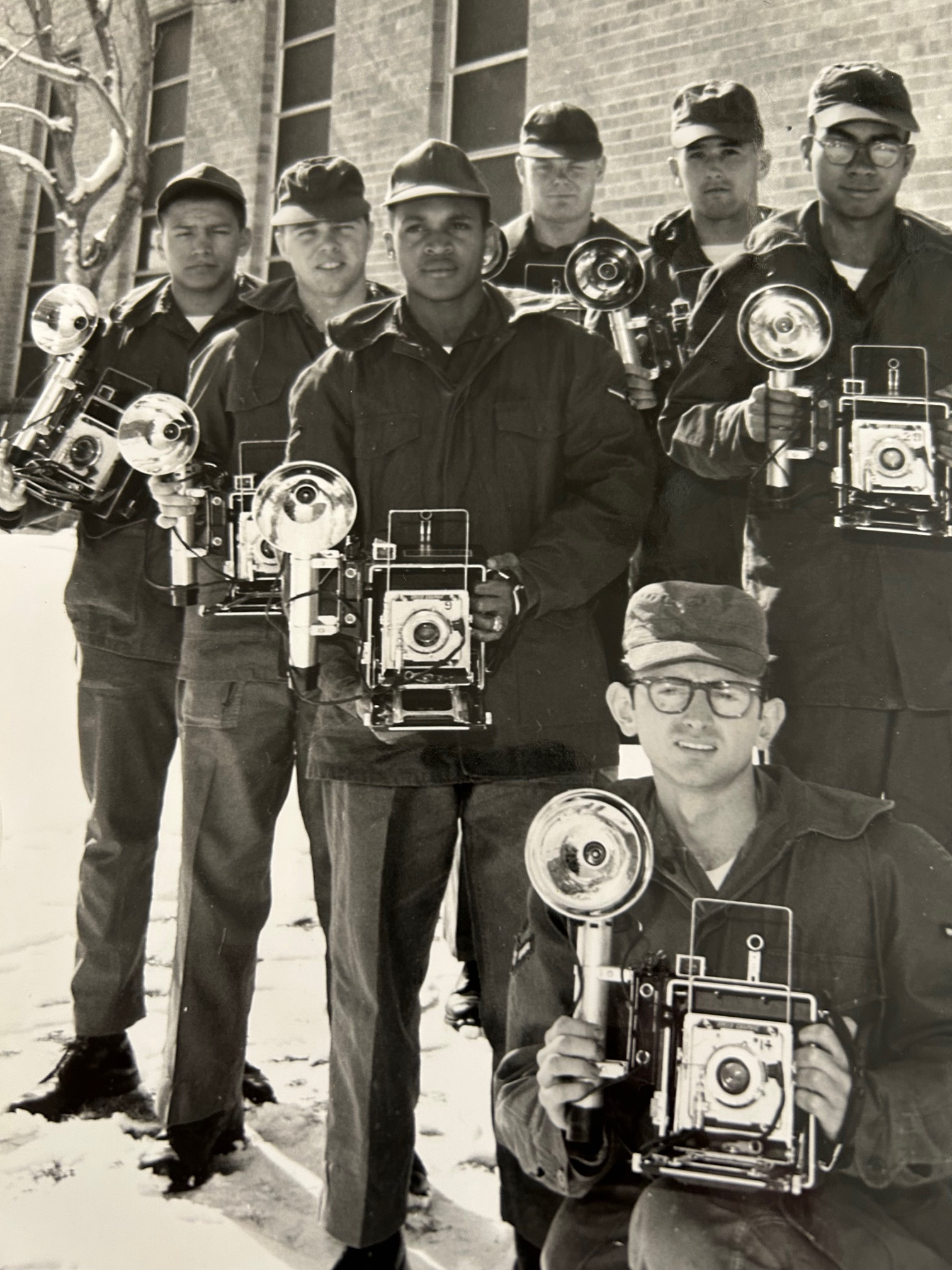
What he got was photography. A temporary assignment to the photo lab at Lowry Air Force Base in Denver turned into orders to attend photography school.
“I liked photography more and more,” Mario says. “It was always where the action was.”
He got all the action he could hope for at his next stop—South Vietnam. The orders were straightforward.
“The function of the photo squadron was to document the mission of the Air Force in Vietnam,” he says.
But, in practice, Mario ended up on flights—and in places—he never dreamed of going as a boy in Bolivia.
The Secret “Misty” Missions
His most hazardous duty came in the super-secret ”Misty” program. It was run out of Phù Cát Air Force Base on the south central coast. Propeller aircraft had been used for what was called forward air control or FAC. They spotted and marked targets for air strikes along the Ho Chi Minh trail, and then returned after bombing runs to assess their success. But there was a problem in mid-1967.
“The planes were Cessnas. They were too slow,” Mario says. “They could not evade the ground fire so too many of those were lost.”
F100D Super Sabre fighter jets replaced the Cessnas. It took special training to qualify to fly in the two-seater Super Sabres, even for photographers. The jets were supersonically fast, highly maneuverable, had sophisticated avionics, and a high degree of survivability.
“I was sent to Kadena Air Force Base in Okinawa,” he says. “They prepared you to fly in the aircraft in different circumstances. We were trained on what to do, especially with oxygen at high altitudes.”
Anyone who flew in the “Misty” program needed something else: a security clearance. Their missions were so important commanders demanded total secrecy. They didn’t use names or any other personal identifiers during flights. “Misty” was the pilots’ radio call sign. Why “Misty”? The unit’s first commander liked the Johnny Mathis hit by that name.
Mach One Over Vietnam
The pre-flight routine was highly organized. It began with an intelligence briefing about the target area and the goal of the mission. It could last an hour or sometimes two.
“The intelligence officer also gave us information about what they were hearing about rockets and weapons in the area, what to watch out for,” Mario says.
“Then the pilot said ‘Are we ready?’” he adds. “We had our helmet and plugged it into the equipment, especially the oxygen mask. We checked the parachutes and the rest and then we took-off into the wild blue yonder.”
The flight was tightly choreographed. The pilot positioned the aircraft precisely over pre-determined coordinates to give photographers the best chance to get the clearest pictures of the troops, bridges, missile sites and other targets of the mission.
“When we got to the coordinates of the target we came down like this,” says Mario as he drops his hand to simulate a steep dive. “We took our pictures and then took off.”
The pilots and photographers were in constant danger. The Super Sabres were fast, but the missions required them to fly low for long periods over areas full of ground fire, anti-aircraft guns and even surface-to-air missiles.
Mario wondered during every flight whether he would make it back alive. Enemy fire hit his planes on numerous missions.
“When we landed we started counting ‘where are the holes’?” he says.
And there were times when he had to help the pilot get out of a tough spot. Once he literally helped the pilot fly their aircraft. The pilot was trying to evade ground fire. He wanted to make a difficult “jinking” move, a fast, unexpected turn to get out of the line of fire. And he wanted help.
_________________________________________________________________________
“We pushed hard to the right and climbed away. You could see the aircraft buffeting. It was the most beautiful thing.”
_________________________________________________________________________
“The pilot said ‘Veer, hold to the right,’” Mario says. “I got the stick of the aircraft and I followed what he was doing, helping him. We pushed hard to the right and climbed away. You could see the aircraft buffeting. It was the most beautiful thing.”
Mario credits his training with helping him assist pilots and get pictures by keeping cool in chaotic situations.
“But it’s something you really can’t figure out until you’re in it,” he says. “We were supposed to have nerves of steel.”
Mario had that, and something else, too. That lifelong love of flying. When I ask him how many Super Sabre flights he had in Vietnam the answer is immediate and emphatic.
“Unfortunately, not enough,” he says. “I was always happy when I was flying.”
Strapped to the Cargo Door
That includes one hair-raising experience early in his tour. He was working out of the giant Cam Ranh Air Force base. His assignment was to document a paratrooper mission from a C-130 cargo plane. The problem was how to get Mario close enough to the soldiers without interfering with their jumps.
The solution was ingenious. The frame of the tail end of the aircraft had holes airmen used during flights to secure crates of supplies with ropes.
“They used those holes to strap me to the side of the end of the aircraft with belts,” Mario says. “That allowed me to handle the camera and take pictures of the parachutists without being in the middle of them.”
Howling winds hammered him. He feared he might fall out through the open cargo ramp. But those belts held. So did those nerves of steel. He got the pictures he was after.
“I saw the paratroopers coming toward me, some of them were waving good-bye,” he says. “Then they picked up, and boom, they jumped and a few seconds later you saw the parachutes open as they came down.”
Photographing the Famous
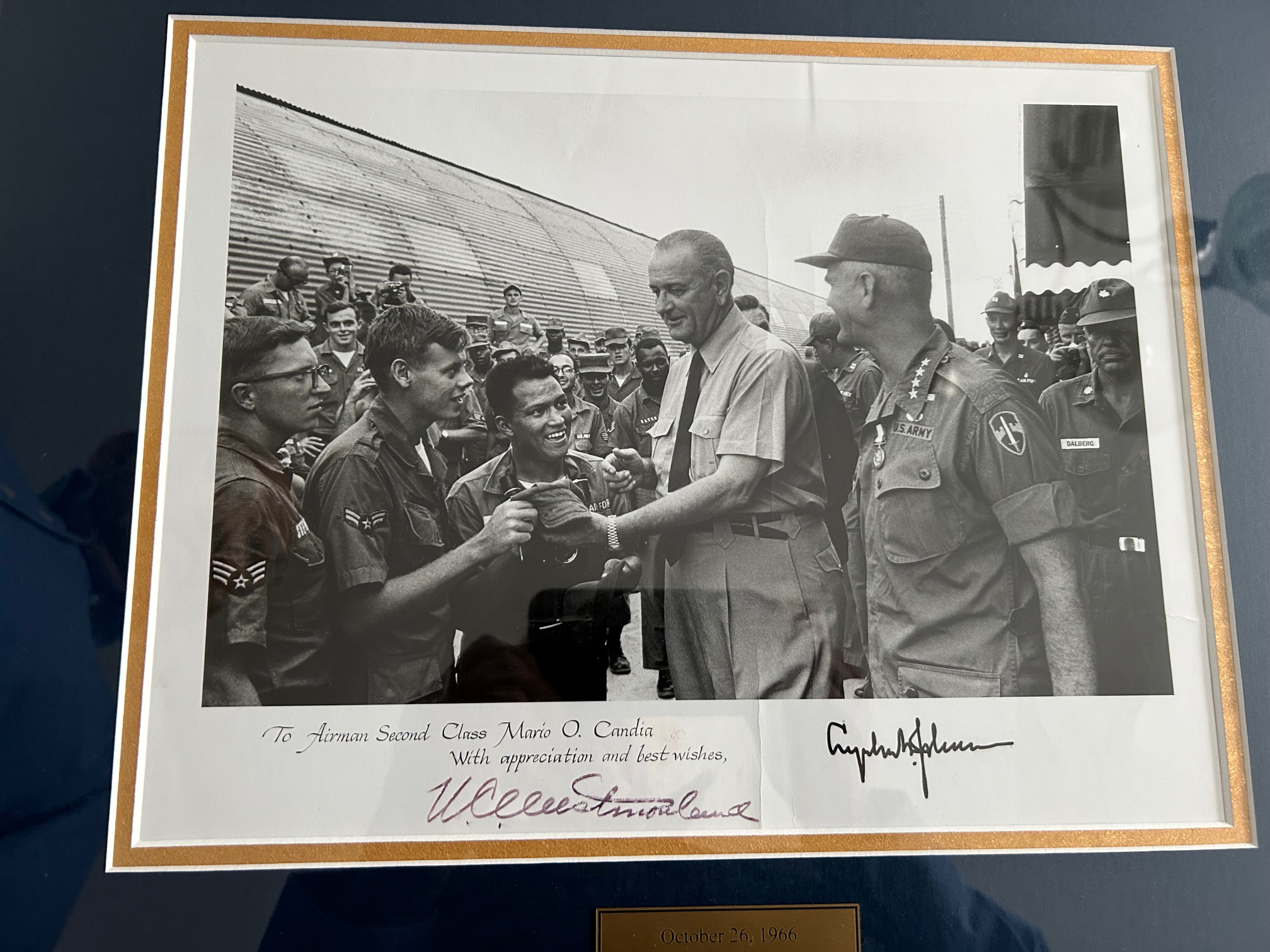
Mario faced a different kind of challenge covering celebrity visits to Cam Ranh Air Force Base. He covered a visit President Johnson made in 1967 and a Bob Hope USO tour of Vietnam. They attracted international news coverage. The media competition for access was intense.
“One thing as a photographer is you have to have the guts to figure out how to get the best picture,” Mario says. “That’s what I learned there.”
He recalls pictures he shot of Hope, Phyllis Diller, Martha Raye, Anita Bryant, Miss Universe, singer Vic Damone and dancer/singer Joey Heatherton.
“What a woman. She was amazing,” he says.
“I was eager to see them all,” he adds. “How did I get so close? I had balls. I said I’m going to get their pictures up close. And I did.”
Mario took pictures that were so memorable that some of them are kept in the U.S. Air Force Museum at Wright-Patterson Air Force Base in Dayton, Ohio.
As he looks back on his eventful service, Mario recalls the dream that began when he was a boy in Bolivia.
“The thing that sticks in my mind is that I am blessed that God gave me the opportunity to fly on those planes,” he says. “It was in my blood to fly.”
Thank you for your service, Mario.