
Army Vietnam War Bolingbrook, IL Flight date: 06/24/26
By Charlie Souhrada, Honor Flight Chicago Veteran Interview Volunteer
Dave Miller entered life in a hurry. The U.S. military would later match his urgency, molding a restless boy into a soldier before he found peace and learned to enjoy life.
Dave was born on August 22, 1947, in the front room of his family’s home in Maywood, Illinois. “I never made it to the hospital,” he says. “I guess I wanted it all and just couldn’t wait!”
One of six children, Dave was raised largely by his mother, Ruth Nix, after his father left when Dave was sixteen. “My mother, Ruth, was unbelievable. She raised all of us, taking on cleaning, sewing, and laundry jobs until my oldest brother, Tom, could help support the household.”
At five-years-old, Dave tried to help the family finances by attempting to “rob” the neighborhood store. “I had this toy cowboy outfit and a little red wagon. On that day, I decided I was going to rob the store,” he remembers. “The owners knew me because I was in there every day returning pop bottles I collected for nickel deposits.” He jokes that the owners declined to press charges.
Despite his early brush with crime, Dave grew into what he describes as a “regular kid.” He spent his youth playing sports, ice skating, and working a variety of jobs to help support the family, including delivering newspapers, stocking shelves at Zayre’s, and working at a pharmacy.
In 1966, he graduated from Proviso East High School, though not without a few run-ins. “I was a real punk,” he says. “At times, it seemed I spent more time in the dean’s office than in the classroom.”
Before he even finished his high school finals, Dave received his draft notice. “They called four of us from my class in for physicals before we even graduated,” he says. Even though a heart murmur had kept him out of school sports, the Army accepted him. He remembers one friend was classified as 4F because of flat feet. “Here I had a bad heart and thought I was golden, I’m not going to get drafted, but they took me anyway!”
In October 1966, Dave was sent to Fort Campbell, Kentucky, for basic training, an intimidating experience for an 18-year-old who had never left home. “It was scary,” he remembers. “The drill sergeants were in your face all the time. I was a dumb kid and thought I knew everything. I never did so many pushups in my life and it seemed I was always in trouble. Basic made me grow up fast. You think you’re cool, but then, after a month or so you find out, you ain’t so cool.”
After getting a dose of reality at basic, Dave received orders to report to Fort Sheridan, Illinois, for advanced individual training in photography. Though he had never owned a camera, he was told he “scored well” on an aptitude test. “I don’t remember the questions they asked, but that’s what they picked for me. It was a bit of a surprise.”
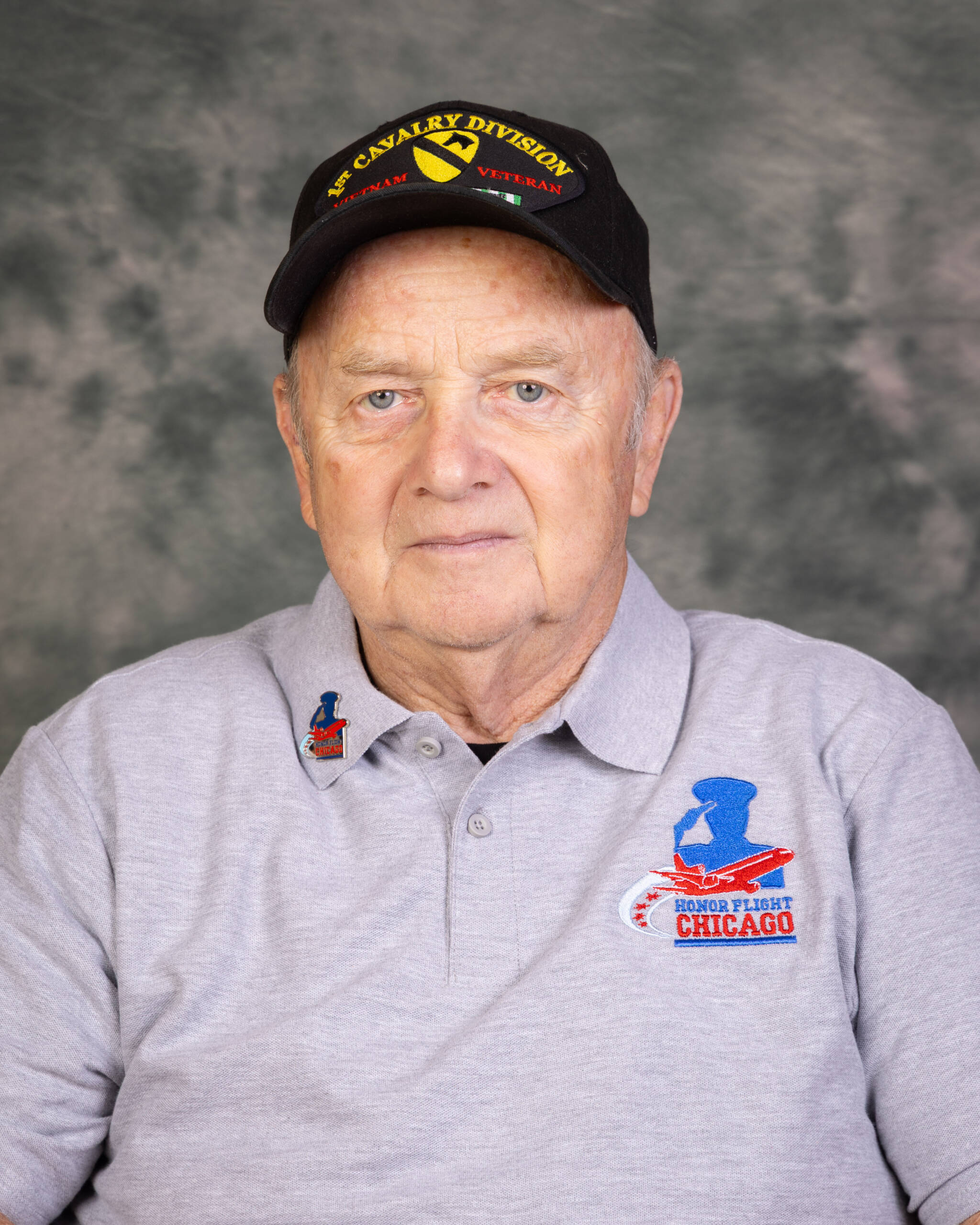
After completing AIT, Dave was sent to Vietnam in late 1967, as part of the 1st Air Cavalry Division. There, he was initially assigned to perform photography lab work but was soon asked to fly reconnaissance missions because the unit was short-handed. “They asked if I’d be willing to get in a plane or helicopter to take pictures, and I said ‘yes.’”
By raising his hand, Dave’s job changed to conducting aerial intelligence photography, before and after bombing runs or troop movements. “Did we hit the spots? Did we get the targets we wanted to get?” he says. He modestly downplays the role, “I shouldn’t even be called a photographer,” he says. “You just hit the switch and monitor the equipment.” Despite his modesty, he admits the work was dangerous.
Living conditions were harsh. He remembers the heat, monsoons, and the constant stench of burning waste. “It smelled like an outhouse,” he says. “There was no getting away from it.”
His unit moved often, wherever or whenever air support was needed. At first, his unit lived in tents, but that soon became too dangerous. “We were getting rocket and mortar fire every night,” he says. “One time, I had just completed some film work, was going back to my bunk and no sooner laid down when I heard a rocket coming. I started yelling ‘incoming,’ and opened the tent door and there was an enormous flash and boom. I looked back at where I was just laying, and it was full of shrapnel holes. I didn’t have a scratch on me!” After that, the unit dug into the earth and slept in bunkers protected by sandbags and steel planks.
He earned the Bronze Star for volunteering to retrieve sensitive intelligence from a downed helicopter deep in the jungle. “Nobody was raising a hand, so I said I’ll go because I knew what they were looking for,” he says simply. The mission required navigating booby traps, spending the night in the jungle, and returning safely with the classified material.
Despite the hardships, Dave says there was a lot of downtime. “We played basketball or football, we weren’t always fighting or working. But even then, we were in a forward area and had to watch because there were snipers all around.” Unfortunately, the Tet Offensive was brewing in late January 1968 and Dave’s plans to enjoy R&R in Australia and even a planned visit from Bob Hope were cancelled. “We lost Bob, but we did get some entertainment – a singing group, but I don’t remember their name or what country they were from.”
Dave left Vietnam in October 1968. The welcome home was devastating. “Before we landed in Oakland, California, we were told to stay in formation no matter what was said or done,” he explains. “We were rocked with rotten fruit, eggs, called baby killers, the whole bit. We didn’t get a lot information over there, so we didn’t realize what was going on. It was an awful time. I thought I was doing the right thing and couldn’t understand why we were being treated like we were. It just didn’t make sense.”
He returned to Maywood, moved back into the family home, and began working. He tried training as a lineman but switched paths after witnessing a fatal accident. He became a meter reader, then spent 19 years as a furniture delivery driver before moving into trucking for a flooring company.
In 1970, after a long friendship, he married Kathy, a girl from down the block. They raised three sons: David, Brian, and Tim, and now enjoy six grandchildren.
After completing two years of service in the Army, Dave applied the discipline, physical conditioning, and leadership skills he developed into his life back home. He began coaching Little League baseball alongside his older brother, Tom, and soon became the head coach for a variety of neighborhood teams. When his sons were old enough to play, he coached their baseball and soccer teams as well. He also remained active by continuing to play sports and by organizing adult leagues in softball, volleyball, and hockey. “Sports have always been in my blood,” he says. “I enjoy them whether I’m playing, coaching, or just watching others play.”
Decades after serving in Vietnam, Dave still suffered from PTSD and got the help he needed. “I would wake up fighting at night,” he says. “The psychiatrist helped me a lot.” He also credits Kathy, a registered nurse, for anchoring him through the bad times.
Retired since 2009, Dave has found peace and is deeply moved by the opportunity to visit Washington, D.C., especially the Vietnam Veterans Memorial. “The acceptance, I didn’t think it would ever happen,” he says. “It’s made a huge difference.”
Thank you, Dave, for your service. We hope you enjoy your well-earned, much-deserved Honor Flight!
Honor Flight Chicago is a 501(c)(3) non-profit organization dedicated to the mission of flying our World War II, Korean War and Vietnam War veterans to Washington DC to see the Memorials built in their honor. For more information, please see www.honorflightchicago.org. Tax deductible contributions can be made online or sent to: Honor Flight Chicago at 9701 W. Higgins Road, Suite 310, Rosemont, IL 60018-4703.