
Army Vietnam War and Korean War West Chicago, IL Flight date: 10/28/26
By Al Konieczka, Honor Flight Chicago Veteran Interview Volunteer
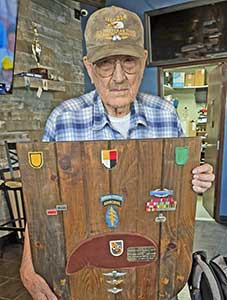
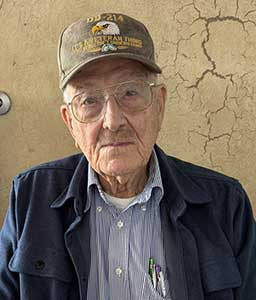
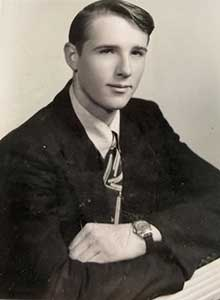
Don Smith went to work in a Pennsylvania steel mill the night he graduated from high school in 1950, a Freeport kid from a mill family. Now 94, he can still tell you about paratroopers, prison guards, the Pentagon, and a jungle trail in Vietnam where the hair on the back of his neck told him to lie down.
The mill kept laying him off. “Every time there was a layoff, I got laid off,” Don says. With a wife, a growing family, and no steady paycheck by his early twenties, he volunteered for the draft. He was sworn in at Pittsburgh on June 17, 1954, and sent to Fort Knox for basic training.
Paratrooper to prison guard
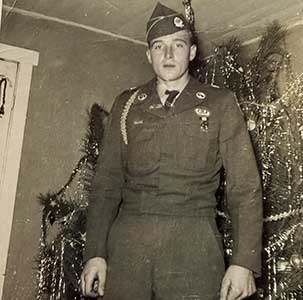
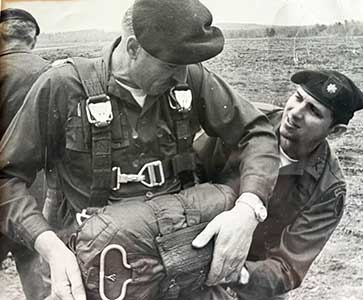
After AIT at Fort Jackson and jump school at Fort Campbell, Don joined B Company, 1st Battalion, 511th Regiment of the 11th Airborne Division. He is proud of that lineage: his regiment parachuted into the Los Baños prison camp in the Philippines in World War II and freed more than 2,000 civilian prisoners.
When the Army began “Operation Gyroscope,” swapping divisions between the U.S. and Germany, a general offered to let Don re-enlist and go along. He said no. His reward was Fort Gordon, Georgia, guarding prisoners at the disciplinary barracks with 29 other paratroopers. “We were really bitter,” he remembers. “We were trained paratroopers, not prison guards.”
One night in a guard tower, he spotted a prisoner in a barracks window about to drop a heavy can of cold sand on a guard’s head. Don shone the searchlight on him and jacked a round into his carbine. The sound stopped the man cold. “It’s safe now to say but at the time I thought I was in trouble.”
A former Ranger who had been at Pointe du Hoc on D-Day told the young guards never to re-enlist. Don left the Army in June 1956 and went back to the mill, only to be laid off again. After a two-week Army Reserve camp that paid better than the mill, he talked it over with his wife and re-enlisted.
Missiles, radios, and a deal with a surgeon
The second time around, Don was trained on Ajax and Hercules missiles at Fort Bliss, Texas, and worked as a range safety technician. When the planned missile sites still weren’t built, he chose fixed-station radio and went to Fort Monmouth, New Jersey. The Army kept the family moving around the country until his wife decided she had moved enough. When orders came for the Philippines, she stayed in Pennsylvania with the children, and Don went alone.
At Camp O’Donnell, site of the Bataan Death March prison camp, he ran a shift at a powerful Army transmitter station, part of the Army’s worldwide communications network. A colleague who lost his teeth to a rifle butt on the march would open his mouth and show anyone who even mentioned the Japanese.
A back injury sent Don to Walter Reed Hospital back in the States, where a surgeon wanted to operate. Don refused, and the doctor offered him a deal: touch your toes by Friday and there would be no surgery. Don practiced all week, bending a little further each day. On Friday he touched his toes, slowly, and walked out.
One marriage ends and a new love emerges
Years of overseas assignments and long separations had taken their toll. When Don got back to Pennsylvania, he found his marriage was over. He and his first wife had six children, and the end was painful for everyone. He eventually filed for divorce and returned to the Army.
After a stint at the East Coast Radio Station in Woodbridge, Virginia, Don landed at the Pentagon as a console operator, patching classified calls to generals and admirals around the clock. Once, outside a Washington finance office, he saluted a man stepping out of a limousine. It was Robert F. Kennedy, who saluted him back.
The Pentagon is also where he met Nancy, a young WAC specialist with auburn hair and green eyes. She had grown up poor in Chicago, the daughter of a father who struggled with alcohol. She and her older sister collected bottles from alleys to buy butter for their oatmeal. She taught herself the French horn and learned Gregg shorthand before joining the Army, where she became a classified documents custodian at Fifth Army Headquarters.
Don asked her to a Jimmy Stewart movie. After only three or four dates, she turned to him in his Ford Falcon and said, “Don, I’m gonna marry you.” The road wasn’t smooth. After a falling out, Nancy broke off their courtship, left the Army for Chicago, and a heartbroken Don decided to volunteer for Special Forces. “I just didn’t care anymore,” he admits. Then, the night before he left for Fort Bragg, a page came over the NCO club speaker for Sergeant First Class Donald Smith. Nancy was on the phone. “Don, I’ll marry you.”
On a two-week leave from training, he went to Chicago and they were married. They bought a small ranch house near Fort Bragg for $13,000.
Nancy and the six children
That summer, five of Don’s children came down from Pennsylvania to visit. When it was time to go home, his oldest son Jeffrey, about 14 at the time, said he and his siblings wanted to stay with Don and Nancy. Nancy, 22, was already cooking, keeping house, and earning the children’s respect. “This woman was an absolute angel. I just can’t say it enough.” The children’s mother objected, but after a custody hearing, a judge listened to Jeffrey and ruled the children could stay in North Carolina.
Weeks later, Don’s orders for Vietnam arrived, and Nancy was left raising five children on her own. She sold cemetery plots by phone in the evenings and eventually landed a job at the 18th Airborne Corps. Money was tight, and some nights she fed the children spaghetti. When the Tet Offensive was on the news, Jeffrey wanted to watch because his dad was there. Nancy wouldn’t turn it on. The family knew he was there, but like every military family, they dreaded the day three officers might come up the walk.
Nancy wrote letters to Don nearly every day. Mail came by helicopter to Don’s remote camp, and there was always a letter from her about the kids, school, and work. That kept Don’s mind in a good place knowing that everything back home was being taken care of.
Vietnam
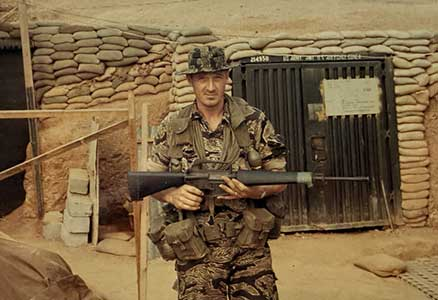
Don served at two different times in Vietnam. “I didn’t serve two full tours in Vietnam. I did serve a full tour, but I was there the first time towards the end of 1967 for just a few months. I was in Vietnam sometime just before Thanksgiving, but my enlistment was running out in January of 1968. So the Army sent me back to the US to re-enlist and then I went back to Vietnam for a second full tour.” In Vietnam, Don was in Special Forces as an operations and intelligence sergeant on an A-team, working with Montagnard tribesmen. The Montagnards (meaning “mountain people” in French) are roughly 30 indigenous ethnic minority groups native to the Central Highlands of Vietnam.
One particular patrol stands out. Walking a muddy trail between rice paddies, Don sensed they were being watched and counted. A small human settlement with bananas still on the trees told him the Viet Cong hadn’t been through the area. He told his radioman Rosie “I don’t like this. Those guys, all the Vietnamese in the rice paddies are watching us. The hair on the back of my neck is standing up. I’m telling you, this is not good.” So he found the lowest ground and lay down. Rosie did the same. Fifteen minutes later, the shooting started.
The first man hit was a small Montagnard gunner who had appointed himself Don’s bodyguard. Don called in a medevac and artillery and lay behind a log as bullets chipped bark from the trees. “I knew what the snap of a bullet sounds like going past your head.”
Don’s tour was set to end on July 10, 1968. Two days before he was due to leave Vietnam for good, he went out on one more medevac flight. The helicopter took fire as it lifted off. Lying on the floor with an M16 and just a single magazine, he thought of Nancy. “I’m not coming home,” he thought, hoping she could hear it. He did come home, to a country that gave him few thanks, and arrived in North Carolina to his wife and children just before Christmas. Don still wonders what became of the pilot and the others on that flight. “I’m a person walking in the shadow of giants because I’m still alive,” he says.
Honoring the fallen
In early 1969, Don led a 21-gun-salute team of Vietnam combat veterans at funerals for Vietnam casualties. At one service, a young soldier confronted him, bitter about his brother’s death. Don told him, “Would you rather have a fellow combat veteran do this, or somebody who doesn’t give a rat’s butt about it?” At another service, a young woman stood at the head of the casket holding a baby. It still makes Don emotional when he thinks about it.
After the Army
Don went on to study special education at Georgia State University, teaching in Atlanta classrooms as a student. Nancy built her own career in public service, earning two master’s degrees and serving as the West Chicago city clerk for 30 years. The two even took karate lessons together.
Don and Nancy were married 55 years when Nancy died of congestive heart failure in February, 2022. Her celebration of life was held at the local VFW and attended by the city council, the mayor, her fellow clerks, and even her karate students.
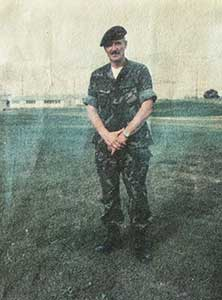
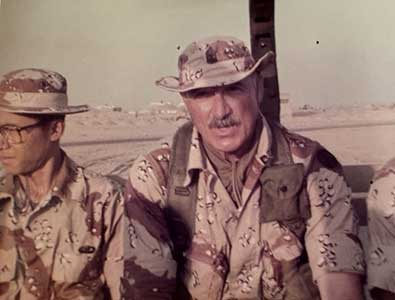
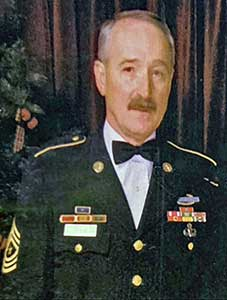
In total, Don’s career with the Army would span 32 years, beginning in June of 1954 and ending in February, 1986. Don served at various locations throughout the United States, as well as overseas in Vietnam, the Philippines, Okinawa, Denmark and Egypt.
Don, thank you very much for your dedicated service and please enjoy your well-deserved trip to Washington D.C.!