

Air Force Vietnam War Indianapolis, IN Flight date: 09/17/25
By Al Rodriguez, Honor Flight Chicago Veteran Interview Volunteer
As an Air Traffic Controller, Emery spent his Air Force career staring at a radar screen in a dark, windowless room. Being an Air Traffic Controller is a stressful job anywhere but in Da Nang, Vietnam, with mortars targeting his building, it was not just stressful but also dangerous.
Emery was born in December of 1948 at the Marion County Hospital in Indianapolis, Indiana. He has two siblings. His father was a World War II Army veteran. When he was in middle school Emery was moved up a semester and he started Arsenal Technical High School a year early. The school was named Arsenal because in the U.S. Civil War one of the buildings was an actual arsenal for munitions. In high school he joined the ROTC becoming a Captain before graduating. He also was a member of the National Honor Society. In 1966 at 17 years old, he graduated with honors, finishing 73rd out of a class of 900. He received a partial scholastic scholarship from Howard University. Fearing that he could not afford his education he went to work at Scherer Electric Company. After high school he chose to enter the Air Force. Since Emery was only 17 he could not join the military until he turned 18. He took the Air Force placement exams early to be ready and achieved over 90% in all areas of testing. Since Emery placed so high in the exams his first choice was Air Traffic Controller. He pre enlisted in the Air Force but didn’t have to report until he turned 18. In June of 1967 he was sent to Lackland Air Force Base for Basic Training. While in basic training, Emery—who was in the rifle team in ROTC—scored expert in small arms.
After basic training he was sent to Keesler Air Force Base in Mississippi for technical training as an Air Traffic Controller. This training was very rigorous and would last six months. He was assigned to work as a radar approach control, RAPCON. Emery explained that the military housed the Instrument Flight Rules, IFR and the Visual Flight Rules, and VFR controllers in separate buildings. The VFR Air Traffic Controllers worked in a tower like you see in airports. The Instrument Flight Rules, IFR controllers worked in a separate building near the runway that contained the RAPCON, Radar Approach Control facility.
Air Traffic Control is the safe orderly and expedient flow of air traffic, and he still had to learn all aspects of an Air Traffic Controller’s job, radar and instrumentation equipment, Instrument Flight Rules, Visual Flight Rules, the flying capabilities of military and civilian aircraft and meteorological conditions. Aircraft take off into the wind to help them create lift. Air Traffic Control is based on three principles. ATC Enroute Control passes off aircraft from one control center to the next as they are flying to their destination. Approach Control passes off aircraft to Feeder Control. Feeder Control passes off aircraft to Final Control which guides them to land the plane on an airport runway.
ATC assigns altitudes and flight paths and aircraft is expected to maintain it until instructed otherwise by an Air Traffic Controller. The aircraft’s pilot is responsible to land the plane so if they can’t see the runway or the crosswinds blow the aircraft out of position, then it’s up to them to abort the landing and go around. On a clear and sunny day they would let the planes use Visual Flight Rules for separation with the Air Traffic Controller assigning altitude and controlling the sequence of take offs and landings. The tower on a runway controlled the VFR flights. On a cloudy and rainy day the Air Traffic Controller will use Instrument Flight Rules using radar and instrumentation to control all aspects of flight. All aircraft have a transponder. Radar sees the transponder and shows the altitude and distance between the aircraft. The Air Traffic Controller is responsible to get the aircraft as close to the runway as possible but it’s still up to the pilot to visually see the runway and land the plane. Emery finished his technical training and was assigned to Eglin Air Force Base in the Florida Panhandle.
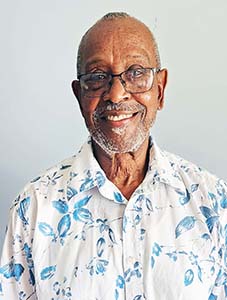
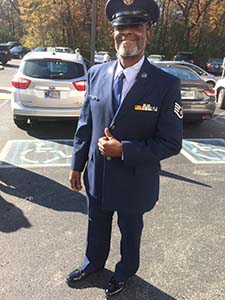
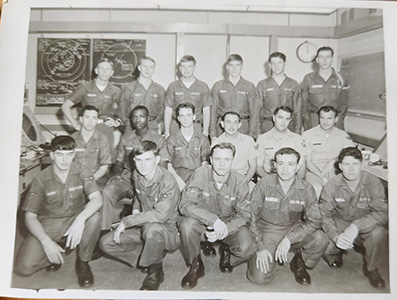
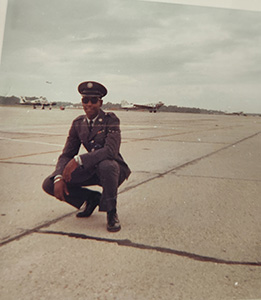
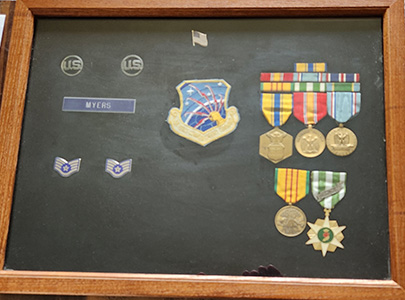
Emery arrived at Eglin in February 1968. Eglin is the largest Air Force base in the U.S and is their Air Proving Ground, testing new aircraft for takeoff and landing capabilities. Emery was assigned as a Final Controller at Eglin. The RAPCON facility was windowless and dark so the Air Traffic Controllers can see their radar screens. His job was to give the aircraft instructions to land on the runway. The Air Traffic Controller would tell the pilot to go to visual for landing. The final approach for jet aircraft from 10 miles out to landing typically did not take long.
After 18 months at Eglin, Emery volunteered for duty in Vietnam. He said he wanted the adventure of duty in a combat zone, plus he could achieve a higher rank quicker than stateside. Also the extra overseas and combat pay didn’t hurt. He arrived at Da Nang Air Base Vietnam in July 1969 assigned to the 1920th Communication Squadron. Da Nang Air Base was a major airport for aircraft entering and exiting the country. Emery had never been outside of the U.S. and he said he found Vietnam to be a whole different world. It took him a while to adjust to this foreign, hot and humid country. He worked as a Final Control Operator in a RAPCON facility. As usual this facility was windowless. He said it was like working in a cave with a double door entry so the light would not leak into their control center and their radar screens. He worked 72 hours covering four shifts with 12 hours off between shifts.
Emery said that he landed every type of military and commercial aircraft at Da Nang, cargo planes, passenger planes bringing men to war and the Freedom Birds taking them home. There was also a squadron of Phantom F-4 jets called the Gun Fighter Squadron that supported the ground troops and conducted fighter escort missions for military aircraft. Since Da Nang was the busiest base in the war as the main aircraft entry and departure point, it was a prime target for the enemy. Da Nang was known as Rocket City. Despite the defoliation with Agent Orange, concertina and barbed wire fences, the bunkers, towers and the nightly patrols around the perimeter of the base, there were still rockets fired weekly at the runways, mostly at night. Emery said that the enemy would target the two parallel runways to damage them so that aircraft could not take off or land. The tower and RAPCON buildings located between the runways were a target too. Emery said working as an Air Traffic Controller job in a war zone was oppressive. There was violence and destruction all around. Working in a windowless building with rockets landing outside was emotionally and spiritually draining. In the monsoon season Emery said ‘the rains were so thick that sometimes it seemed like you were swimming instead of walking.’ Aircraft were grounded with the dense cloud cover and rain. As an Air Traffic Controller he had separate housing that was away from the other Air Force barracks. Rocket attacks killed several Airmen in the other Air Force barracks. There were a couple of bright spots in his tour. There was a Marine base near Da Nang and he met twins that he grew up with in Indianapolis. They got together when their schedule allowed. He saw Clark Air Force base with a friend and towards the end of his tour he went to Hong Kong for R&R. He was promoted to a sergeant E-4 and received an Air Force Commendation Medal for his ATC work in Vietnam. When his tour ended in July 1970 and it was his turn to take the Freedom Bird out of Vietnam, he was bumped off the flight and had to spend an additional 5 days in Da Nang.
After a 30-day leave, Emery reported to McGuire Air Force Base in New Jersey. He said it was peaceful duty compared to Da Nang. He was promoted to a Staff Sergeant, E-5. He was honorably discharged June of 1971.
Emery went back home to Indianapolis. He went back to work for Scherer Electric Company for about a year.
He decided to go back to air traffic control and become a government air traffic controller. He enrolled in the F.A.A. Academy in Oklahoma City, Oklahoma. Having worked as an Air Force Air Traffic Controller, he finished the course at the top of his class. Unfortunately they would only start him as an entry level air traffic controller with low pay and he decided to leave the job after a year. He enrolled at Marion College as a Philosophy and Theology undergraduate. He had to work part time jobs to afford college life. He worked for Brehob Electric Company in the electrical power maintenance section. Emery was married in 1979. The marriage did not last but he had a son from this union. In 1989 he married the love of his life, Carlotta. They had a daughter in 1993 and a son in 1995.
In 1990 Emery was employed by the Indianapolis Power and Light Company working with the gas turbines. He earned an Associates of Arts degree from Marion College and received an Associate of Applied Science degree in Electrical Engineering Technology from Ivy Tech. He worked his way up and became the Electrical Maintenance Coordinator where he planned jobs and scheduled manpower and equipment needed for 16 electricians. He retired in 2012.
After retirement he stayed busy. Emery went to work with the electrical department at Home Depot. In 2017 he started his own courier business, delivering mail, medical specimens and medications between hospitals and private individuals. He volunteered with the Food Bank of Indianapolis picking up food and distributing at his church’s pantry. Emery was the chaplain for American Legion Post 500. In 2021 he and Carlotta thought about moving to Belize with a relative but after three weeks moved back to Indianapolis. In 2022 they moved to Chicago to help care for Carlotta’s parents. The house Emery and Carlotta bought has a river behind their property which works great because Emery loves to fish. He also loves to golf. He recently has taken up bowling because his mother-in-law volunteered him to substitute for a league member who is ill. Since his theology studies he said ‘the church is a big part of my life and my faith the moral center for my life’. He was a choir member and worked with the church food pantry distributing food to the needy.
Since his service in Vietnam, Emery has had several health issues but the V.A. is taking care of them.
Emery is looking forward to going on his upcoming flight for the camaraderie with the other vets. He’s excited to see the aircraft in the Smithsonian. He also has a high school friend that he wants to visit on the Vietnam Memorial Wall.
Emery thank you for your service and enjoy your day in D.C!