
Navy Vietnam War Crete, IL Flight date: 04/15/26
By Al Konieczka, Honor Flight Chicago Veteran Interview Volunteer
John grew up on the south side of Chicago in the Englewood neighborhood. He was one of nine children in the family, with three brothers and five sisters, and he worked doing anything he could from a very young age. He delivered newspapers and groceries using the family’s Radio Flyer red wagon and after graduating high school, he got a job working at Jewels on Martin Luther King Drive.
By August of 1965, the Vietnam War was in full swing and ground combat forces were arriving to launch the main U.S. combat mission. John knew that if he were drafted he would most likely be placed in the Army for a two year term. So at the age of 19 he headed to the recruitment office and signed up for a four year commitment in the Navy. “I wanted to get out of Chicago. So I told the recruiter, the only way I would join, if I go to boot camp in San Diego, because I was always interested in the West Coast. I always was interested in the Far East and all of that type of stuff.”
He completed boot camp and awaited his orders. “After boot camp, everybody had their orders, you know, the ships they would be on and all of that stuff, where they were going to, except for me. I didn’t have any orders. So I was in transit in San Diego for about two months before my orders finally came through. Why I didn’t have my orders right away, to this day I don’t even understand.”
John decided to take advantage of his time in San Diego by visiting different places. He has always been interested in people and cultures and wanted to explore how people lived on the West Coast. “I remember outside of boot camp, maybe one or two blocks away from the base the streets were very busy, zoom, zoom, zoom, cars going all over the place. I wanted to cross the street. And I just stood there, waiting for the light to change. And I stood, and I stood, and I stood, and the light never changed. Finally this little girl walked up to the light post, and she wanted to cross the street, too. And she pushed the button and the light changed. I had never seen nothing like that. We didn’t have that here in Chicago. And so I thought that was hilarious. I will remember that forever.”
When John’s orders finally came through he was disappointed because they were shipping him all the way across the country to Norfolk, Virginia. He was going to be in the Atlantic as part of the 5th Fleet, and he thought he would stay on the West Coast and be part of the 7th Fleet. “They shipped me all the way back to Norfolk, Virginia. And I said, what’s wrong? What did I do wrong?”
After a brief stop at home he went on to Norfolk, Virginia, and was assigned to a ship that was a destroyer, the Sierra, AD-18. According to John, the ship only left port once a year. “It went to Jamaica for a weekend and then came back. It was for people with families that wanted that type of duty or lifers that had been in the Navy for a while that wanted that type of light duty so they could go home to their family every night.”
But that type of assignment wasn’t what John was looking for when he joined the Navy. He wanted to go places and do things. John spent about six months assigned to the Sierra until a new opportunity came up. The Navy was assembling a crew for a new ship being built in Maine where they built cruisers and destroyers. So John volunteered to be transferred to that new ship and headed off to Maine. That’s how John ended up on the USS Biddle. Designed as a guided missile cruiser, the USS Biddle was specifically built to provide air defense for aircraft carriers and other valuable assets. Equipped with radar systems and surface to air missiles, it could engage threats simultaneously. As an original member of the ship’s company, John was considered a Plank owner – one of the original sailors who took the ship from the builders and made it ready for sea and combat.
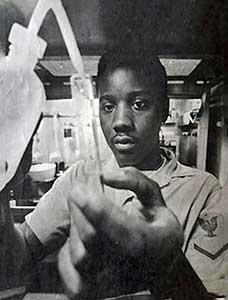
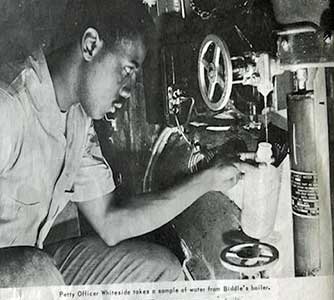
When John arrived in Maine, the ship was still in the shipyard. He learned about engineering, the boilers, and a variety of other work assignments. He had certain machinery that he had to take care of, like the air compressor and the water pumps. Previous ships of that type had boilers that operated on 600psi but the Biddle was operating at 1200. He had been assigned to the ship for about a year when he became a Petty Officer Third Class (PO3), and wanted to do more. The guy who was the oil king aboard the ship was getting discharged, and John wanted that job. He put in for the job, and was approved to get the necessary training and certification.
“They sent me to school in Newport, Connecticut. There were about 25 people in the class, and we studied intensely. We were in class eight hours a day, then you had to do your work and your homework and all of that stuff. Out of all of us in the class, only about three of us passed the class, and I was one of the people that passed.”
John couldn’t get the job as Oil King or Water King unless he was certified. Once he completed the schooling and received his certification, he got the job that he had put in for. When out to sea, water and oil are critical to the running of the ship. Some ships have both an Oil King and a Water King. In the case of the Biddle, John performed both roles. With a crew of 377, the ship required 10,000 gallons of water each day and about 20,000 gallons of oil per day. Keeping track of all that was complicated and took a lot of effort. John explained, “Salt was our biggest problem. We would get bad water from our evaps or sometimes a shot of salt would get into our good water and we would have to get rid of the whole load of boiler water and start over. If we got any water into our fuel oil we would have to re-pump the oil back into the tanks and the water over the side.”
The ship was commissioned in Boston on January 21, 1967 and officially became a part of the US Navy. Before the ship would head to Vietnam though, it had to undergo a shakedown cruise. A shakedown cruise is a final, intensive test run of a new ship or vessel to ensure all systems function properly before official service. “Once we were commissioned, we went to our home port in Norfolk, Virginia. Then we had to go through a whole lot of stuff in the Caribbean in Cuba, Jamaica and Puerto Rico. We had a gun range in Puerto Rico where we trained on the guns and at the missile range.”
Once they had qualified with the guns and the missiles, they performed many short cruises between Norfolk, Virginia and Mayport Naval Base in Florida. Finally, on January 22, 1968, the USS Biddle put to sea bound ultimately for the combat zone off the coast of Vietnam. Along the way, she cruised through the Panama Canal. John recalled, “Midway through the Panama Canal was a city which was very interesting. All the people there work on the canal from the East Coast to the West Coast. And it seemed like every race in the world lived there. There were Africans, Europeans, Asians, everybody. I must have heard about 50 different languages. And wow, that was very, very interesting.”
The long trip to Vietnam took some time, but according to John, they were moving fast. “In the open seas we were steaming at 34 knots. The Biddle was a big destroyer built on a light cruiser frame. Since the ship was new and had they newest technology, the Navy wanted to see how the ship would operate and how fast it could go. So we put the ship through its paces.”
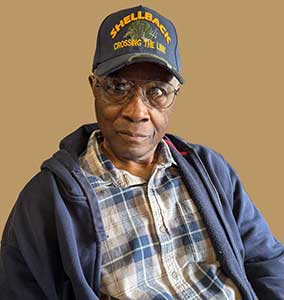
Once the ship left Hawaii they crossed the International Date Line (IDL). Crossing it westward adds a day while crossing eastward subtracts a day. It ensures consistent timekeeping across the globe. John explained the ceremony they had on board the ship as they crossed the IDL. “The ‘Crossing the Line’ ritual involves transforming from a Pollywog to a Trusty Shellback through tests conducted by the crew. Pollywogs are sailors who have never crossed the equator, while Shellbacks are seasoned veterans who have crossed.”
The ship made stops at Pearl Harbor and Guam before reaching her base of operations at Subic Bay in the Philippines and then ultimately entering port at Danang, South Vietnam, on March 5th. For the next four months, Biddle alternated between periods at sea—either carrying out PIRAZ (Positive Identification Radar Advisory Zone) duty, serving as an anti-air warfare (AAW) picket, or acting as a sea-air rescue (SAR) vessel—with time in port at Subic Bay or Yokosuka, Japan.
Aboard the ship John performed the dual role of Water King and Oil King. At just 22 years of age, he served a very critical role. He divided his time between a small room that resembled a chemistry lab and another space in one of the ship’s two boiler rooms. He functioned as a chemist, a meter reader and a bookkeeper. And John was the only person on the ship qualified to do the job. The Biddle had four boilers and John was responsible for testing all of them.
“I had to constantly test the water to make sure no salt got in the boiler. Salt would tear everything up. So my job was to keep out the salt. Make sure the salt didn’t get into the boilers or the drinking water. The primary job was making sure the boilers would run smoothly to power the ship.”
Everything on the ship started with the boilers. The boilers made the steam. The steam turned the turbines, and the turbines made electricity that ran everything on the ship. The ship did have an electric engine at the rear end of the ship they could use for emergency power. It was a 20-cylinder engine that could generate minimal power to keep the ship going. Before John was promoted, he had worked around that engine and was familiar with it.
During his time in the Navy, John never put boots on the ground in Vietnam but he did visit many ports as the ship completed a circumnavigation of the world. The ship visited ports in the Philippines, Singapore, Hong Kong, Japan, Taiwan, Portugal and Denmark as it made its way back to Norfolk, VA. John recalled two memorable trips to Japan during his time in the Navy. “Once I visited Tokyo to see a show. I was always fascinated in the culture of people. The show had men dressed like women with the white makeup on their face and I thought that was very interesting. Another time I attended the Black Ship Festival in Japan and you know people were getting drunk and being loud and the shore patrol came and everybody started running and a couple guys that were running fell into the open latrines.”
By the time the ship returned to Norfolk, John was nearing the end of his tour. John transferred to a ship in the shipyard called The Stanley (GLG 32) to serve out his remaining 90 days. He was discharged on a Friday and headed home to immediately start looking for a job. The very first place he went looking for work was at Electric Motors, which was a division of General Motors. They were impressed with him and they hired him on the spot. He was shocked to find out that his job would tie him back to his time on the Biddle. John laughed as he told me, “Do you know what they made there? They made that very same electric engine that we had on the Biddle for emergency power. So I wound up making those same engines once I got out of the Navy. Those engines are the same ones that they put in the Sears building and all those tall buildings downtown in case they lose power. Those engines would kick on the power for the elevators and all of the things needed in those tall buildings.”
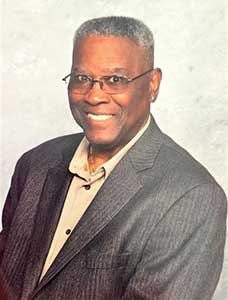
John would work there for years until the facility closed. He then went on to work for NAPA, a genuine parts company, at Midway Airport, taking care of the equipment for the City of Chicago. The city was his only customer and he was in charge of selling them whatever they needed to keep their equipment going. He worked there until he retired in 2015. John was married twice and has four children and four grandchildren and enjoys fishing whenever he can find time.
John, thank you very much for your dedicated service. Please enjoy your well-deserved trip to Washington D.C.!