
Navy Vietnam War Midlothian, IL Flight date: 05/20/26
By Al Konieczka, Honor Flight Chicago Veteran Interview Volunteer
Larry Beall was born in Jacksonville, Florida and raised just north of there in Brunswick, Georgia. He graduated high school and from there went to Nashville, Tennessee ,to a trade school called Nashville Oil and Diesel College. He spent a year taking courses that included auto mechanics, diesel mechanics, and welding. When he finished school in May 1966, he went to work for Tidewater Equipment Company as a welder.
In August of 1966 Larry received his draft notice from Uncle Sam. He decided to join the Navy under a delayed enlistment program so he didn’t have to report until February of 1967. I asked Larry why he decided to join the Navy in the first place. “My dad was also a Seabee. He served in the Naval Mobile Construction Battalion 71 (MCB 71) during World War II. So I’m a second generation Seabee.” The U.S. Navy Seabees (from the acronym CB – Construction Battalion) are specialized naval forces that build and repair infrastructure in combat and humanitarian zones, adhering to the motto “We Build, We Fight”. Established in 1942, they are skilled tradespeople—including builders, mechanics, and electricians—who can work under fire, build airstrips, roads, bridges, and housing for military personnel worldwide.
Larry knew he wanted to go into the Navy, but he only wanted to attend boot camp at the Naval Base in San Diego. “I hadn’t planned on going into Seabees, but I had the trade school behind me, and I knew that was pretty much a given that I would do that. In fact, I went in as a construction apprentice. I had two stripes going in where you only get one in boot camp and then you get a second one after boot camp. I had two stripes going in.” So when Larry got out of boot camp, he was rated construction mechanic heavy equipment. They also found out he could weld, and when he got to battalion, he was put into the steel shop, because they needed a welder.
After boot camp, he was assigned to the Great Lakes Naval Base in Illinois. “I got special tourist shore duty at Great Lakes, Illinois, serving one year in public works. On the way to San Diego, we stopped at Dallas, and I got off the plane to stretch my legs a second. I met one of my friends that I’d been in trade school with, Frankie Suber. He was on the flight going out there too. He was from Florida and they flew him to Dallas, and he was getting on the same plane I was on. We ended up going to Great Lakes together, working in the grounds division. Throughout the whole thing, our orders were almost carbon copies.”
Larry was at Great Lakes from May of ‘67 to May of ’68 and before he would leave for Vietnam he would be married and have a baby on the way. “On February 17, 1968, I got married to Veronica. I met her on a blind date, Labor Day weekend. When I finally got transferred to Battalion at Gulfport I knew I would be going to Vietnam with a wife and now a baby on the way.”
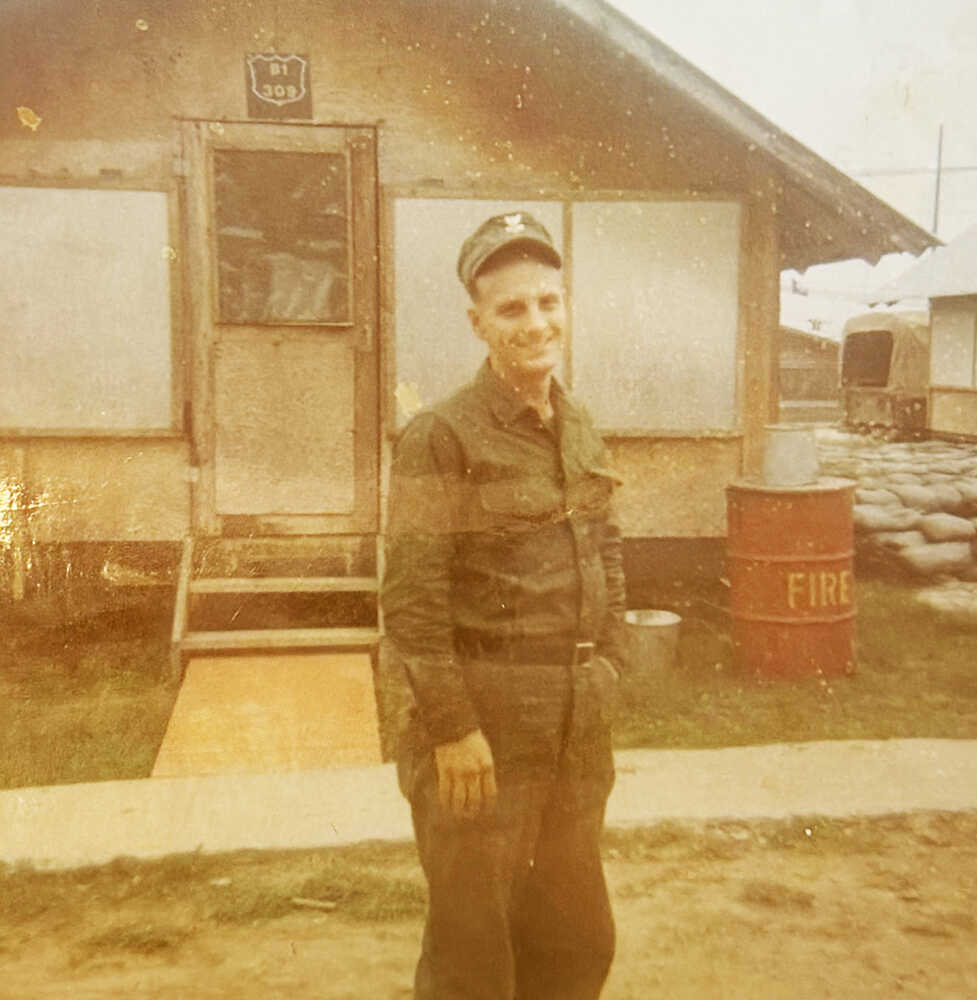
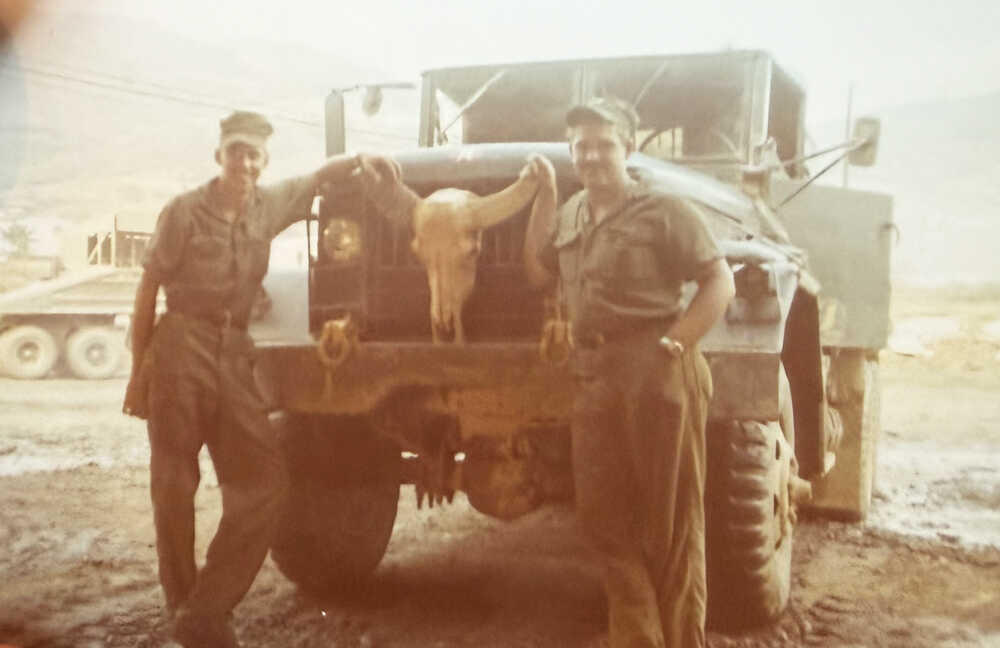
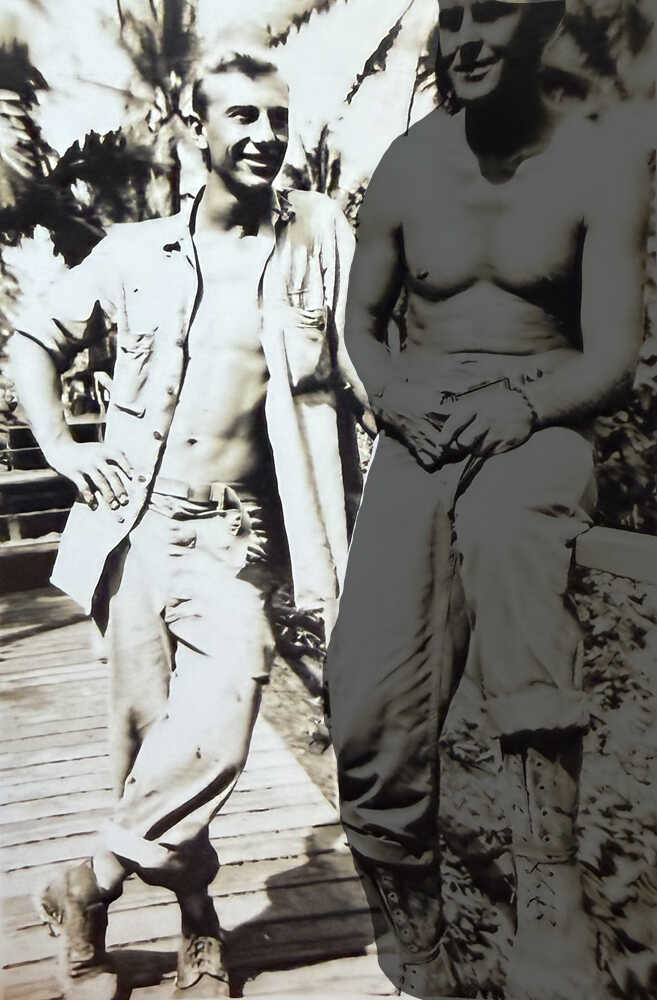
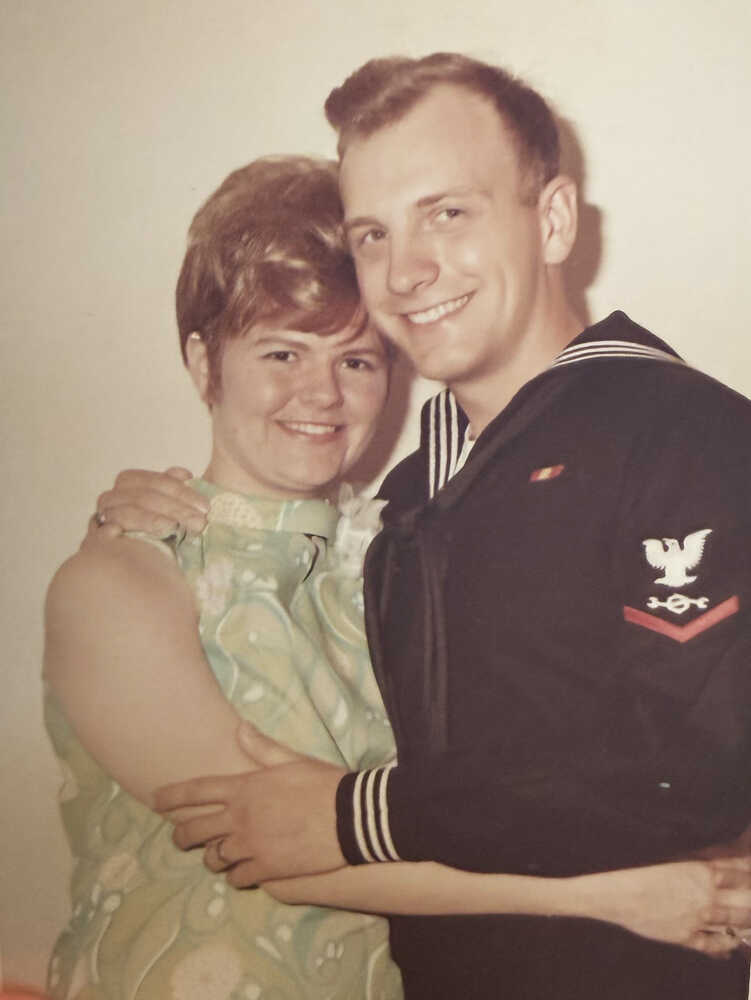
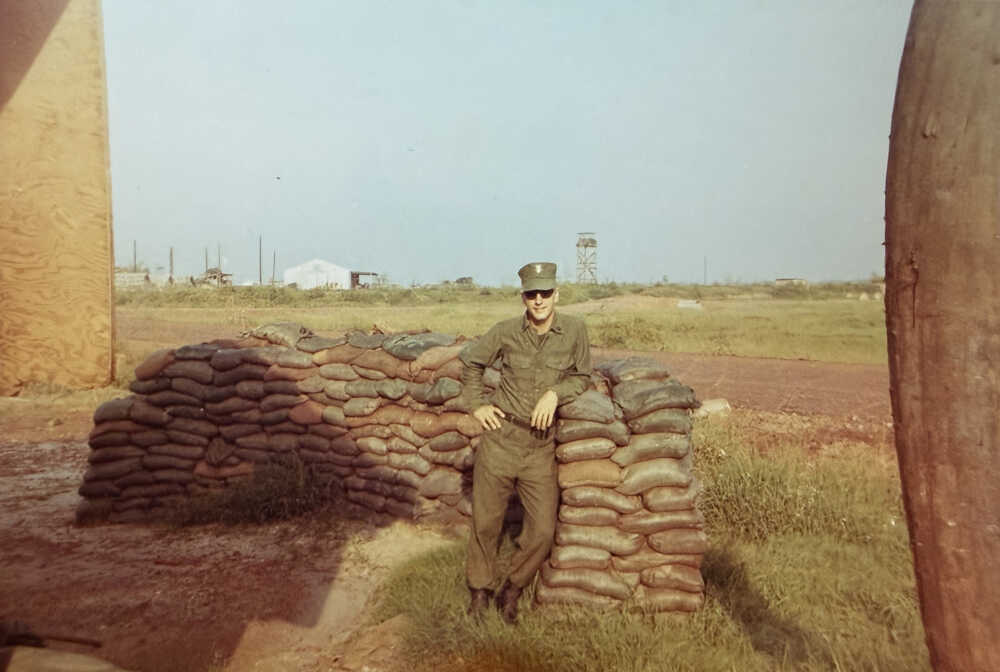
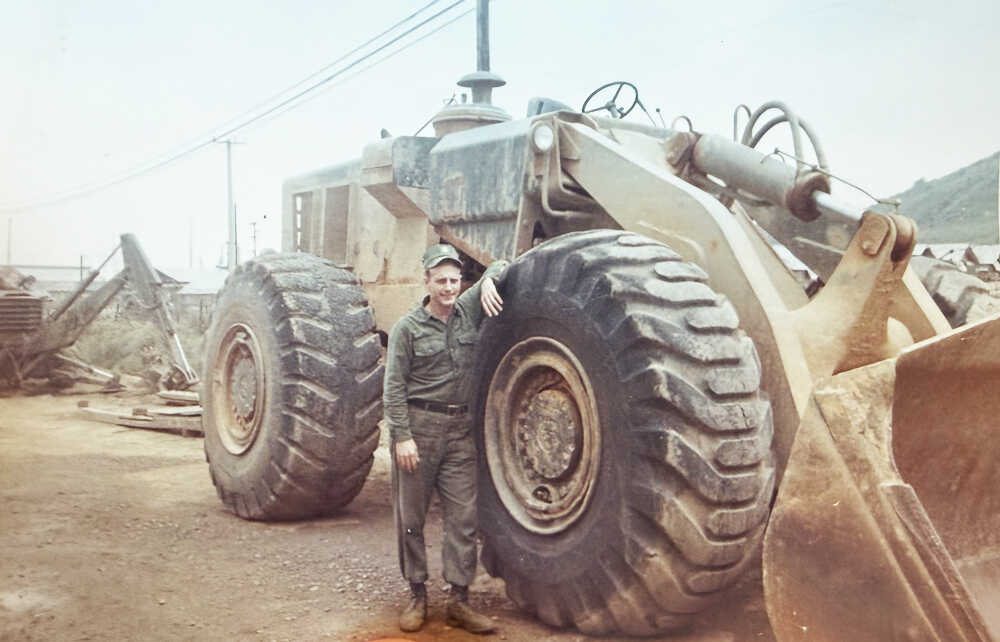
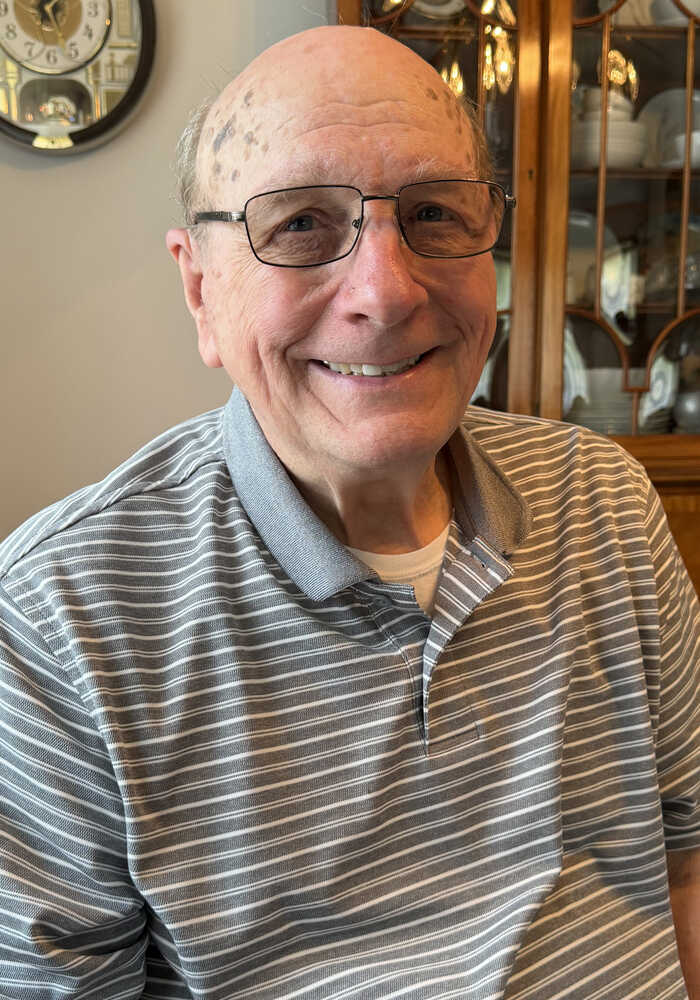
Larry’s wife would stay with her father in Oklahoma during Larry’s first deployment. By June, Larry was sent to the Naval Construction Battalion Center in Gulfport, MS for about four to six weeks. “We had rifle range tactics and class training on claymores and things like that. I was there in June and Gene Dixon was predicting at that time I would not want to be in Chu Lai in July. Guess where I went? Chu Lai in July.”
Larry headed to Vietnam on a US Air Force C-141 Starlifter in a jump seat. He flew out of Gulfport, Mississippi and then into Elmendorf Air Force Base in Alaska. After a stop in Japan he flew directly into Chu Lai. When Larry landed in Vietnam he would soon find out that the weather was not the only thing hot in Vietnam. “Our area was a hot spot. Across the road from our camp was Marine Air Group 12 and 13. About the mid part of the month we had like 40 rocket rounds come into an airstrip where we were. The beach was right on the South China Sea so they trafficked a runway there. I was there during the bombing halt that lasted 26 hours. You did not talk or speak unless you read lips or use sign language because the phantoms were taken off. And from what I understood, one of the guys working over by the base said they’d pull up to a staging area, rearm, refuel, and they’d be off again. Then at midnight, you didn’t hear anything but the choppers running in front of you. And still to this day, when I hear a chopper, I get a cold chill up my back. That Huey has a unique sound. And they were flying the perimeter. Our huts were like almost on the beach, and they’d fly that beach line, and then go around on the mountainside. By the time one had come and be almost out of sight, there would be another one coming. They flew 24-7. They were up about 200 feet and that was just normal over there. You knew if you heard a Huey, you were okay.”
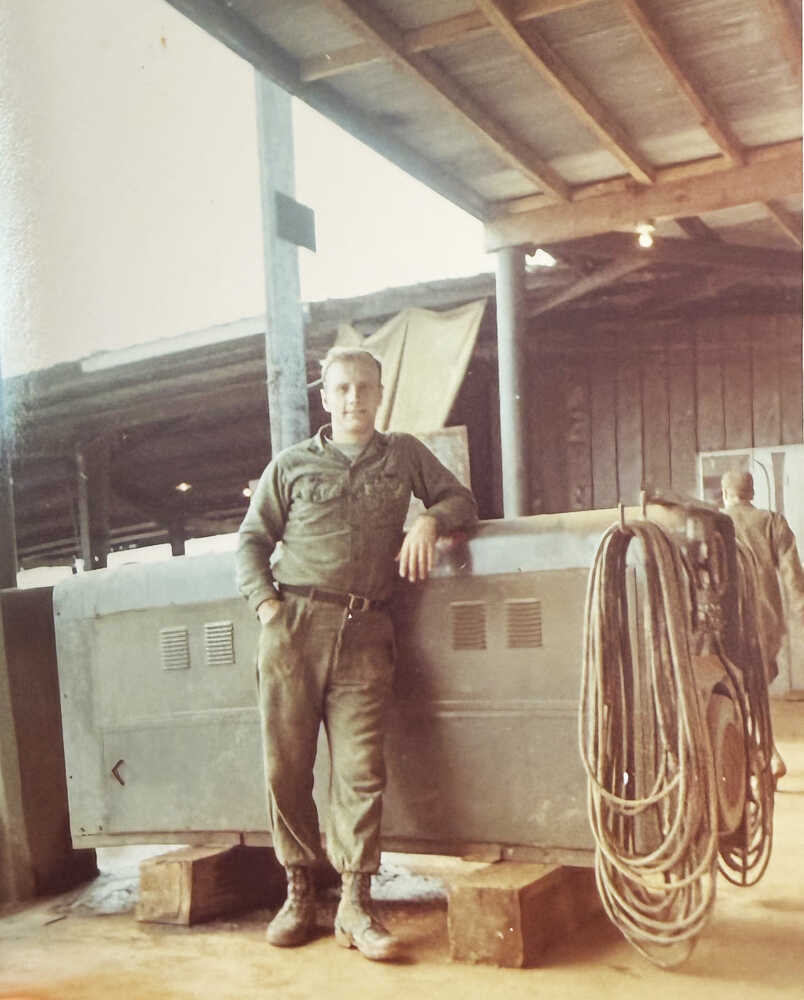
During his first and second deployment, Larry worked in the steel shop. The shop was in charge of welding and repairing all types of heavy construction equipment to keep the war efforts moving forward. “I was a third-class petty officer at the time. Shortly afterwards, I got promoted to second-class field promotion. Frankie Suber and I worked in the steel shop as welders because we had the exact same training.”
The work was challenging, difficult and sometimes dangerous even inside the shop. “Once we ended up with a case of chicken noodle soup and Frankie was going to cook that chicken noodle soup. Well, he set the can on top of a vise, and was going to use the acetylene torch and heat it up a little bit. And I looked about the time I wanted to yell. It was too late. He didn’t open the can so it blew up. His mouth opened up big enough he could have backed a semi into it. His eyes got big and there were noodles all the way up to the rafters.”
Larry would remain in Chu Lai until early 1969 before returning home and reporting back to the Naval Construction Battalion Center in Gulfport, Mississippi. In February he was able to meet up with his wife and celebrate their first wedding anniversary and to meet his 3-month-old daughter for the first time. “I had some leave and the wife and I rented a U-Haul trailer with everything we owned and a crib in the back seat. We drove down to Gulfport and got us an apartment where we stayed for six months until August. During that six months, I got sent to Camp Lejeune for two weeks of NCO training.”
When Larry left for his second tour in Vietnam, it was just before a major storm. “I left Gulfport, Mississippi at noon before Hurricane Camille came in at midnight. I didn’t know for almost a week if my wife and baby were dead or alive.” Hurricane Camille was one of the most powerful hurricanes to make landfall in the United States when it hit southern Mississippi on August 14, 1969 just 12 hours after Larry’s plane had left for Vietnam. Winds were clocked in excess of 210 miles an hour at Gulfport Airport. Larry remembered the pilots talking about the storm as they were loading the plane. “I heard one of them say to the other, get that thing loaded. Let’s get out of here. That son of a bitch is coming in. It was almost a week before I got a hand-carried letter from my wife saying they were OK.”
Larry’s second tour landed him briefly in Da Nang. “About 10 am they loaded us on a C-130 and we flew up to Quang Tri. Quang Tri had just a small airport so they couldn’t get jets in there. After we were at Quang Tri just two weeks, they moved the battalion out and left the detachment, mostly A company, to work on Highway 1 between the Phu Bai and the DMZ. I was part of a company that ran the steel shop. I had three steel workers working under me.”
Known as Phu Bai Combat Base, it served as a crucial airfield and logistical hub for U.S. forces, including the 101st Airborne Division, particularly during the 1968 TET Offensive. During his time in Quang Tri managing the steel shop, Larry and his crew continued to weld and repair heavy equipment. “We all worked together. I taught them some things, they taught me some things. One time I had a big water tanker. I had to spend a day down in that thing, maybe two days, in the hot sun. It was Battleship Gray. I had to go in through the center hatch, crawl through a baffle and get to the back. A hydraulic pump was mounted there and the pump was bad. I had to cut out the mount and weld in a new mount for the new pump. And it was so hot. I worked down in there for an hour or so and I had to come out and cool off a minute or two and then go back. But I got it done.”
From front end loaders, to earth movers, to Euclid dump trucks, Larry and his crew repaired and maintained them all. They had to not only be excellent welders, but problem solvers using what they had available to them to get the job done. Larry was very fortunate that he spent little time in the field and most of his two tours were spent in the steel shop. But he did learn something about the Seabees in Vietnam. “While we were there, our field crews could go out in the boonies and drill wells. We had a well drilling crew. We modified a five-ton dump truck by taking the dump off of it, and put a tank on it. And the drill crew would take that out in the field and drill. And oddly enough, they never got attacked. And you look at them when they came back in. They had their shirts open, no helmet, no flak jacket, just a green hat, green uniform, and covered in dust. They never got messed with. Come to find out that the Vietnamese, we understood, were deathly afraid of a crazy man. And they knew for a fact the US Navy Seabees were crazy.”
Larry would remain in Quang Tri from August of 1969 to May of 1970 before being transferred to Camp Hoover at Da Nang about a month before being sent home. Larry flew back to his base at Gulfport, MS and was met by his wife and mother-in-law. They stayed the night at a local hotel and the next day, he went back to the base. They gave him all his discharge papers, and he was checked out around 2am that morning. The family headed back to Brunswick, Georgia, so Larry could start to look for work. His options weren’t looking very good and he was thinking about re-enlisting because the hourly wages were too low to support his family. “I thought, before I go to work for that amount, I’ll go back to Vietnam. I had three months where I could still re-up and not lose any time. My recruiter told me, you’ll probably go to Japan or the Bahamas or somewhere like that. I said, I’ve got a wife and a baby. What are my chances of taking them with me? He cringed a little bit and said maybe 50 -50.”
Larry knew that Vietnam was still going hot and heavy in the middle of 1970 and he really didn’t want to go back to Vietnam and leave his family again. Larry and his family stayed in Georgia from May through August working vacation relief at the pulp and paper mill where his dad had worked for over 20 years. He then then moved north and worked briefly at Central Steel before landing a job with McLean trucking in September of 70. He worked his way up from helper mechanic to mechanic and ultimately to foreman. He worked there until the company closed. “When they folded, I had been taking classes at Prairie State College in industrial management supervision. I had an Associate’s Degree in Science and with that I went to work at Carolina Freight as a shop manager. I remained in that role until December 31st, 2020, when I retired at the age of 73.”
Larry received the Vietnam Service Medal and Vietnam Campaign Medal with two stars for his service in Vietnam. He and his wife, Veronica, have been married for 58 years and have three children – two sons and a daughter and four grandchildren. Larry enjoys spending time with his family and also enjoys watching stock car racing, a passion he’s had since he was about 14 years old.
Larry, thank you very much for your dedicated service to our country and please enjoy your well-deserved trip to Washington D.C.!