

Army Vietnam Chicago, IL Flight date: 09/23/26
By Marilyn Lucas, Honor Flight Chicago Veteran Interview Volunteer
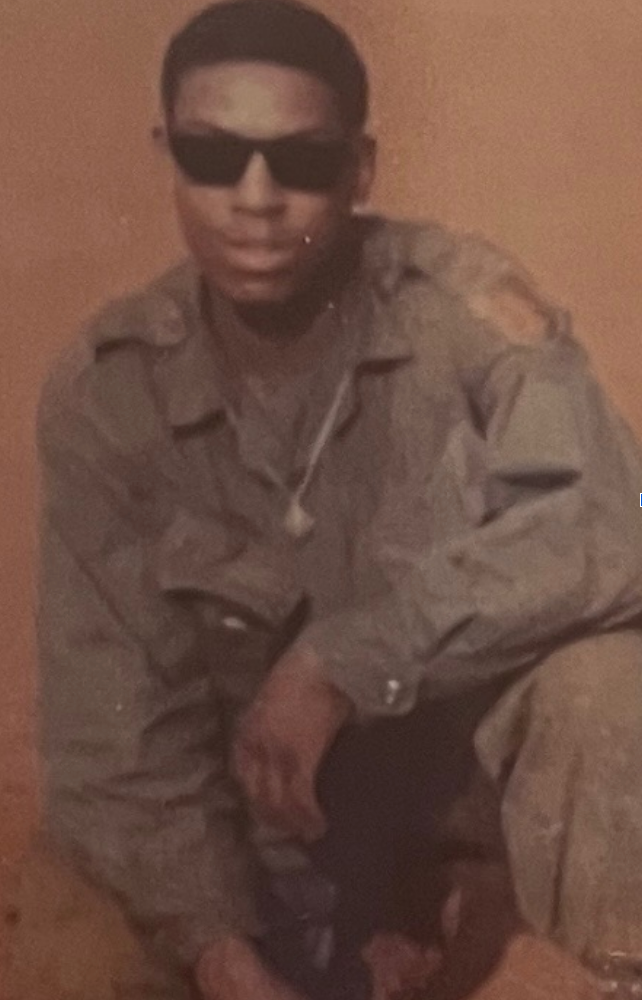
Army private E1 Lawrence Jones was drafted into the Army in 1966 while attending Harold Washington College. He reported for duty in 1967 the day after New Year’s. Training at Fort Polk, Louisiana covered a myriad of potential positions Laurence would be responsible for in Vietnam.
The value of an individual life is often shaped not by abstract ideas but behind how well one responds to unexpected demands. Laurence Jones did not enter military service seeking glory or adventure. In late 1966 he was simply a young man from Chicago answering a call to serve. At the time, he was attending classes at Harold Washington College in downtown Chicago, focusing on his education and planning an ordinary working life. During the height of the Vietnam War the selective service system drew heavily upon Urban centers like Chicago, requiring tens of thousands of young men to leave their schools, jobs, and homes. Jones did not fight the draft or attempt to evade it. He understood his call to serve, reported for duty and was inducted into the United States Army at the entry rank of a private E1.
His arrival into military life in 1967 placed him on an immediate path toward combat operations due to the escalation of the war in Vietnam. For a city youth accustomed to urban streets and college classrooms, the rapid shift into the strict discipline of the Armed Forces was a process designed to strip away individual habits and replace them with behaviors conducive to collective utility and mutual survival.
Fort Polk “Tiger Land”
Before entering combat, Jones was sent to Fort Polk, Louisiana for basic combat training and advanced infantry instruction. Fort Polk in late 1966 was notorious amongst soldiers as one of the most grueling and demanding installations in the United States military. Known throughout the army by its moniker “Tiger Land“, The base was specifically engineered to simulate the brutal environmental and operational conditions recruits would face in Southeast Asia. It was known infamously as “little Vietnam“ and “The birthplace of the combat infantry man“. Training went beyond standard basic requirements to emphasize survival skills used against the Viet Cong. Recruits learned to spot booby traps, land mines,and punji stake pits, a favorite of the Viet Cong: (Guerrillas would harvest local bamboo, shave the ends into razor sharp spikes; a shallow hole was dug along jungle paths, near stream banks, or in tall elephant grass where soldiers were likely to walk or dive for cover. The stakes were placed upright at the bottom of the pit and camouflaged, specifically designed to maim, not kill. The tips were frequently coated in human feces, animal dung, or tropical plant poisons. The severe secondary infections caused would hospitalize a soldier for weeks.) To say the training at Fort Polk was intense was an understatement. The climate of Western Louisiana was unforgiving. Recruits were thrust into heavy, oppressive humidity, unrelenting heat during the warmer months, and persistent rain that converted the red clay soil into thick, boot sucking mud, which he would later encounter in Vietnam after the rains.
The terrain consisted of dense pine forest, treacherous swamps and scrub brush teaming with chiggers, ticks, and venomous snakes. The physical discomfort served a practical purpose: it systematically desensitized recruits to environmental misery so that climate alone would not break their operational focus and combat. Lawrence laughingly referred to the red clay soil as a true introduction into what he would experience in Vietnam. Days began before dawn with calisthenics, followed by grueling forced marches carrying full combat loads through deep sand and standing water. Instructors, many of them combat veterans with recent tours, constructed simulated Vietnamese villages complete with punchy stick pits, camouflage type wires, and underground bunker networks. Recruits were drilled repeatedly in reaction to ambush, weapon maintenance, underwent wet conditions, and squad cohesion, for Jones Fort Polk became the conversion of a civilian college student into a functional combat infantry man, with the physical stamina and instinctive reactions that would sustain his life in the months ahead.
The Big Red One and the Blue Spaders
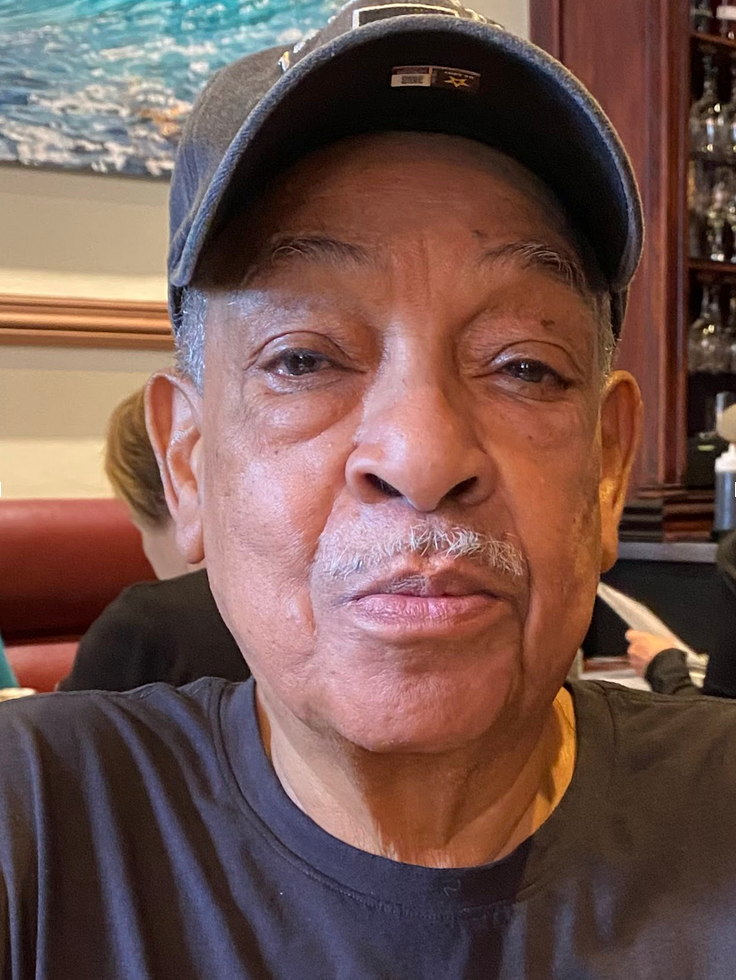
In January 1967 Jones received his deployment orders and departed for South Vietnam beginning an intense combat tour that spanned two continuous years concluding in January 1969. Upon arrival in theater, he was assigned to Delta company of the famed first infantry division historically recognized worldwide as the “Big Red One”. (He proudly wears his hat today)
Within the division Jones served as part of the 26th infantry regiment known as the “Blue Spaders’s, “a designation earned from the blue spade featured prominently on the regimental crest. Delta company operated at the point of friction in a three course tactical zone, an operational sector northwest of Saigon characterized by dense jungles, expansive rubber plantations (owned by Michelin) and complex enemy base camps.
Jones entered the theater with a strictly practical goal: To survive and ensure his squad members did the same. Survival in an active combat zone certainly requires adaptability. During his 24 months in the field Jones fulfilled several of the most dangerous assignments a man can undertake. He rotated through duties as a point man the lead soldier walking ahead of the patrol(Lawrence made special note of the Korean War monument where the soldiers are standing just as they would have walking into the jungle) who is tasked with spotting ambushes, snipers, and booby traps before his squad walked into them, he also served as a flank man, moving through rough vegetation along the side of the convoy to protect against in incoming fire. They served where needed!
He also provided heavy fire power, serving as an M 60 machine gunner to suppress enemy attacks, as well as an M 79 carrying the “thumper “that launched 40 mm explosive rounds into enemy fighting positions. Additionally, he functioned as an arrow rifleman, inserting into combat via utility helicopters directly into active loading zones to reinforce units in combat or conduct rapid sweeps. His primary mission objective throughout these varied roles was: search to destroy operations designed to disrupt North Vietnamese army and vehicle staging areas before they could threaten major civilian populations.
Much of Jones combat service centered along one of the most strategically significant and parallel transportation arteries in South Vietnam: Highway 13. Running from Saigon North through Ben Duran andBen provinces all the way to the border of Cambodia Highway 13 “thunder road“ named by the troops who patrolled it. It was vital for Allied logistics. It was the principal ground conduit for transporting ammunition, food, and fuel to various military bases.
Because Highway 13 represented the logistical lifeline of the area, it was subjected to constant, aggressive actions by communist forces. The road edpasses through the infamous Michelin rubber plantation and skirted the edges of the “iron triangle, regions heavily fortified with subterranean tunnels and occupied by well organized regiments of the VC and NVA. The enemy frequently buried explosives in the asphalt, and built complex ambushes using command detonated minds that could snipe a convoy from the dense neatly spaced rolls of rubber trees. Securing Highway 13 was critical. Delta company spent months clearing both sides of the corridor, providing mechanized security for supply convoys, conducting daily mind sweeping operations, and engaging enemy who wereforces attempting to sever severthe route.
During an operation near Highway 13, Delta company encountered a heavily prepared enemy ambush. Trapped in the kill zone under intense small arms, mortar, and rocket propelled grenade fire, the unit was in danger of destruction. Maintaining a calm demeanor was extremely necessary. whereDespite being wounded, Jones held his ground delivering decisive counter fire and assisting in the extraction and protection of his fellow soldiers. For his extraordinary valor, calmness under fire, and effective defensive actions during his engagement, he was awarded the Bronze Star with” V” device ( signifying combat heroism).
His tour in Vietnam was defined by constant hazard. Over the course of his service Jones was wounded in action on two separate occasions, resulting in two awards of the Purple Heart. He continued his tour through early 1968 facing the mass operational upheaval of the Tet Offensive, with enemy forces launching launchingsynchronized, nationwide attacks against Allied bases and administrative centers. During this time . Delta company was thrust into counter offensive missions to clear perimeter sectors, maintain communication lines, and suppress concentrated enemy offensive around Saigon in the surrounding province.
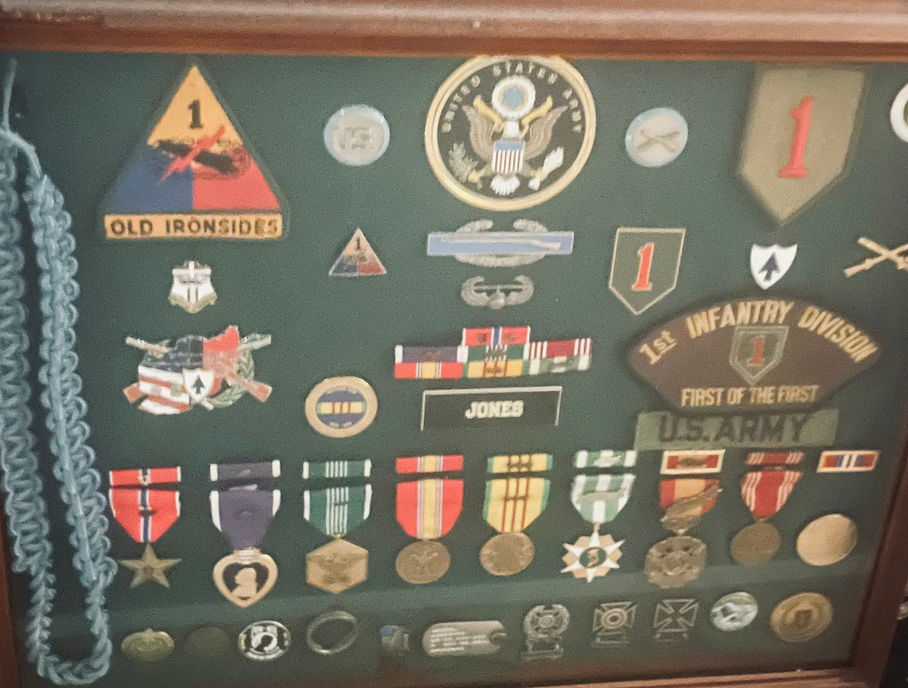
By the time he concluded his combat tour in January 1969, Jones had earned an extensive set of decorations reflecting both sustained duty and direct engagement with the enemy.
Combat Infantry Badge
Bronze Star with “V” device
Purple Heart with Oak Leaf Cluster, representing two awards
Army Acomadation Medal
National Defense Service Medal
Sharp Shooter Qualification Badge
Vietnam Service Medal
Republic of Vietnam Cross of Gallantry
Republic of Vietnam Campaign Medal
And of course, Good Conduct Medal
Returning to the United States in 1969 Jones faced a difficult transition, to many combat veterans the war left indelible physical and psychological marks. He was eventually classified as 100% service connected disabled as a direct consequence of his wounds and operational trauma.
Rather than allowing disability to stall his contributions, Jones established a stable productive civilian life in Chicago. He married Adele, building a partnership that lasted 55 years. Together, they raised their children, expanding their family circle to include grandchildren, who benefited directly from his positive attitude.
Jones joined the local Carpenter’s Union in Chicago, applying practical skills to the city’s building trade, while physical limitations from his wartime service were present. His civilian career was built on honest methodical labor.
To manage the long-term impact of his injuries, Jones has consistently utilized the Department of Veteran’s Affairs (VA) hospital system. He’s very pleased with the care and treatment he receives from the VA, acknowledging that the medical teams provide the vital rehabilitation support and health monitoring necessary to maintain a dignified quality of life.
Reflecting on his path from a drafted student at Harold Washington College to a decorated veteran, Jones maintains a realistic, constructive philosophy. While he entered the military simply looking to survive, he came to believe that military discipline and structure provide a formative example for young people. In his view, military experience imparts resilience, mutual accountability, and practical application preparing one preparationfor the inevitable hardships of life. His legacy remains that of an ordinary citizen, who answered a call to duty thus experiencing the heavy cost of combat, and returned to contribute meaningfully to his family and community.