Army Vietnam War Bourbonnais, IL Flight date: 10/28/26
By Kenna Rathai, Honor Flight Chicago Veteran Interview Volunteer
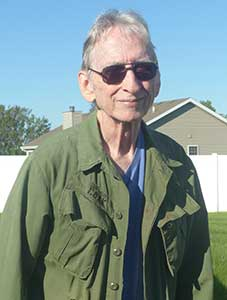
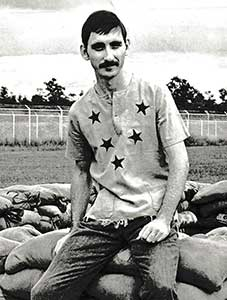
When Mike Cook enlisted in the U.S. Army in September 1970, he had no idea that a talent for a language he’d never studied would shape his military service. Or that he would spend much of his time overseas translating North Vietnamese radio communications from a base in Thailand.
Born and raised in Muncie, Indiana, Mike grew up with a brother and sister in a community where Ball Brothers, known for its glass canning jars, was a major employer. His family worked for the company. After graduating from Indiana University with a degree in political science, Mike faced the reality of the Vietnam War draft.
With a relatively low draft lottery number, he decided to enlist rather than wait to be called.
Mike joined the Army Security Agency (ASA), the Army’s signal intelligence organization. Following basic training at Fort Leonard Wood, Missouri, screening tests identified him as a promising candidate for language training. He was sent to the Defense Language Institute at Fort Bliss, Texas, where he spent 47 weeks learning Vietnamese, specifically the Hanoi dialect spoken in northern Vietnam.
The results surprised even Mike. Although he’d been an average student in Spanish and French, he excelled at Vietnamese, graduating first in his class.
His language skills may have faded over the years, but his sense of humor hasn’t. As he puts it, these days a Hanoi toddler would probably have a better Vietnamese vocabulary than he does.
After language school, Mike spent another 11 weeks at Goodfellow Air Force Base in San Angelo, Texas, learning about signals intelligence, North Vietnamese Army (NVA) operations and his responsibilities as a translator.
He was then assigned to the 7th Radio Research Field Station in northeast Thailand, where his work provided intelligence about North Vietnamese military activity.
The station operated around the clock, using a powerful antenna array capable of intercepting radio communications from many miles away. Specialists monitored and decoded messages, which were then passed along to translators like Mike. His team, generally consisting of three or four translators per shift, focused primarily on NVA communications originating in northern Laos.
The messages covered everything from battlefield reports and troop movements to supplies and other logistical activities. Mike and his fellow translators turned those communications into information that could help military analysts understand and respond to enemy operations.
Occasionally, something unusual came across the airwaves.
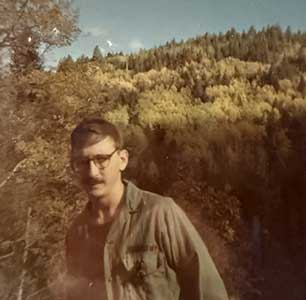
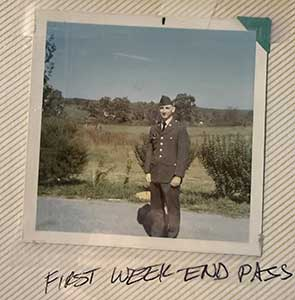
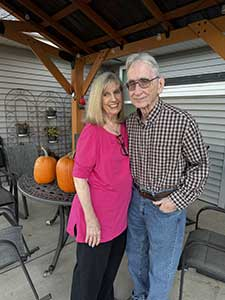
Mike recalls translating a conversation in which North Vietnamese soldiers reported discovering an American radio beacon in territory they controlled. The soldiers were astonished that the device had somehow been installed there. Mike recognized that they weren’t talking about the more familiar sensors used along the Ho Chi Minh Trail.
He translated the message as he normally would, but the report attracted attention from higher-ranking officials. Mike was called in to confirm that he’d translated it correctly because the beacon’s presence was apparently a closely guarded secret.
Much of Mike’s work involved routine intelligence reporting, but moments like that demonstrated the potential importance of what he and his fellow translators were discovering.
While his duties were serious, Mike also remembers the friendships he developed. Some of the men had trained together for more than a year before deploying and working together overseas strengthened those bonds.
One of his favorite memories came when he and a buddy managed to attend a Bob Hope USO show at a nearby air base around Christmas.
Mike remembers the emotional impact when Hope sang “I’ll Be Home for Christmas.” It was a poignant moment for service members spending the holidays far from their families.
Although Mike acknowledges that his assignment was safer and more comfortable than the experiences of those serving in combat, he hopes his work made a difference.
“My tour was safe and easy compared to combat roles, but I hope the translations were useful to our overall effort.”
After two years and seven months in the Army, Mike took advantage of an early-release program in April 1973 as the military reduced its forces. His first priority was reconnecting with family. From there, he began a 30-year career with the Social Security Administration in the Chicago area. Starting as a claims representative, he later worked in public information, giving presentations, writing newspaper articles and producing radio spots. He eventually moved into supervisory and management roles, retiring as a district manager.
Mike married his wife, Susan, in 2005. Now retired, they live in Bourbonnais, Illinois.
As Mike prepares for his Honor Flight Chicago experience, he’s especially looking forward to sharing the day with fellow veterans. The opportunity comes at a meaningful time, following the recent loss of his youngest daughter.
Making the experience even more special is the fact that his oldest daughter, Linda, will accompany him as his guardian.
Mike is grateful to the organizers and volunteers who make the trip possible, and he looks forward to the camaraderie and connections the day will bring.
For a man whose military service involved translating voices from far away, the Honor Flight Chicago will offer something different: a chance to share memories and experiences with others who understand what it meant to serve.