
Army Vietnam War St. Charles, IL Flight date: 05/20/26
By Mark Splitstone, Honor Flight Chicago Veteran Interview Volunteer
Rob Anderson was born in Iowa in 1949, and after moving around a bit while he was growing up, his family eventually settled down in LaGrange, Illinois. His family was familiar with military service, with his dad serving in the Army Air Corps during World War II and his brother serving in the Army in Vietnam. Although Rob says he had a good childhood, he had never really figured out what he wanted to do with his life, and after he graduated from Lyons Township High School in 1967, he decided to enroll at Western Illinois University. Unfortunately, he didn’t really like it there, either, and soon after dropping out, he received his draft notice. He recalls going to the recruiting station with a bunch of other draftees, who all looked as nervous as he felt. When a Marine recruiter told them that he needed five volunteers for the Marines, Rob says that everyone just looked down and tried not to get noticed. He wasn’t one of the men chosen for that branch and instead was inducted into the U.S. Army on June 17, 1969.
Rob did his basic training and Advanced Infantry Training at Fort Polk in Louisiana. Despite being in good shape, he says that basic training was more difficult than he expected, and the recruits there derisively referred to the base as Fort Puke. He says the three goals of basic training are to get in shape, to learn to follow orders, and to learn how to kill people. His MOS training was firing a 106mm recoilless rifle off the back of a moving jeep, and in the right type of war, this would have been a powerful weapon. Given the nature of the war in Vietnam, though, there wasn’t much of a need for it. He was eventually assigned to the 101st Airborne Division. The “Screaming Eagles” had become a legendary unit during World War II, but Rob says he doesn’t recall learning much about its history at the time. After five months at Fort Polk, Rob was on his way to Vietnam.
Rob didn’t have much time to get acclimated to Vietnam, and instead was sent almost immediately to the jungle. He would spend most of the next year in the jungles west of Hue, not far from the DMZ. He says that in the jungle the object for both sides of the conflict was the same: “Our assignment was to find and kill them, and their assignment was to find and kill us.” In every firefight in which he was involved, though, there was one thing that was consistent: his unit was always on the defensive. Sometimes they would bump into enemy units by chance, and other times they’d be attacked by enemy units, but it always seemed that they were back on their heels. They’d sometimes get intelligence about enemy units in a given sector and would make their way through the jungle to find and attack them, but by the time they got there, the enemy, if he had been there at all, was already gone.
His training on the recoilless rifle turned out to be useless, but shortly after he arrived in Vietnam he took over responsibility as his unit’s Radio Telephone Operator (RTO). Beyond the extra 17 pounds that he had to carry, the radio also brought with it extra responsibility. It was the unit’s only means of communication with the outside world, so whether it was calling in airstrikes or requesting a medevac helicopter, it was an exceptionally important role. Because the enemy knew the importance of the radio, its operator was usually one of their first targets.
Rob says that he and his fellow soldiers weren’t there to stop communism, spread freedom, or do any other high-minded thing. They were there to try to keep each other alive. Every day was a struggle, but they had several things that kept them going. They’d love to get mail or care packages from home (“the world” as they called it), because it reminded them that people were thinking about them. They also would sometimes make lists of things they wanted to do or buy when they got home, so they’d have something to look forward to (Rob wanted a reel-to-reel tape recorder and a car). They’d often share these lists with the other men, which was a good way to get to know each other. After a certain amount of time in the jungle, Rob says that the men weren’t usually even scared—it just became a way of life.
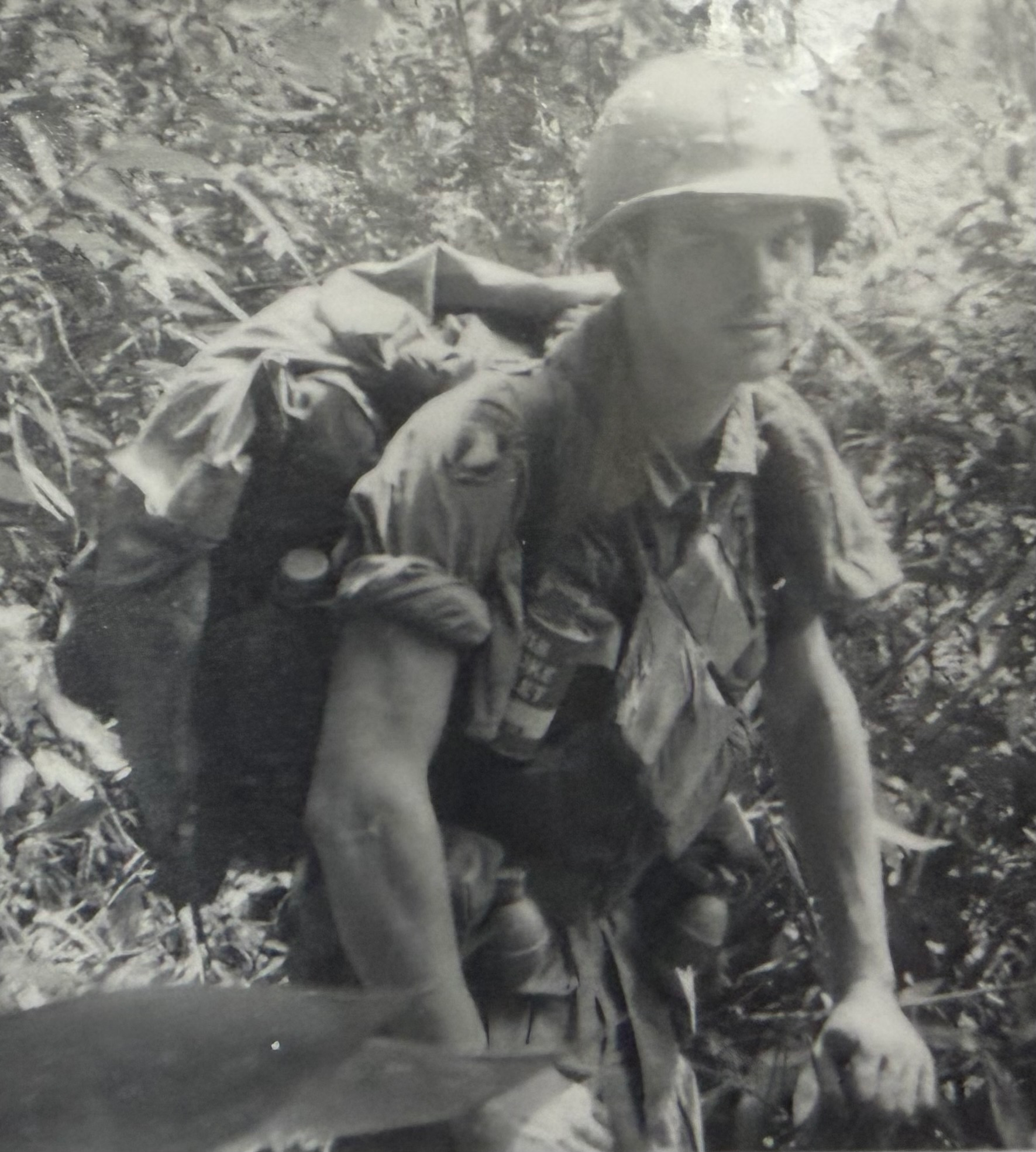
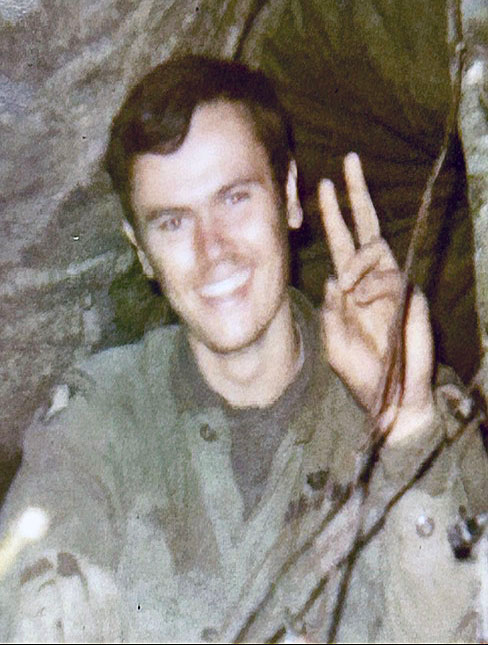
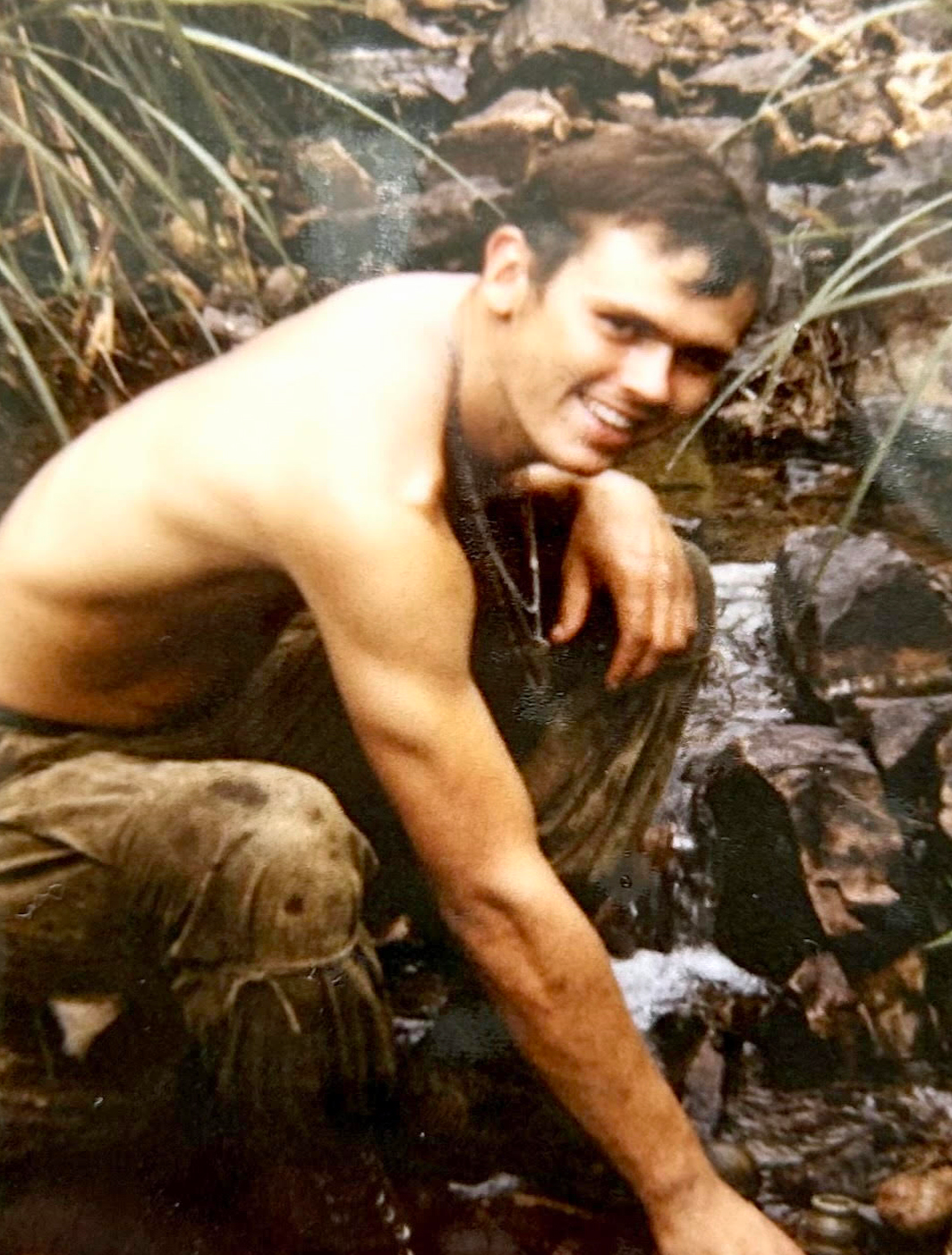
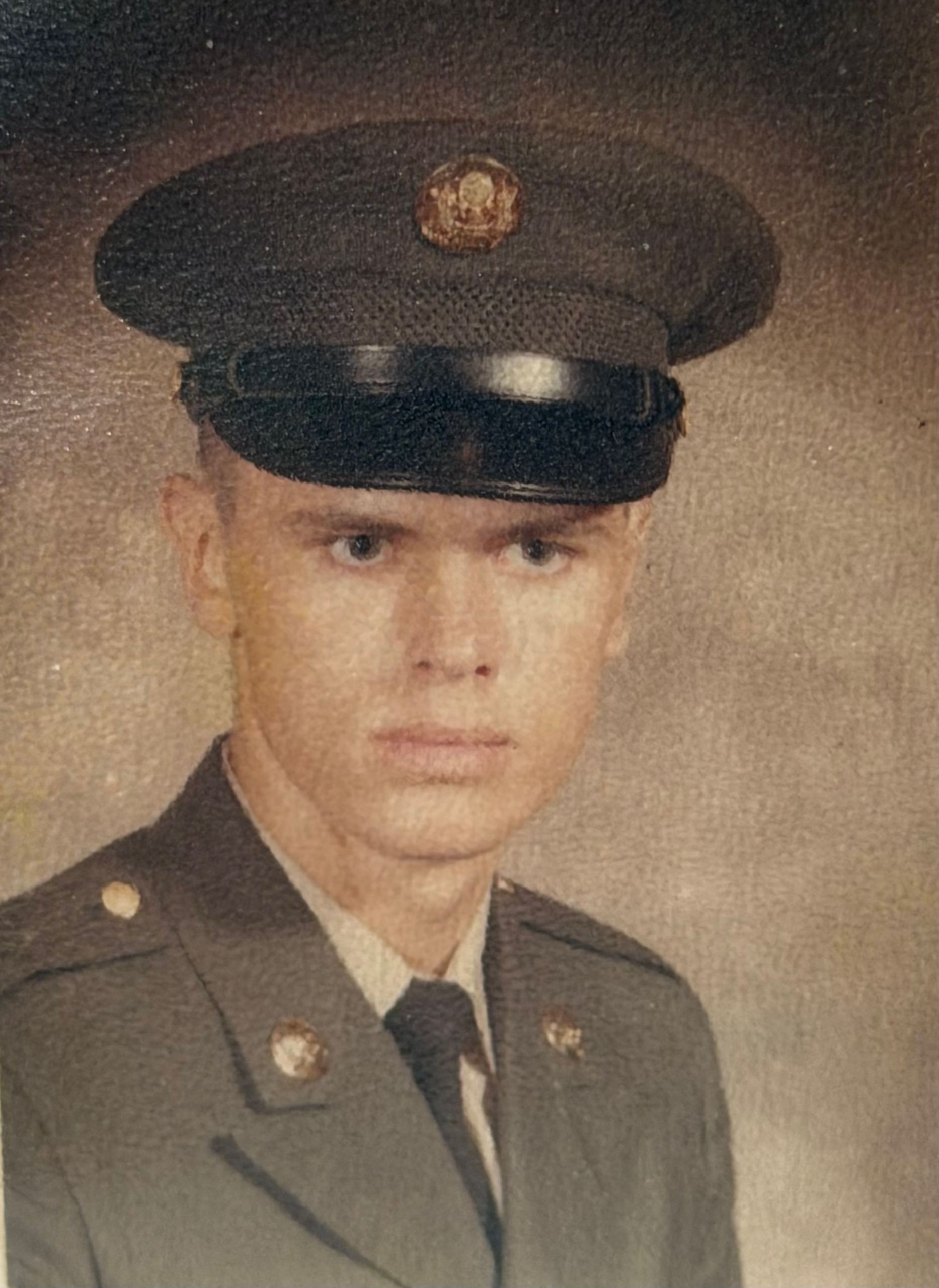
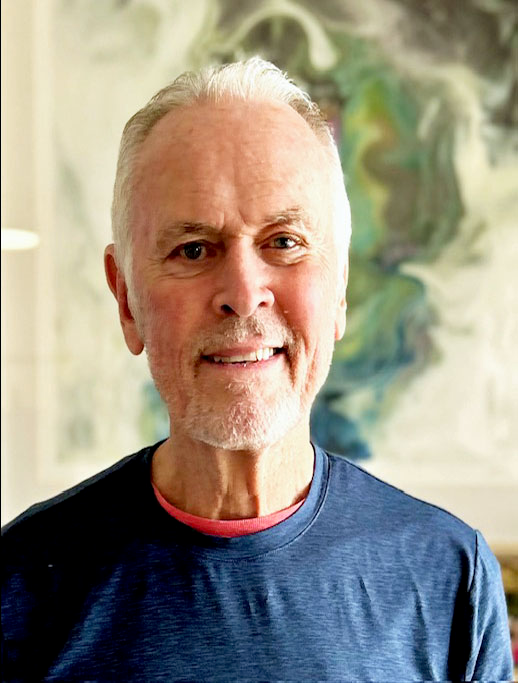
On the morning of July 6, 1970, Rob’s life was forever changed. His unit had spent the night in the jungle and was in the process of breaking camp. They hadn’t had contact with the enemy in a few days, and Rob says that they and their leader were being careless. The enemy had snuck up in the dark and got close enough to throw a satchel charge inside the perimeter. Rob was blown off the ground as an intense firefight broke out. Upon landing, he reached for his handset and quickly called for air support. Three helicopter gunships quickly came to their aid, with Rob talking directly to the lead pilot to give instructions. Rockets, machine gun fire, and cannon fire quickly pulverized the jungle where the enemy was concealed.
The fight lasted for an hour or so, but before the enemy had been driven off, Rob and five other soldiers were wounded. As the adrenaline wore off, Rob started to feel pain and see blood coming out of his boot. The pain then spread to his back and the back of his legs. Even as he realized the extent of his injuries, Rob knew that his responsibilities hadn’t gone away because he still needed to call in the medevac helicopters that would evacuate the injured soldiers. Since Rob was coordinating the evacuation, he was the last one to be removed from the jungle. As the helicopter began to fly away, he looked down from the door and realized that while his day in the jungle was ending, for the rest of his unit it was just beginning. He was eventually awarded a Bronze Star for his actions that day.
After a month in the hospital at Cam Rahn Bay, Rob was sent back to his unit. While he maintained his role as an RTO, from that day forward he was assigned to the base rather than being in the jungle. As it turned out, the day he was wounded ended up being a good one for him—the wounds weren’t life-threatening, but the end result was that he had spent his last day in the jungle.
On November 6, 1970, after eleven months and seven days, Rob left Vietnam. He was sent to Fort Hood, Texas, where he worked as a clerk for the rest of his enlistment, eventually being discharged in March 1971. He returned to Chicago, but when he met up with his buddies from growing up, he realized that he had been forever changed, while they had remained basically the same. When he tried to explain some of the things he had been through, they tried to be sympathetic, but he quickly realized that unless someone had experienced what he had been through, there’s no way they could understand. He eventually gave up on talking to them about it.
Before enlisting in the Army, Rob had started dating a young woman named Kathy, and they wrote each other regularly while he was overseas. They continued dating after his return, were married in 1975, and last year they celebrated their fiftieth wedding anniversary. Rob had a camera with him in Vietnam and was able to capture some stunning photos of what he describes as a beautiful country. He pursued this passion after the war, utilizing the GI bill to go to photography school and eventually opening up his own commercial photography studio, with Kathy handling the business side of the enterprise. He would later move on from the photography business and ended up having a number of roles related to senior living facilities, including marketing, business office manager, and executive director.
While Rob says that he doesn’t suffer from PTSD from the war, he says that “We leave the war, but the war doesn’t leave us.” He says that he was raised to be nice and kind and good to other people, but then the government told him to go out and kill as many people as he could. There are scars that are placed on your soul, he says, that never heal. He says that Vietnam was both a life-changing and life-affirming experience for him. He saw how truly ugly human beings can be to each other, but also saw bravery, dedication, and commitment. There’s no better team, he says, than a military team.