
Army Vietnam War Lake Mills, WI Flight date: 05/20/26
By Al Rodriguez, Honor Flight Chicago Veteran Interview Volunteer
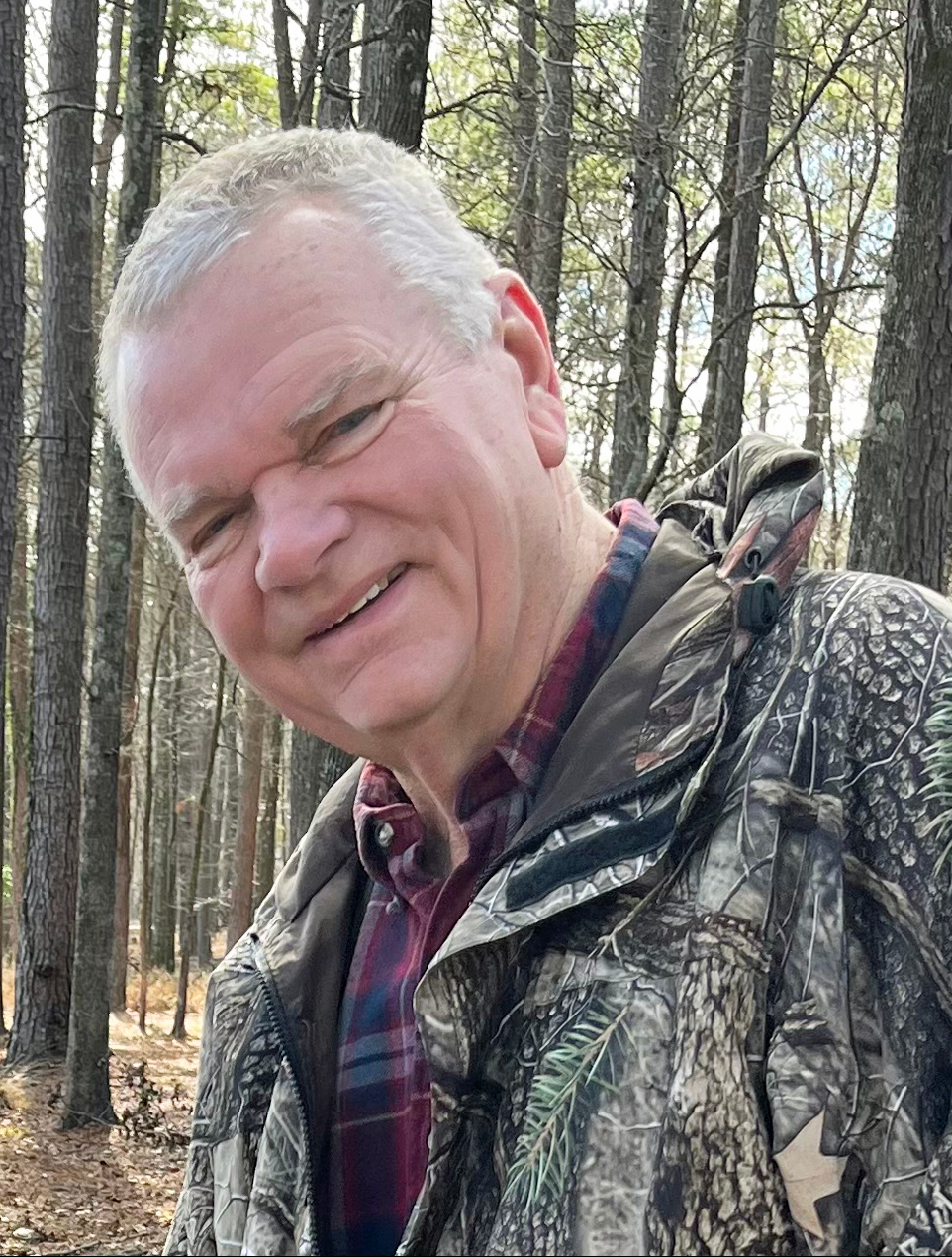
Doug Strasburg says he was born with the ‘go fast’ gene. He loved figuring out how car engines worked. At 15 he overhauled a 6-cylinder engine by himself in hopes of making it into a race car, even though he wasn’t old enough to drive yet. So, when he enlisted in the Army, did they use his natural abilities and assign him to work as a mechanic? No, he was trained as a heavy equipment operator driving very slow bulldozers in Vietnam.
Doug was born in 1947 in Lake Mills, Wisconsin. His dad was a WWII Purple Heart Army veteran who served in the Philippines. When Doug was a junior in high school his dad moved the family to Rhinelander, Wisconsin. In 1965 after he graduated from Rhinelander High School he pieced together a makeshift stock car and raced it a few times at the Tomahawk Speedway near Rhinelander. To fund his passion, he applied for a job with the USGS, U.S. Geological Survey Department. He was accepted and put on a team that was sent to Kansas to map roadways and the countryside. His job was to hold the stick, the survey prism, while the land surveyor took the map readings. Doug worked this job for a few months. He knew he would probably be drafted for that new war in Asia and decided to talk to the Air Force recruiter. He completed all the testing and went home to wait for their call. Doug said being a young impatient kid he got tired of waiting and decided to enlist in the Army instead of waiting for the Air Force results. The Army took him right away and he left for basic training at Fort Knox, Kentucky on January 31, 1966.
Doug arrived at Fort Knox with two inches of snow on the ground which for a Wisconsin kid was not a big deal but the local folks were having a problem dealing with it. He wasn’t sure what to expect at Basic but his impression was that the people in charge didn’t know what they were doing. They rushed around and then waited around a lot. He was happy when it ended and was sent to Fort Leonard Wood, Missouri, for his Advanced Individual Training. He was trained as a heavy equipment operator. Other than driving a farm tractor and equipment back home he had no experience with this type of large construction machinery. Doug said he enjoyed learning how to operate the road graders, wheel tractor-scrapers, pay loaders, bulldozers and all the equipment used to move or flatten large quantities of dirt and rocks. He said there were other Wisconsin guys training with him, and being homesick, they pooled their money together to go home for the weekend. One Friday six or seven guys piled into an old Thunderbird one of them owned and drove to Wisconsin. The car had a leaky radiator so every 100 miles they had to stop and fill it with water. It took a little longer but they made it and Doug had a brief visit with his family and girlfriend before heading back to Fort Leonard Wood by Monday morning roll call.
Doug finished his AIT training with orders for Fort Knox, Kentucky. He was assigned to the recommissioned 554th Engineer Battalion. The 554th had been decommissioned after WWII. As with any startup there was a lot of lag time while they gathered the troops and heavy equipment together. Doug said he spent 10 months fighting boredom. Boredom caused him a few scrapes with the authorities. Most days he went to the motor pool to check the fluids and startup the heavy equipment assigned to them. They also received combat training. There was a rumor that the battalion was going to be deployed to Vietnam and it was confirmed when the battalion’s needs were met. The soldiers loaded and chained their construction equipment on railcars for transport to California and then on to Vietnam. Before going overseas, Doug went home on leave for two weeks and married his girlfriend.
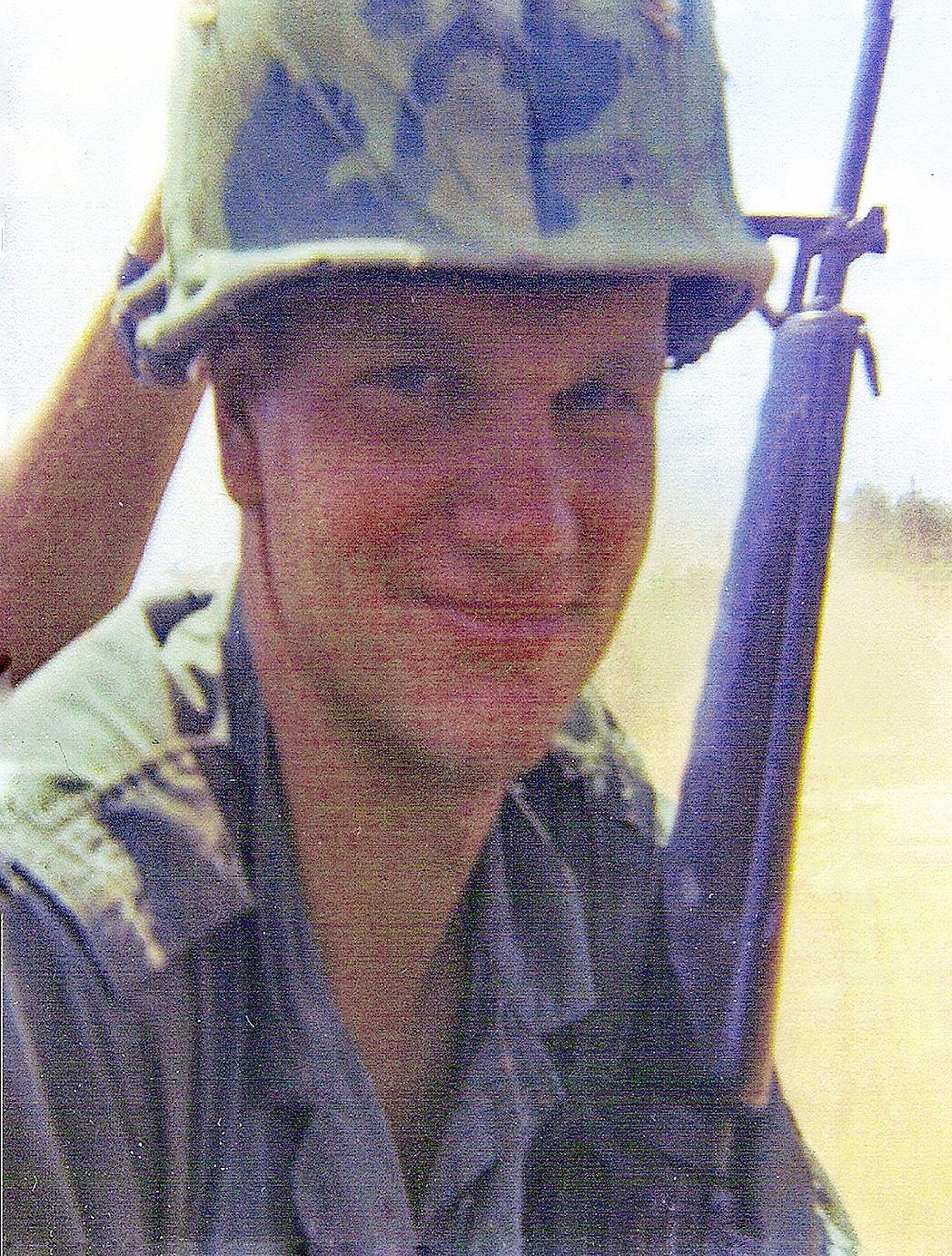
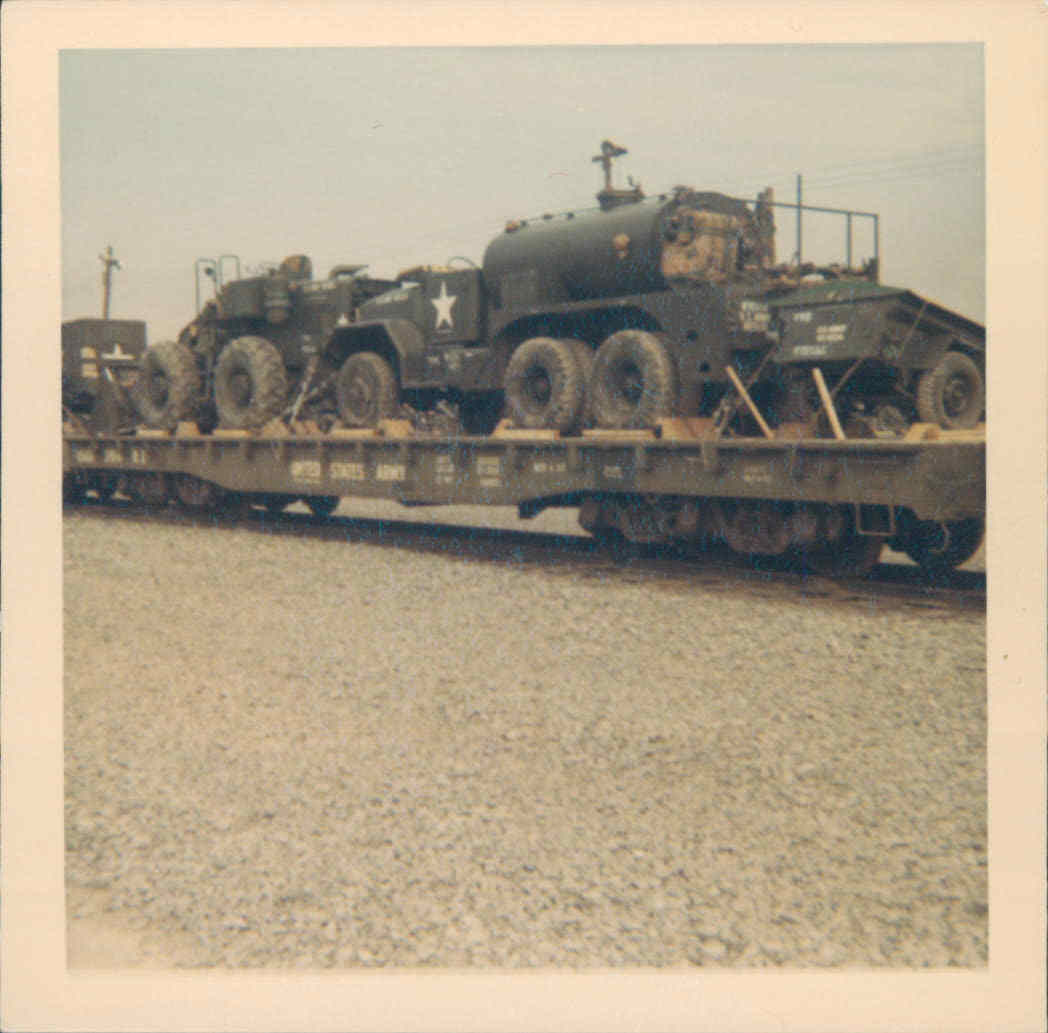
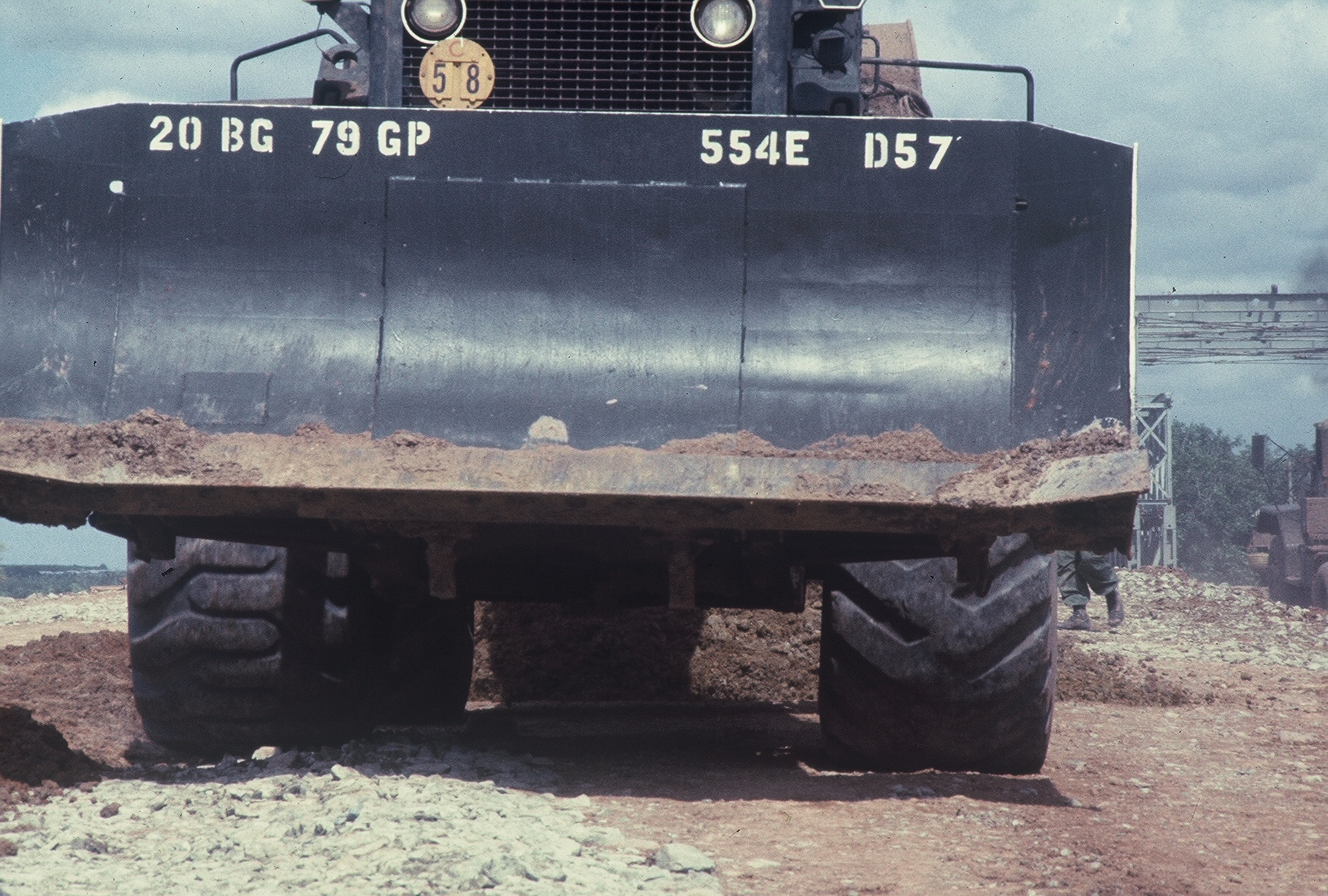
Doug reported back to Fort Knox and from there was transported on a troop train to the Oakland Army Base in California. There he boarded the US Naval Ship General Walker, an old WWII and Korean troop ship that took him to Vietnam. Their heavy equipment traveled on other ships. He said the troop ship was very tight quarters, stacking rows of hammocks 4 high in the belly of the ship. Thankfully he never got seasick in the 20+ days it took to get to Vietnam. They landed in the port city of Vung Tau near Saigon. There they gathered up their heavy equipment they shipped from Fort Knox. Doug said even though it was labeled with the registration/unit markings for the 554th Engineer Battalion somehow they had extra equipment when they departed for Cu Chi, their base camp. Cu Chi had many units stationed there and the 554th were assigned for base camp construction, road building/maintenance in and around the base, improvements to flight lines and airfields. Doug was assigned to drive a bulldozer as a construction engineer in Company C. Vietnam was hot and humid and sitting on top of a large piece of steel wearing a helmet and khaki’s made it even hotter. He said he never needed a blanket to sleep in his room in the barracks. He met and befriended Jim Ferguson while in Fort Knox who was also in Company C. Doug and Jim are flying together as buddies on Honor Flight Chicago 128. Shortly after arriving in Vietnam his wife wrote him that she was pregnant. Eight months later she gave birth to a baby girl they named Tina.
The combat engineers who were also assigned at Cu Chi went out into the field to support the combat troops. They always needed an extra bulldozer because their equipment would be damaged. Doug would be temporarily assigned to them for up to a two week stretch. Depending on how far they had to travel, they would drive their bulldozers out of Cu Chi. Their top speed would be about 10MPH. If they were travelling longer distances, they would load their heavy equipment on the back of flatbed semi-trucks to be transported. Their missions were to clear and level the jungle, establish landing zones to aid the combat troops and sometimes bulldoze the ground looking for suspected enemy tunnels.
Large construction equipment is not meant to be fast or stealthy. You can see and hear them from long distances. Although the heavy equipment drivers carried M16 rifles, to keep the personnel and equipment safe they would be accompanied by two M60 tanks, four Armored Personnel Carriers and an Army platoon. As Doug explained even when it wasn’t the monsoon season after they cleared the growth on top, the ground underneath would be muddy. If they weren't careful the bulldozer would get stuck. If it did get stuck, sometimes it would take three bulldozers to pull one out.
When they came across a tunnel the ‘tunnel rat’ would be sent down to investigate and destroy it. Doug explained that his bulldozer’s cab was opened aired so he sat exposed. The bulldozer engine noise was very loud and he couldn’t hear very much. He often had someone riding shotgun next to him. Once as he was clearing an area, he finally heard a wolf whistle and saw the guys running and taking shelter. He shut off his bulldozer and heard pinging noises. Needless to say he took shelter. There was a sniper across a rice paddy that was shooting at them. After the sniper was dispatched, Doug saw pockmarks on his bulldozer near his operator’s seat.
Snipers weren’t the only danger he faced. There was the booby-trapped explosives the enemy planted in the ground. Although their equipment was elevated and steel fortified, there was still a chance for injury or death. One of his buddy’s ran over one and got a piece of shrapnel in his neck but survived. If a village nearby was found to contain hidden weapons or explosives after they burned it, they would use their bulldozers to level it. When you’re out in the jungle for a couple of weeks you need to stay dry and off the ground. The Army furnished a wood and canvas cot so he didn’t have to sleep with the snakes and a tarp to hang above him to keep him dry.
There were times that only a driver was needed in an operation and Doug would be transported by a UH-1 Huey helicopter. If his bulldozer was also needed a CH-47 Chinook would air lift it out to the field. Doug went on one operation near Nui Ba Den Mountain, aka the Black Virgin Mountain near Tay Nihn. The Black Virgin Mountain provided a 360 degree view of the Ho Chi Minh Trail. The base of the mountain had many U.S. and ARVN artillery batteries to prevent the enemy from getting to the top. There were constant battles for control of this area so clearing the ground around it was crucial. Doug said they were often under fire from the enemy. Two men were killed in this operation.
The danger wasn’t only in the field. The Cu Chi base was constantly under 'hit and run' mortar and rocket fire. He said one of the barracks and a mess hall was destroyed with fatalities. Although the Americans tried unsuccessfully to eliminate them, an extensive enemy tunnel system was operating below them. The tunnels were three stories high, served as communication and supply routes. They had a hospital, living quarters, food and weapons and hiding places for the Viet Cong to fight the Americans. The tunnels were also extensively booby trapped to discourage entry. This was the Viet Cong’s base of operation during the Tet Offensive in 1968.
On January 31, 1968, the Tet offensive launched many coordinated attacks on several specific highly visible locations throughout South Vietnam. Cu Chi was a primary objective with its proximity to Saigon. During the initial Tet attack, Doug was out in the field but the attacks continued for the next few weeks. Doug’s travel time to Vietnam on the troop ship was included in his tour so he was close to going home. He went back to Cu Chi four days before he was to leave. The enemy was still launching mortar and rocket propelled grenades attacks on the base. During one attack he jumped into a sandbagged bunker and cut his head. The sights, sounds and smells of Vietnam still haunt him today. He hunkered down and prayed he would make it home to see his wife and daughter.
Doug was transported to Tan Son Nhut Air Base in Saigon to catch a commercial flight back to the U.S. He said that the plane landed on the runway and those boarding were hustled onboard. They did not want to spend any more time on the ground than necessary. The plane quickly took off and Doug said he gave a sigh of relief once they were in the air. It was a bittersweet moment, he was happy to be going home but he was also leaving friends behind. His plane landed in Hawaii to refuel and from there flew non-stop to Chicago O’Hare.
What angered Doug the most about coming back to the U.S. was the anti-war protestors. He was told not to wear his uniform when he got off the plane. He said “I thought joining the Army I was doing the best for my country.” His wife met him at O’Hare and they drove home to Lake Mills where he met his daughter for the first time. He had ten months left on his enlistment and was sent to Fort Hood, Texas, with the 36th Engineer Brigade. Since he was a short timer he had no real assigned duty. As an E-4 he could afford living off base with his family. His 2nd child, a boy they named Steven, was born right before his enlistment ended. He said the Army paid for that one too. Leaving the U.S. Army and Fort Hood as an E-5, they headed for Lake Mills, Wisconsin on February 4th, 1969 with two small children.
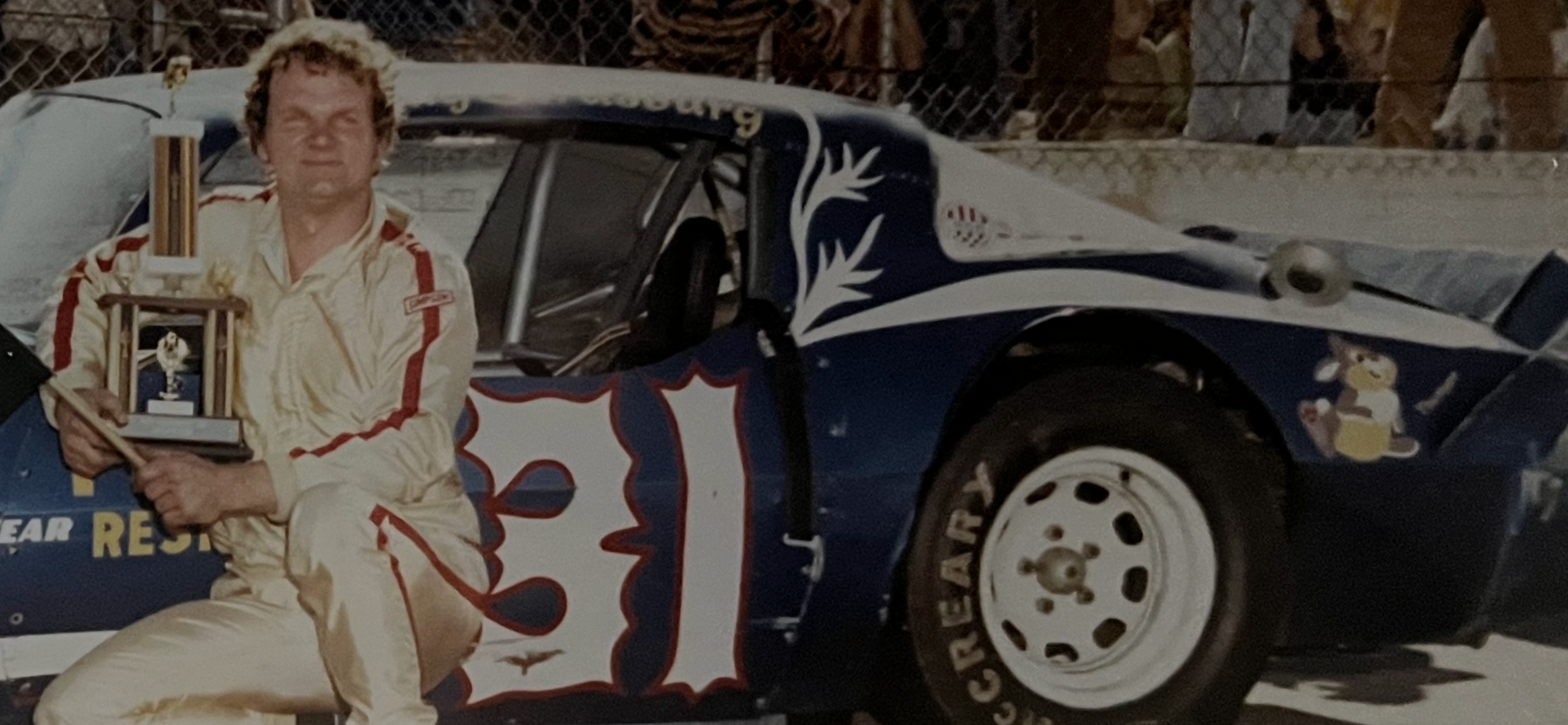
Returning home Doug said he was very restless but he found work as a mechanic at the car dealership his dad previously managed. But his passion was racing so he built a racecar and drove it at various race tracks in the ASA series around the Midwest. Doug won his first track championship in 1975 and this win led to a lifelong devotion to racing and more wins. He raced throughout the Midwest and set the track record at Dells Motor Speedway in Wisconsin Dells before NASCAR's Mark Martin broke it in 1980.
He leased a gas station with three tow trucks that picked up vehicles along the highways. Doug had two other children, Matt and Jay for a total of four. Now he has twelve grandchildren and seven great grandchildren. He is now a born-again Christian who believes in following the Bible.
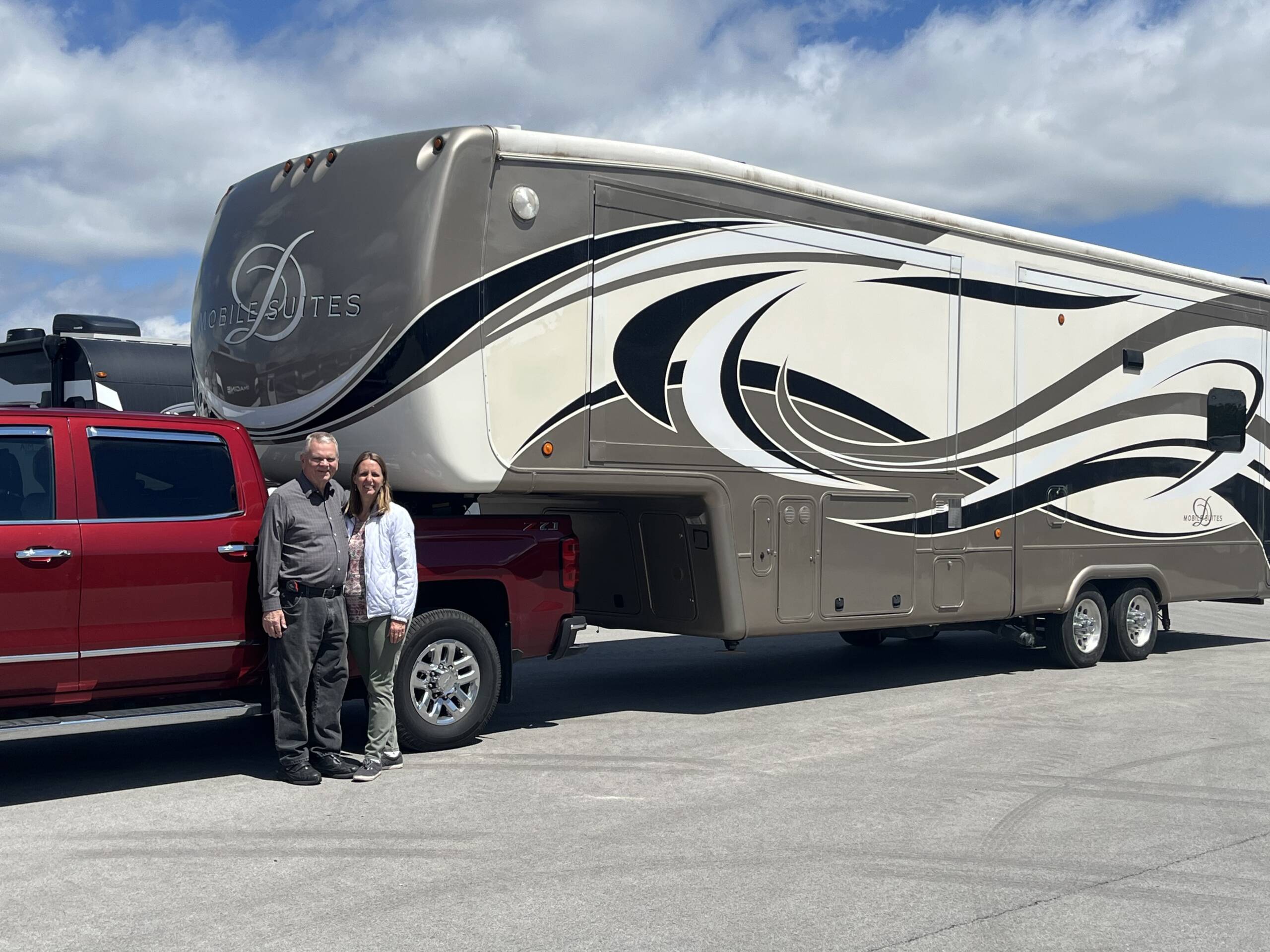
Until he retired, he owned the Mid-American Stock Car Series bringing premier stock cars together to race in the Midwest. He and his current wife, Julie, attended the last race event at the Tomahawk Speedway in 2024, the first track he ever competed on. Since retirement they’ve traveled around the country putting 140,000 miles on their RV. After RVing for nearly 20 years, in 2023 they left 42 peaceful, wooded acres in northern Wisconsin to begin a full time RV venture.
About his time in Vietnam, he’s had hearing issues from the noisy equipment he operated with no hearing protection. Later in life he developed heart and diabetes issues with no family history. About 20 years ago his 554th buddy Jim Ferguson and a couple of others reached out to him and they talked to each other about their time in Vietnam. Until then he had kept his Vietnam memories suppressed. He understands that the restlessness he’s had most of his life is attributed to his exposure to combat. Doug wonders how different his life would have been if he hadn’t served.
Doug has seen the memorials in D.C. but says he’s looking forward to seeing them with his friend, Jim, and the other vets on the flight.
Thank you Doug for your service to the country! Enjoy your day of thanks that you greatly deserve.
Welcome home!