
Navy Vietnam War Big Rock, IL Flight date: 05/20/26
By Charlie Souhrada, Honor Flight Chicago Veteran Interview Volunteer
Jack Rauscher entered the world on the final day of 1945 and grew up in Aurora, Ill., where his working-class upbringing shaped his character from the start. His father, Bill, worked long hours as a machinist at Aurora Pump, while his mother, Jean, kept the household running. Eight years after Jack’s birth, his sister Mary Sue arrived, completing the family.
As a boy, Jack poured his energy into athletics, spending countless hours playing ball with friends at Lebanon Park. When he wasn’t on the field, he was helping his father paint houses on weekends to bring in extra income. “My dad would come home exhausted from the week and then paint houses all weekend,” Jack recalls. “He taught me what it meant to work for the important things in life.”
At 15, Jack took his first job washing dishes at Copley Hospital for fifty cents an hour. He attended East Aurora High School as part of the first class to spend all four years in the newly built facility. A middle linebacker on an undefeated team, he earned several college scholarship offers.
After graduating high school in 1964, Jack accepted a football scholarship to Western Illinois University in Macomb, joining three of his high school teammates. “We roomed together with two other guys… big mistake!” he jokes. One and a half years later, Jack and two friends returned home, found work, and joined the Navy Reserves in 1966 to avoid being drafted. “It was tough to get in the reserves at that time,” he says. “But I had an uncle who made a phone call, and all three of us got in.”
While waiting for orders, Jack completed a two-week cruise for reservists out of Fall River, Mass., started a small trucking business with a friend, and then received instructions to report to boot camp at Naval Station Great Lakes in January 1967 during the infamous Chicago Blizzard. “Boot camp lasted only two weeks because the instructors couldn’t get to the base,” he remembers. “With the exception of swim training and a fire safety course for shipboard problems, we spent about a week and a half in the barracks just looking at each other!”
After completing boot camp, Jack was sent to Naval Station Treasure Island, in San Francisco Bay, Calif. There, he received orders for the Mobile Riverine Force. Initially, he couldn’t understand the orders because they were written in Navy abbreviations, so he asked the chief to translate. He learned the orders sent him to Vallejo, Calif., for advanced combat training, with additional courses at Naval Base Coronado for survival, and San Clemente Island for gunnery training.
During this training, the Navy asked for volunteers to go over early because of the 1968 Tet Offensive casualties, and Jack stepped forward. “They said you could go early, get your year in, and get back. I thought, ‘What the hell, let’s get it over with.’ I finished survival and gunnery training and felt ready to be a river rat.’’
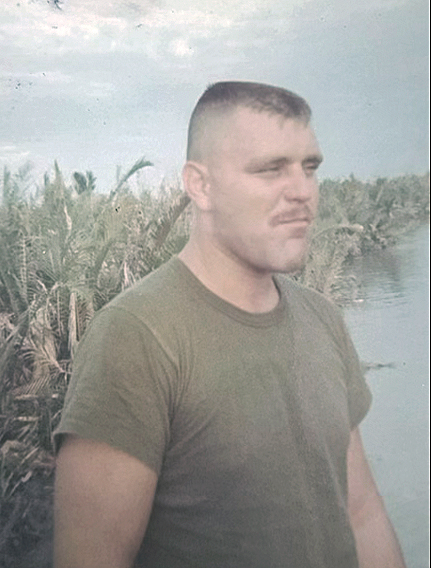
In Vietnam, Jack served as an engineman on a “Tango” boat, # T-132-1, assault troop carrier, used to move the 9th Infantry Division soldiers, SEAL teams, the South Vietnam army, and others through the Mekong Delta as part of the Brown Water Navy. The vessels carried a seven-man crew, up to 40 infantrymen, and were heavily armed, but slow. Jack often piloted the boat through tight canals with vegetation touching both sides of the boat.
“The waiting game was all mental, like the nervous energy before a big sporting event. You’re wondering what’s going to happen and how you’ll react when Charlie fired at us,” he says, “Thank God they weren’t very good at aiming most of the time.”
He still laughs about the time he and his crew mates welded a water pipe to the bar armor of the boat and ran a hose to the diesel engine cooling system for hot water, creating the only hot water shower in the entire fleet. “One day, a command boat pulled up next to us and the Commander asked if he could use our shower, ‘yes sir!’ we said.” Jack was delighted the Commander did not complain about the non-regulation modification.
After nine months in Vietnam, Jack took R&R in Tokyo. He carried a 35mm camera everywhere, but most of his photos were lost when his boat capsized just three weeks before he was scheduled to go home.
“Our ramp got stuck in the down position with troops on board, we started taking on water, and the boat capsized,” he says. “I ran up on deck and jumped as the boat turned over. The accident claimed the lives of one of our crew and five men from the Army’s 9th infantry. By then we were all just hoping to get out alive. They offered us $10,000 to stay another year with one month’s leave, but I said no, I just wanted to go home.”
Jack finished his service in Seattle aboard the USS Bridget (DE1024), a Naval Reserve training ship. There, he was one of the first to take part in the new rehabilitation program for Vietnam combat veterans. In late 1969, he drove home to Aurora and his fiancée, Barbara, whom he had met in 1968 at Fox Valley Country Club before shipping out. “We clicked instantly,” he smiles. They married on April 4, 1970, and built a family that now includes three daughters – Debbie, Maggie, and Jackie, five granddaughters, two grandsons and three sons-in-law.
Back in civilian life, Jack spent 17 years at Sears in plumbing, heating, and air conditioning sales. He later moved into contract furniture and design sales at Landgraf’s Ltd. in Aurora.
“I never talked about service, unless I was with other veterans. Being a veteran wasn’t a popular topic at that time.”
Jack retired from full-time work in 2008 at age 62, later taking a part-time job with Golf Visions Management, Inc. Today, he enjoys golf every other day and listens carefully to his body after several health issues linked to Agent Orange exposure.
Through it all, he maintains the resilience and humor that carried him through the Delta.
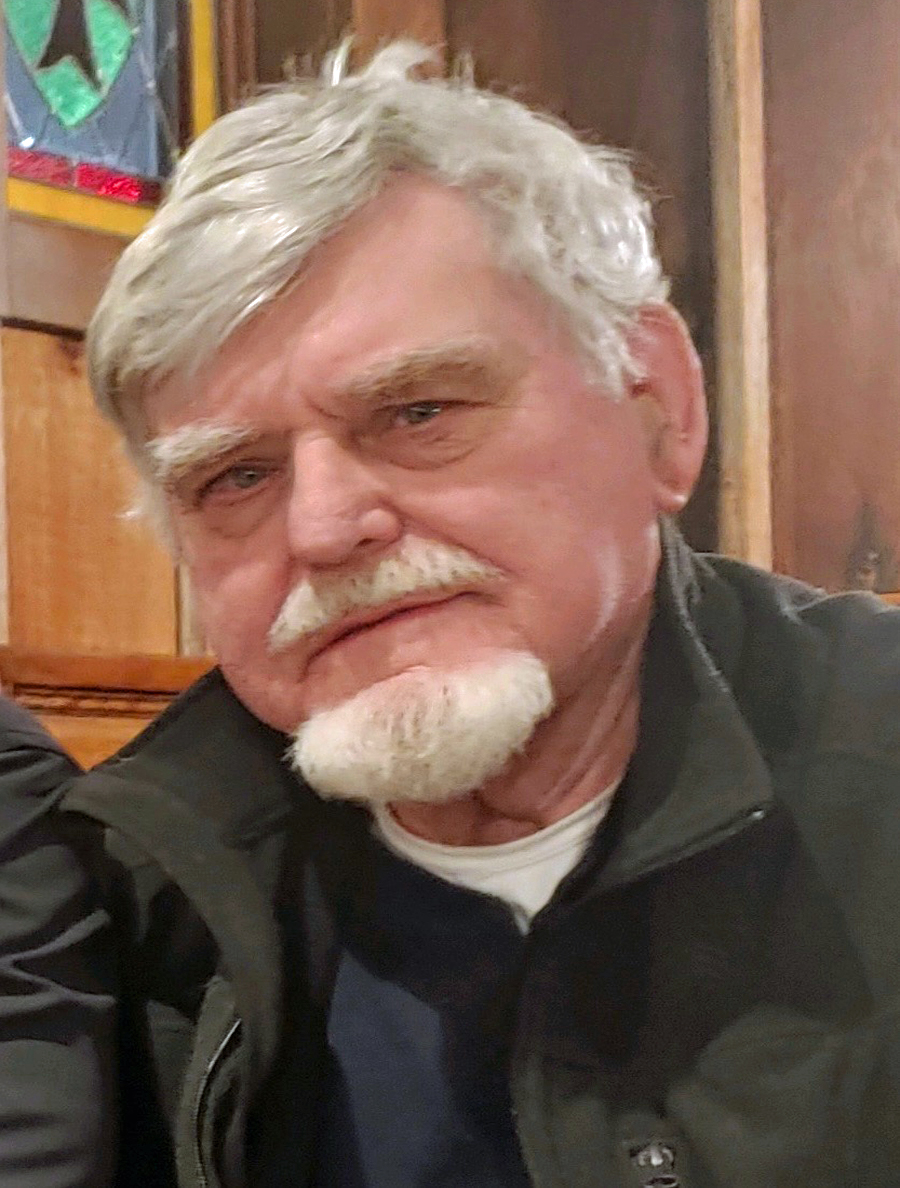
Welcome home, Jack—and thank you for your service. We hope you enjoy your Honor Flight.