
Navy Vietnam War Chicago, IL Flight date: 05/20/26
By Joe Kolina, Honor Flight Chicago Veteran Interview Volunteer
Mike Pfeffer had just turned 18 when he played a role in two of the best-known and most controversial episodes of the Vietnam War. He served on the aircraft carrier USS Coral Sea during the evacuation of Saigon and the Mayaguez incident in Cambodia, which officially ended combat two weeks later. Mike says he didn’t give it much thought at the time. All he did back then was work non-stop. But now, 51 years later, Mike spends a lot of time remembering, reading and reflecting on those historic, turbulent times.
The irony is that Mike might have missed it all if not for two life-changing decisions. He enlisted underage at 17, three weeks after dropping out of high school. His Chicago neighborhood was tough and violent. He wanted to escape temptations that he knew meant trouble.
“My dad signed but my mom was very, very reluctant,” Mike says. “She was crying and saying you’re going to die in Vietnam. But she finally signed.”
Mike and his buddy, Andy, went downtown and signed up for the Marine Corps. But that night he had second thoughts. He told Andy something bothered him.
“I told him I’m not going to join the Marines,” Mike says. “What am I going to be able to do afterwards? Shoot a gun, drive a tank? I said I’m going to join the Navy and get a trade, something I can do after the Navy.”
That’s what they did. Mike chose to work on diesel engines. But when he got to Great Lakes for training there were no spots left for engine school. That’s when he made a second momentous decision. Since the Navy didn’t keep its promise of a guaranteed school assignment he could have walked away with full benefits.
“A lieutenant commander knocked on my door and explained it to me,” Mike says. “He said all you have to do is sign this paperwork and we’ll get you out of the Navy by the end of the weekend.”
But that’s not why Mike was there. And not a reason enough to leave.
“I said ‘Sir, I didn’t join the Navy to get a haircut and go to boot camp,’” he says. “I joined to get an education. He said ok. He saluted me—a lieutenant commander saluted me, an E2, can you believe it– and shook my hand and said you did the best thing. You’ll never regret it. And I didn’t.”
Mike went to boiler technician school. And that skinny, fresh-faced 17-year-old sailor shipped out to the USS Coral Sea in April, 1974. He was a BTFN, Boiler Technician Fireman. A year later the ship steamed into the Gulf of Tonkin amid frantic efforts to save people caught in the chaos of the fall of Saigon.
The USS Coral Sea was like a small city floating on the ocean. Think of a skyscraper laid on its side—60,000 tons, three city blocks from stem to stern and as long as a football field across. It was home to 4,000 officers and enlisted men and a cutting-edge air wing with more than 500 men and 70 aircraft.
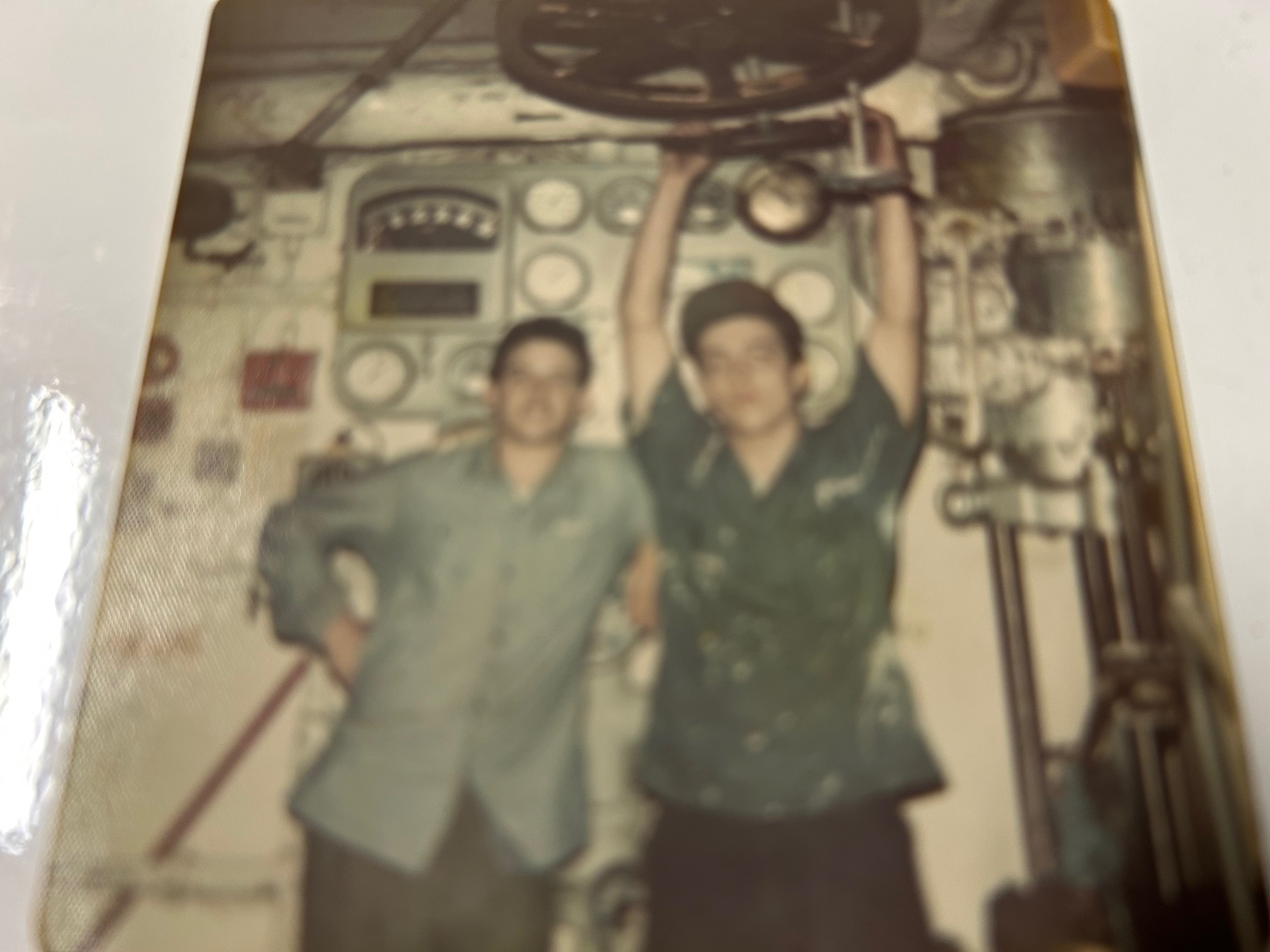
Mike and the other boiler technicians made everything go. They operated 12 boilers driving four turbines that produced all the ship’s energy. They generated the power that heated food and water, propelled the massive ship, and launched the catapults that hurled jets down the flight deck during takeoff.
It was tough, dangerous work. Long hours of hard, physical labor maintaining steam pressure by operating huge valves and burners; lighting, cleaning and repairing boilers, pumps and gauges; hauling tools and parts; and pumping steam wherever it was needed.
“The boiler room was a very scary place,” Mike says. “600 pounds of steam. 850 degrees. You could get killed so fast. So many things could happen.”
Mike describes the soaking sweat and deafening noise that hissed through cramped compartments connected like a maze along narrow corridors deep inside the ship’s hull.
“The noise level was incredible,” he says. “It’s why I lost a lot of my hearing.”
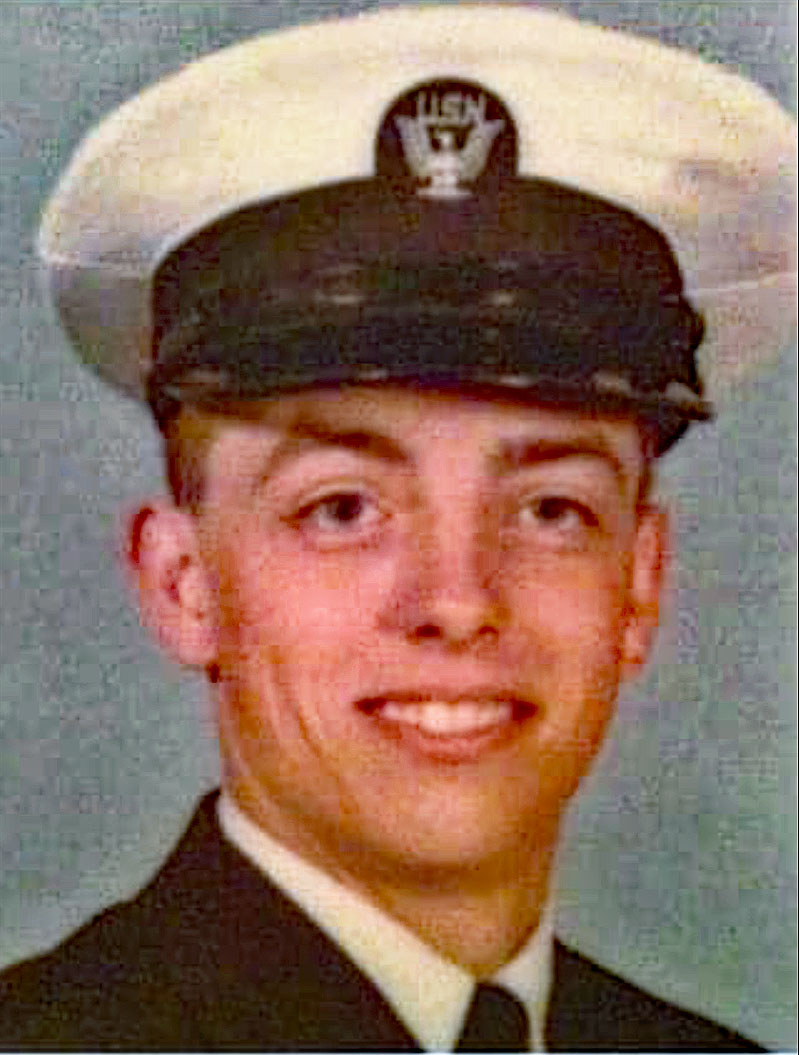
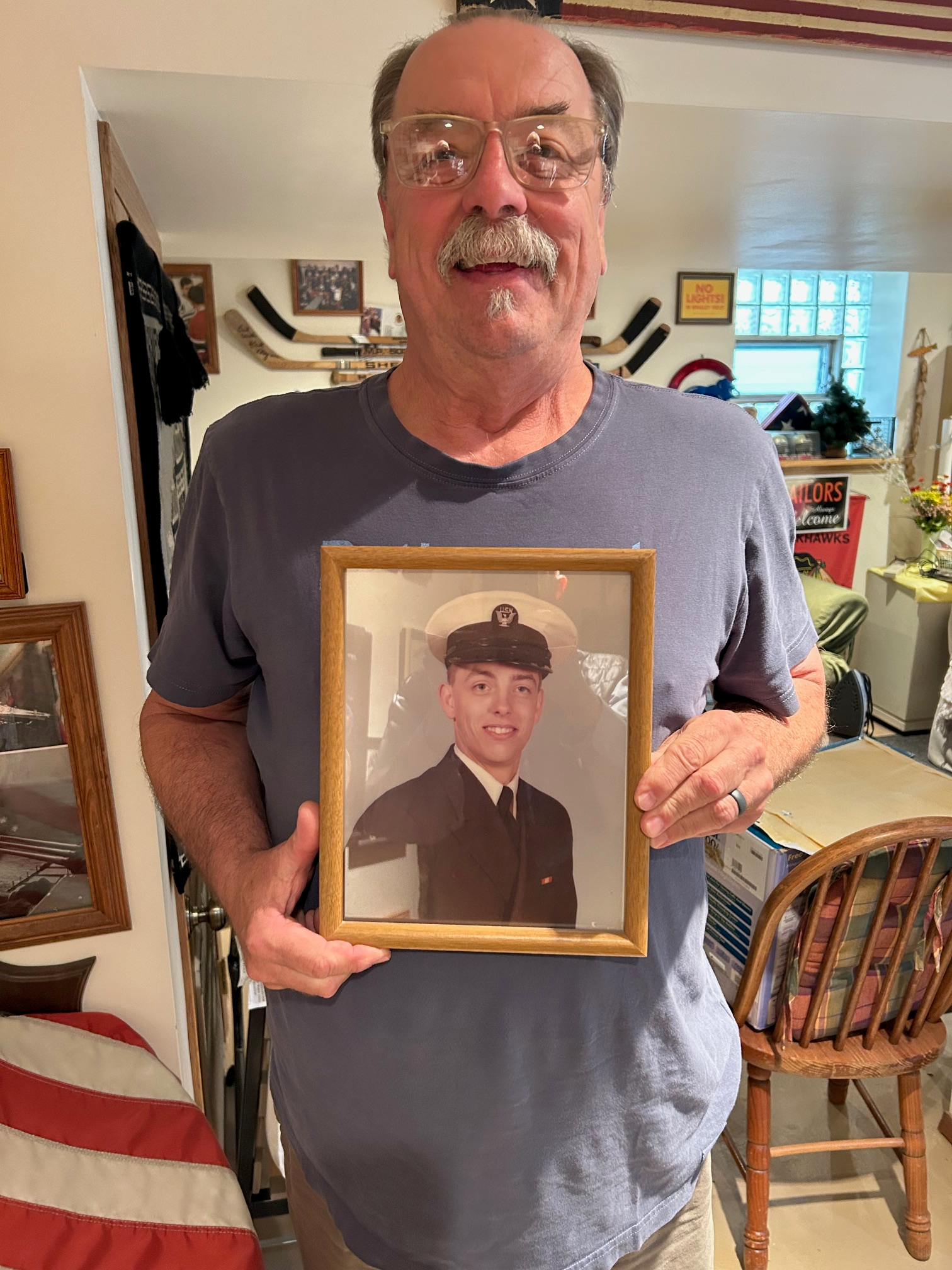
Mike’s before-and-after pictures show a remarkable transformation. The slender recruit developed into a burly veteran.
“I was all upper body then,” he says, pumping his arms back and forth. “We were cranking out valves and climbing, a lot of climbing.”
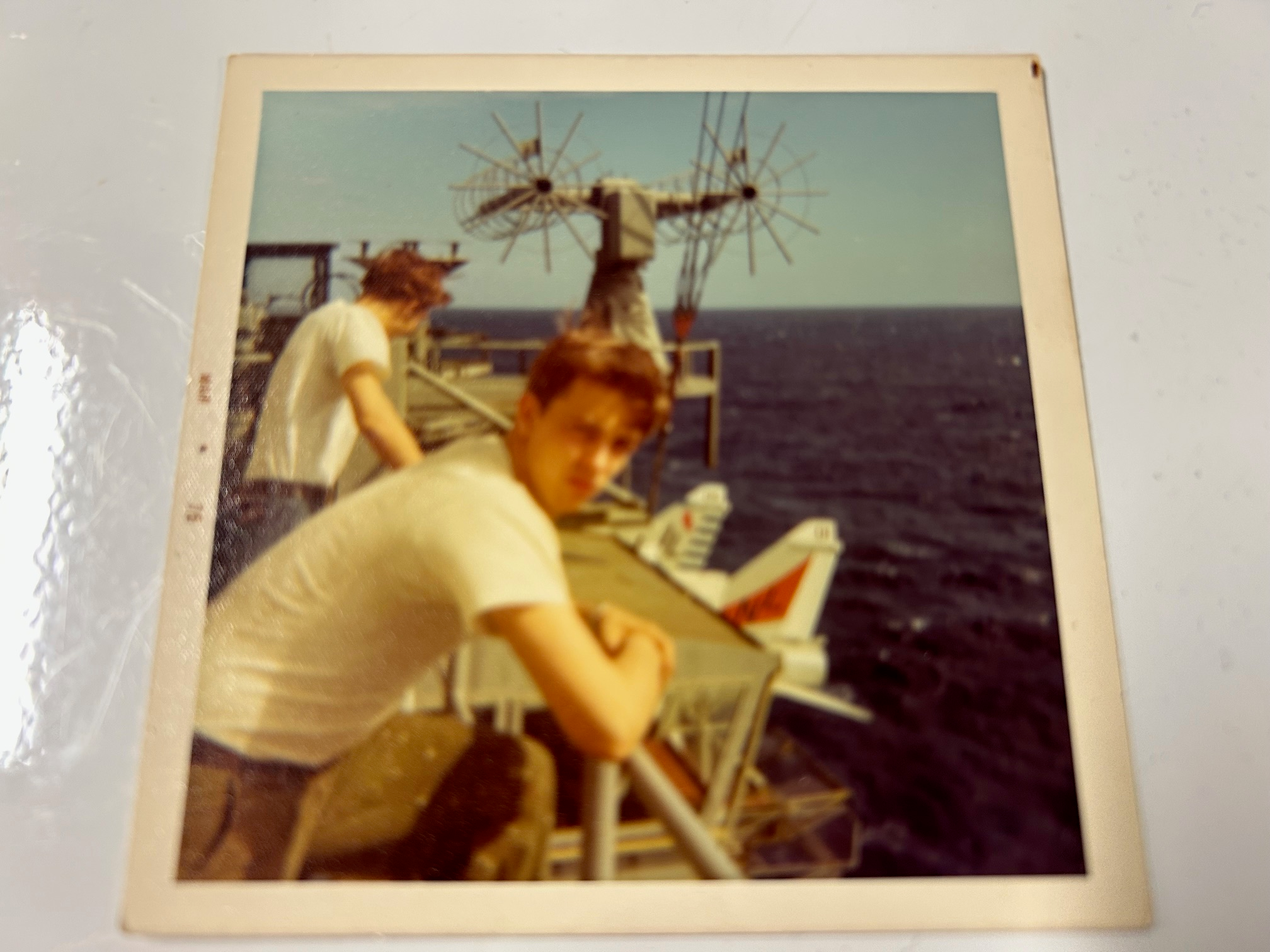
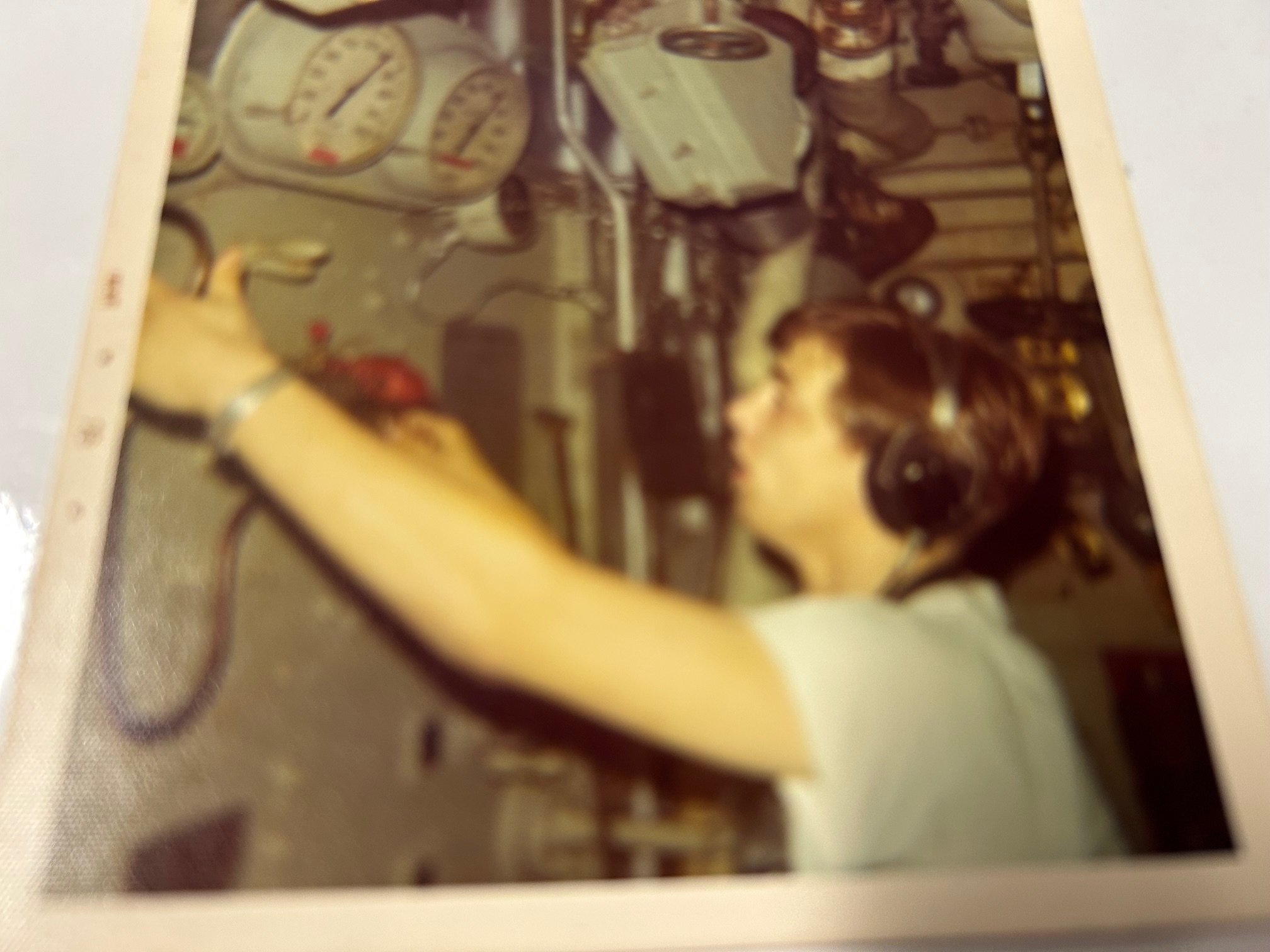
Mike recalls the day he found out about Operation Frequent Wind and the race to escape Saigon.
“The captain came up and said they were evacuating, many ships were in the Gulf of Tonkin and we were going to go to help them,” Mike says. “We stood plane guard watching over the whole fleet.”
Jets from the Coral Sea provided air cover to protect helicopters ferrying the last 7,500 people to safety. Planes from the ship, equipped with radar mounted on big rotating cylinders over the rear fuselage, helped direct the complicated mission.
“We were like air traffic controllers in the sky,” says Mike. “We’d stack up all the planes and tell them when to take off, when to do their mission and when to land.”
The Captain ordered the ship to general quarters for most of the time the Coral Sea was in the Gulf of Tonkin.
“We ran to the boiler room yelling at people in the corridors to get out of our way. 30 straight hours in the boiler room, “Mike says. “It was a 120 to 130 degrees the whole time.”
When the evacuation ended the Coral Sea was scheduled for R&R in Australia. But it didn’t get very far. The ship was ordered right back into service two weeks later after Khmer Rouge forces seized the SS Mayaguez on May 12, 1975, off the coast of Cambodia in the Gulf of Thailand.
The U.S. flagged container ship’s 39-man crew was believed taken to Koh Tang Island off the Cambodian mainland. President Ford decided on a bold military response. The Coral Sea was part of a task force that blockaded the Mayaguez and bombed Cambodian targets while Marines attacked Koh Tang Island to rescue the hostages.
“We circled around this island and bombed,” Mike remembers. “When we first passed it you could see the silhouette of mountains. When we passed by the next morning and went up on deck you could see it was flat. We bombed the mountain range to nothing.”
But the rescue operation ended in an intelligence disaster. Helicopters landed nearly 200 Marines on several beaches but heavier than-expected resistance prevented them from linking up. Two helicopters were shot down. An operation that was planned as a surgical attack on a sparsely defended island turned into a vicious jungle battle against a much larger force of well-prepared and armed Cambodian troops.
When it was over, Khmer Rouge forces had killed 41 Americans and wounded 50 more. Tragically, three Marines were left behind in the withdrawal and later executed. To make matters even worse, it was later revealed that Cambodia had begun releasing the crew unharmed before the Marine assault had even begun.
Mike is still appalled by the decision not to go back for those three Marines. But he knows his service made a difference. Many years later at a reunion he met Marines who were at Koh Tang.
“More than one guy grabbed me and hugged me and said thank you. You’re the reason I’m alive,” Mike says. “To get that ship back and us being a part of it was a proud moment. We actually did something. I was proud to be in the last battle of the Vietnam War. It was like a finish, an exclamation point to my service.”
But, as it turns out, it wasn’t really the end. Like so many veterans of that era, Mike still faces health issues that began in the Navy. Mike believes the boiler room of the Coral Sea was contaminated by Agent Orange, fuel oil in the water, and asbestos.
“We used to have a 100-pound bale of live asbestos fibers wrapped in a burlap bag with wire,” he says, “and we’d get bored and someone would grab a handful of that and put some water on it and next thing you know we’re having a snowball fight.”
Mike’s battled prostate cancer, gets his lungs scanned every year for mesothelioma, has diabetes, and needs hearing aids for tinnitus. He’s coped with anger and alcohol and anxiety. And he knows he’s not alone.
“I don’t know how many guys I’ve buried already. Quite a few,” Mike says. “Lung problems, abuse problems, whether it’s drugs or alcohol. PTSD is terrible for a lot of us. It never goes away.”
But neither do the bonds of brotherhood that he shares with his former shipmates. Mike’s been active in the VFW, Disabled American Veterans and the Coral Sea Association. He regularly attends conventions. He’s worked doggedly to track down men he served with. For many years he hosted former comrades at his house for several days leading up to the Army-Navy football game.
“My buddies, my brothers, closer than my own brothers,” he says. “This guy could save your life, will save your life. The camaraderie is real.”
You can see the feeling in Mike’s house. Books about the Navy and the war are stacked everywhere in bookcases, on chairs and tables and the floor. Sailor caps of navies from around the world hang on the wall next to the steps that wind downstairs. One basement wall is filled with framed pictures, medals and mementoes from the Coral Sea. He has a huge collection of Navy plastic model kits.
What a journey for a 17-year-old Chicago boy who had never been on a plane or a ship before he joined the Navy. His service took him around the world. It gave him a role in the last battle of the Vietnam War. And it paid off in the way he hoped it would when he switched from the Marine Corps to the Navy: he worked as a boiler operator in Chicago until his retirement 45 years later.
Thank you for your service Mike!