
Army Vietnam War Chicago, IL Flight date: 04/15/26
By Joe Kolina, Honor Flight Chicago Veteran Interview Volunteer
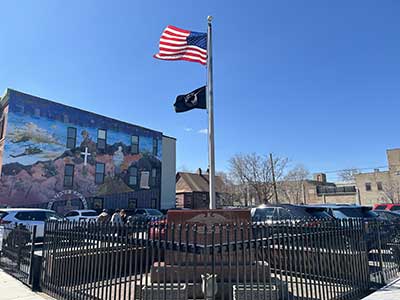
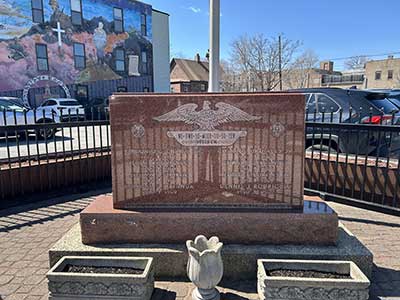
The mural floats like an apparition in the sky over Our Lady of Guadalupe Church. A giant palette of colors shrouds the entire side of a building rising across the street. Soldiers in fatigues and helmets ascend through rusty smoke that wafts over the wounded and dead of a battlefield. Across the very top, hovering over medevac choppers and above the blue, cloud-filled sky, are the portraits of 12 parishioners killed during the War in Vietnam. It was the largest loss of life for any parish in the United States.
This is the story of three sons of Our Lady Of Guadalupe who also fought in Vietnam. They came home with deep emotional scars. But theirs’ is also a story of love, loyalty, and healing. The mural helps explain why.
The three friends—Jose Cruz, Alphonso Ferreira Sr., and Lawrence Vasquez— grew up near the church located at 3200 E. 91st Street on the Southeast Side of Chicago. Their families were members and the boys went to school there for at least part of their elementary years. They migrated to Chicago when plentiful jobs at the now-defunct U.S. Steel South Works and other manufacturing plants offered a decent living and hope for a better future.
You’re in the Army Now
Young men in their community were proud and patriotic. When Uncle Sam called they went, no questions asked. Jose, Alphonso and Lawrence got drafted into the Army in 1968 and 1969, soon after high school. They quickly landed on the firing line in Vietnam.
“I wondered if I was ever going to see my mom and dad again,” Alphonso says. “Who’s going to be next? I wondered if I was ever going home.”
Life-threatening danger was constant. Alphonso rode shotgun on the top of a “gun truck.” They were armored personnel carriers outfitted with mounted .30 caliber machine guns. His gun truck protected convoys from Quy Nhon delivering supplies to infantry bases along the south central coast. The convoys rumbled over unpaved roads that snaked through dense, dangerous areas. They were prime targets for snipers and ambush.
“I was so scared. I never prayed so hard in my whole life.”
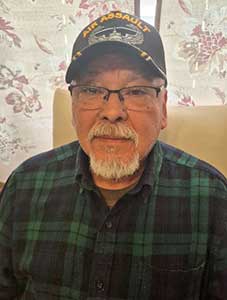
Alphonso Ferreira Sr.
Alphonso is solid, compact. He speaks with passionate intensity about his combat experiences. Events, he says, that can still trigger flashbacks.
“One time the truck in front of us hit a mine and it blew the truck away,” he says. “I was so scared. I never prayed so hard in my life.”
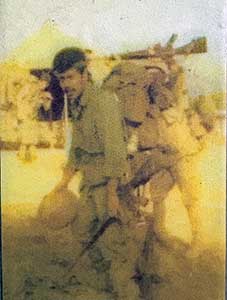
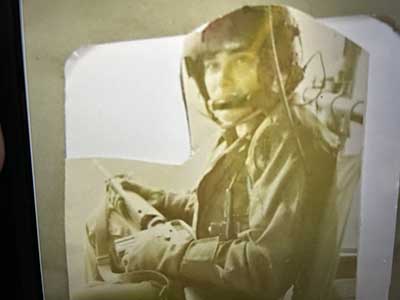
Alphonso couldn’t sleep after that. He went to bed with his M-16 across his chest. That makes it all the more remarkable that he volunteered for more hazardous duty as a door gunner on Huey H-1 helicopter. They ferried infantry units to remote areas. Door gunners gave cover when soldiers jumped from the choppers as they swooped down over landing zones. The crews also rescued soldiers wounded in battle.
Alphonso earned a Distinguished Flying Cross for heroism during a frightening nighttime rescue mission. Three men were trapped by Viet Cong. Alphonso’s crew hovered above them in heavy fire and lowered a rope ladder to pluck them out.
“The rope got stuck on the trees and we couldn’t pull all of them out,” Alphonso says. “We kept pulling, going up and down. But we were stuck. One of the pilots had a knife and he finally gave it to me and said ‘door gunner, take it and cut the rope. We can’t save the other guy. We have to get out of here.’ That was the night I thought I was a goner.”
The Underground Man
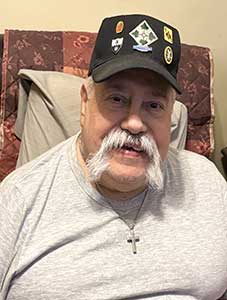
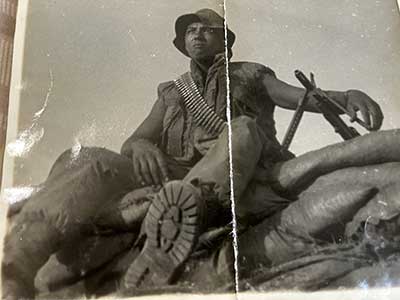
Lawrence Vasquez spent a memorable part of his war underground. He’s round-faced with a white and grey walrus mustache, an easy-going manner, and a harrowing story to tell.
Lawrence was picked to go on search-and-destroy missions in the notorious Viet Cong tunnels burrowed beneath the battlefields of South Vietnam. He had the most important qualification—he was short and skinny. Lawrence could squeeze himself into pitch black tunnels that sometimes were no more than four-feet-high and three-feet-wide.
“All I had was a .45, a flashlight and I learned to take some earplugs because those 45’s are a bitch to hear in the tunnels,” he says. “Sometimes you could hear something moving around.
“You’d only go so far at one time and then report back,” he says. “If you went too far, you’d get lost. And there was no way you could turn around in it and scoot out. The only way to do it was to back up,” he says.
“Sometimes you could hear something moving around.”
Lawrence Vasquez
Occasionally, the narrow tunnels opened into big rooms filled with sights that amazed him.
“Cots, food, ammo, x-ray machines,” he says. “Even vials of medications that said made in Chicago, Illinois, they must have bought on the black market.”
Lawrence’s stature may have been a factor in an assignment to work as point man on patrols above ground. They could roam the thick bush in the Central Highlands for 30 or 40 days at a time. Anything could happen at any time.
“North Vietnamese just walking down a path and I come around and see him,” he says. “I got my weapon, right? I got so scared. I put it on automatic. Brrrrrr. Rrrrrr. Cut him down. Talk about scared.”
Lawrence went on top-secret patrols in Cambodia weeks before President Nixon announced the campaign publicly. Viet Cong were hiding in Cambodia re-grouping and re-supplying for attacks inside Vietnam. There were stores of weapons, rifle manuals, rice and medical supplies. Lawrence’s mission: find it and destroy it.
“Talk about someplace you don’t want to be,” he says. “Weather worse than Vietnam. Everyone wanted to go back to Vietnam.”
The Radio Man
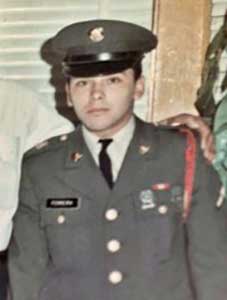
Jose Cruz was always good with electronics. He already had a good job with General Electric when he was drafted. Jose is quiet, with darting eyes that don’t seem to miss anything. He’s self-effacing, quick to heap praise on Lawrence and Alphonso. He downplays his service fixing radios.
“You were never safe at all, anywhere.”
Jose Cruz
But everyone in Vietnam was exposed to danger. Jose also pulled guard duty at fire bases near Phu Bai, in central Vietnam, when they were short-handed. The fire bases were key artillery bases often set up on hilltops. They had howitzers and mortars to support infantry operations.
“My company had three fire bases, and I visited all three of them,” he says.
“I got to know a lot of guys. They had a lot of stories,” Jose says. “One time they got hit by mortars. One of them hit the ammo area and everything blew up. One guy, really nice guy, got killed. You were never safe at all anywhere.”
The Wounds of War
Jose wears a cap that says Disabled Vietnam Veterans. All three men have grappled with the emotional wounds of war. They’re still processing their feelings about their experiences—the terror of combat, the surprise and shock of friendly fire, the confusion over war aims and rules of engagement, the exposure to napalm and Agent Orange.
“It was supposed to kill the vegetation, but instead of killing the vegetation it was killing us,” Alphonso says. “We didn’t know that and the government doesn’t acknowledge it, they say no.”
Their shared memories have drawn the three men closer over the years. They’ve all struggled with nightmares, anxiety, flashbacks, high blood-pressure and stress. There have been treatments for Post-Traumatic Stress Disorder. They still attend discussion groups.
“We let everything out, “Jose says. “And there’s no problem because we all know what we went through. If you weren’t in Vietnam you’d never understand it.”
Men On A New Mission
Their bond has strengthened over their commitment to the massive mural at Our Lady of Guadalupe Church. A red headstone commemorating the lives of the 12 men from the parish who died in Vietnam was erected in 1970. The mural went up on the building behind it in 1990. Jose, Alphonso and Lawrence had become active in Veterans organizations. And they took up the cause of the mural. They raised money, participated in planning meetings and spread the word around the neighborhood.
“We wanted to honor the guys we once knew,” says Lawrence. “We hung around with them, we played ball with them. We went to grammar school, high school, we knew them as friends.”
The men all wear t-shirts with pictures of the mural and the names of the fallen. Fundraising and planning are underway on a new renovation effort they hope will begin this summer. Weather and time have taken a toll. The pictures of the 12 parishioners have been taken down for now.
One of those names—Joseph Quiroz—will be on Lawrence’s mind during the Honor Flight Chicago trip to Washington D.C. Joe Quiroz’s mother is now 90- years-old. His sister and niece are also alive.
“I want to go there and etch his name from the wall,” Lawrence says. “I want to bring home the name to his loved ones. I got to do that if it’s the last thing I do. It must be done before his mother passes.
“40 years ago they told us we’d crumble,” he says. “We’re still here.
Lawrence, Jose and Alphonso. Three soldiers still on duty.
Thank you for your service.